
Vanilla Butter Cake Recipe
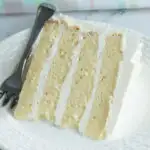
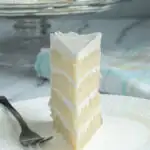
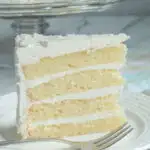
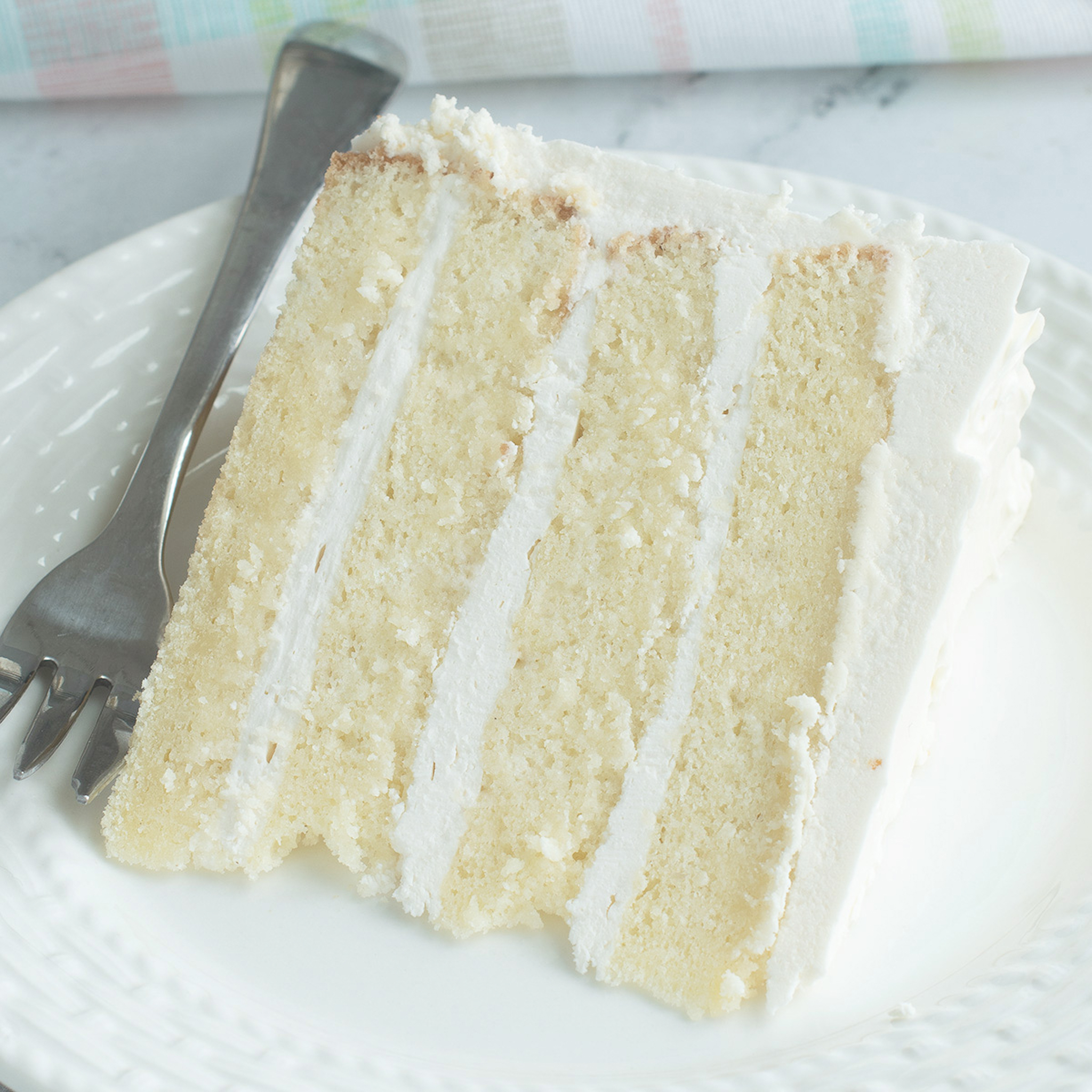
This is the vanilla butter cake I used for years in my wedding cake business — moist enough to eat without frosting, adaptable enough to layer with frosting or stack into tiers. Careful recipe testing and specific ingredient and technique choices get it there. The baked layers freeze well, so you can make this ahead of a birthday or a bigger cake project.
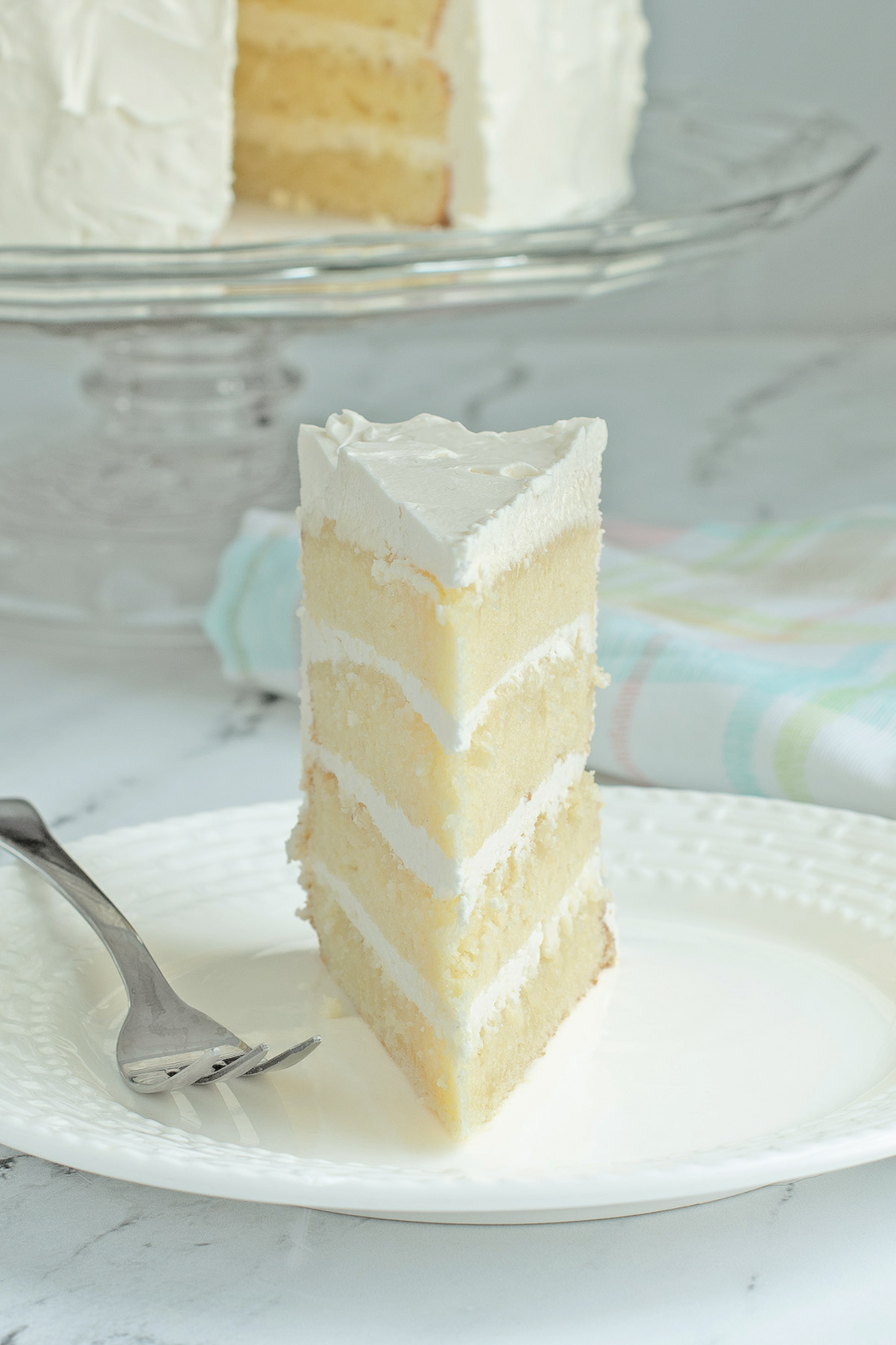
Table of contents
Why This Vanilla Butter Cake Works
You’ll love this recipe for all the reasons you love butter (you do love butter, don’t you?). The cake is rich with a full vanilla flavor and the velvety crumb melts in your mouth like, well, like butter.
There are three important factors that really set this recipe apart:
✓ Extensive Recipe Testing
This exact recipe was the base for hundreds and hundreds of wedding cakes I sold when I had my wedding cake business.
Professional bakers use the “Baker’s Percentage” to balance the ingredients in a recipe. With this knowledge I worked for months developing the softest and moistest vanilla cake that could be appropriate for a simple birthday cake or stacked into a towering wedding cake.
You can find the percentages for this Vanilla Butter Cake recipe in this all-encompassing post describing how to create the best cake recipes.
✓ Rich Ingredients
In addition to balancing the recipe, I made very specific ingredient choices. Sour cream, extra egg yolks and whipped egg whites create a soft and moist cake. See the ingredient notes section for more information.
✓ Reverse Creaming Method
Traditional cake recipes cream butter and sugar together first, then add the dry ingredients. This recipe uses reverse creaming instead — the butter is mixed directly into the dry ingredients before any liquid is added, coating the flour in fat. The result is a finer, more velvety crumb with less risk of the tunnels or dense streaks that can show up in a traditionally creamed cake.
Ingredient Notes
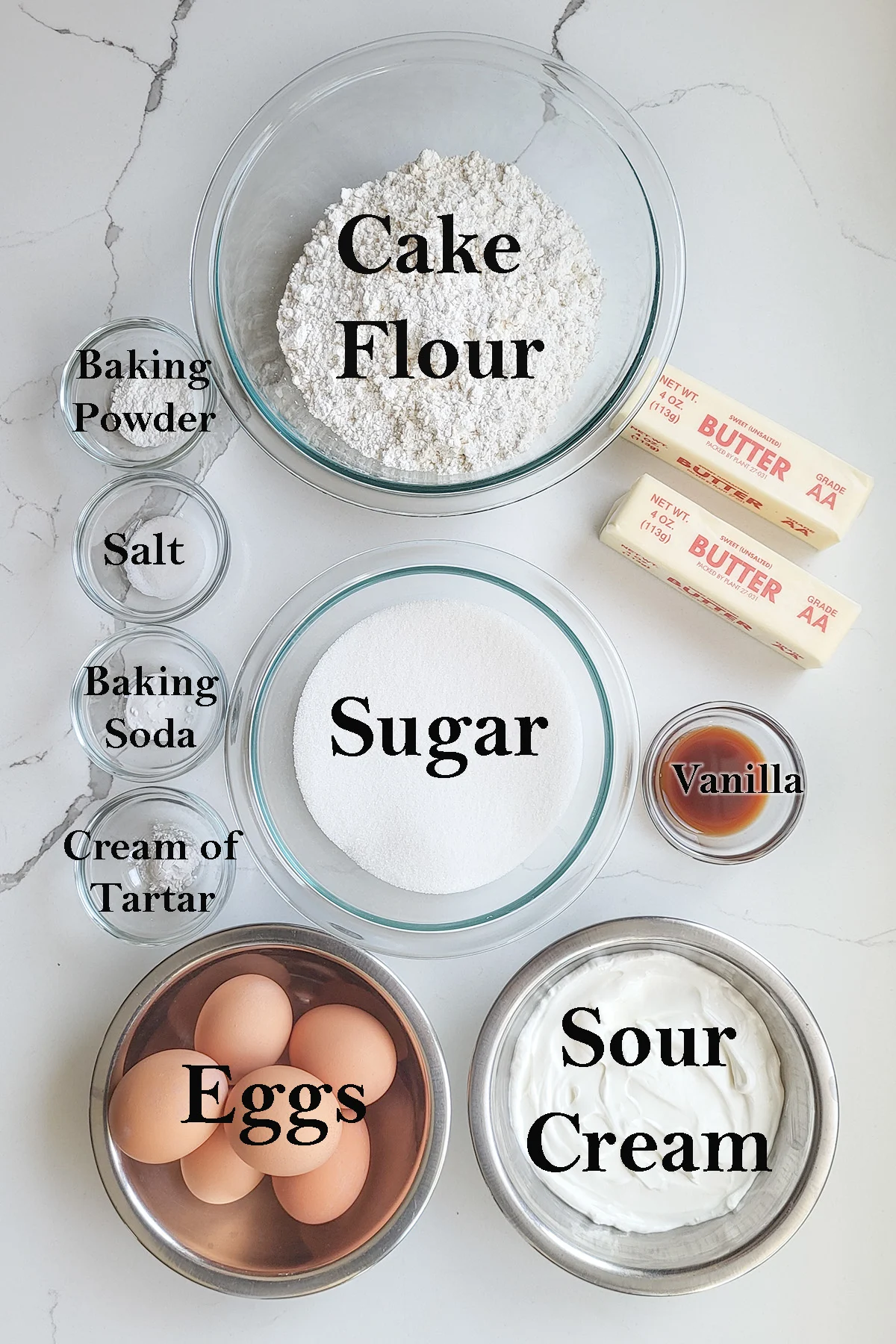
- Cake Flour – Has a lower protein content than all purpose flour so it makes a softer cake. I prefer bleached cake flour. Bleached cake flour is acidic which tenderizes the cake and allows the batter to absorb more liquid for a moister cake. Although you will definitely get the best results with cake flour, in a pinch, for every cup of cake flour use ¾ cup of all-purpose flour mixed with 2 tablespoons of corn starch.
- Unsalted Butter – I prefer unsalted butter so I can control the amount of salt in the recipe. If you use salted butter eliminate the salt listed in the ingredients. The butter must be room temperature for the best results. Room temperature butter is about 65F-70°F (21°C). The butter should be pliable but not soft and melty.
- Sour Cream – Is used instead of milk as the “liquid” in this batter. Sour cream softens the cake and the added fat enriches the batter. Full-fat, unsweetened Greek yogurt would be the best substitute for sour cream.
- Eggs – Extra egg yolks in the batter enriches the cake and emulsifies the batter for an even and tender crumb. The whites are whipped and folded into the batter for an extra light cake crumb.
- Cream of Tartar – This acidic ingredient stabilizes the whipped egg whites and acidifies the batter for a softer crumb.
How to Make Vanilla Butter Cake
See the recipe card for detailed instructions and measurements.
Prep the Pans
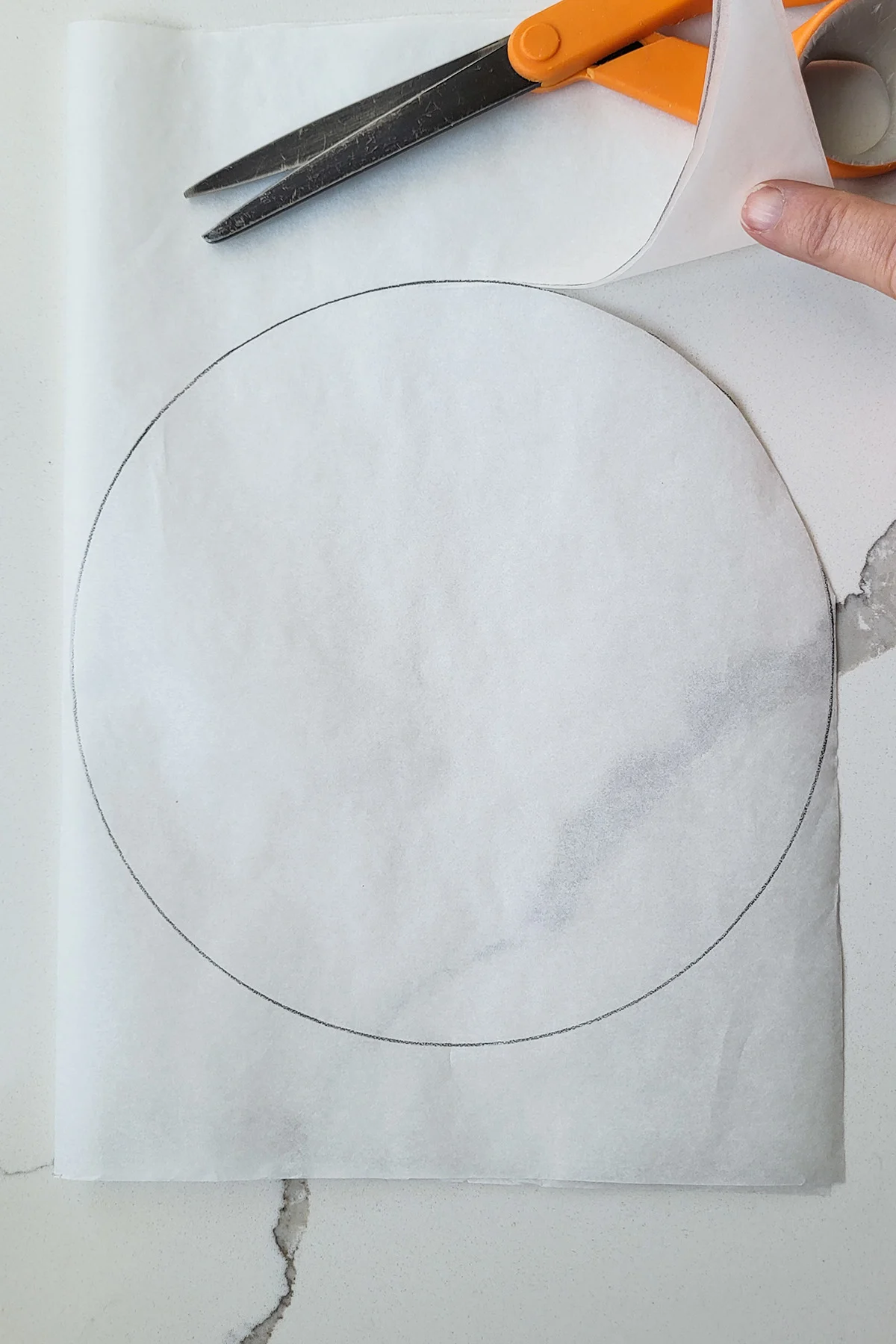
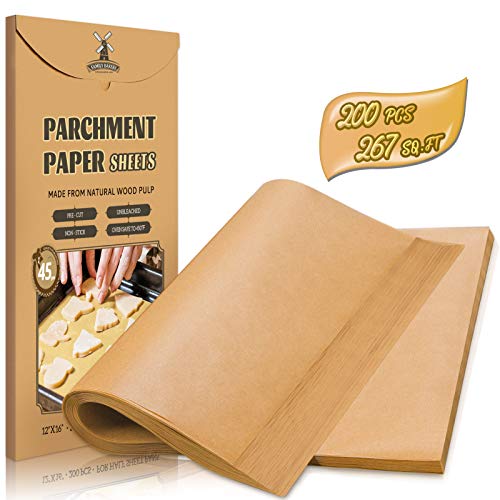
- Draw an 8″ circle on parchment paper using your cake pan as a guide. Cut out two circles and use them to line your cake pans.
- If you don’t have parchment paper butter and flour the bottom of the cake pan only, not the sides.
My Easy Pan Prep Method
After baking thousands of cakes in my career I have learned that the best way to prep a cake pan is the simplest. Just line the bottom of the pan with a round of parchment paper.
By leaving the sides of the pan without any grease, the cake batter slightly grips the pan as it bakes. This encourages straight, tall sides on the cake and a thinner and more delicate crust. But don’t worry, since the bottom doesn’t stick it’s very quick to release the cake from the pan.
Even better, pan cleanup is much easier!
Mix the Batter
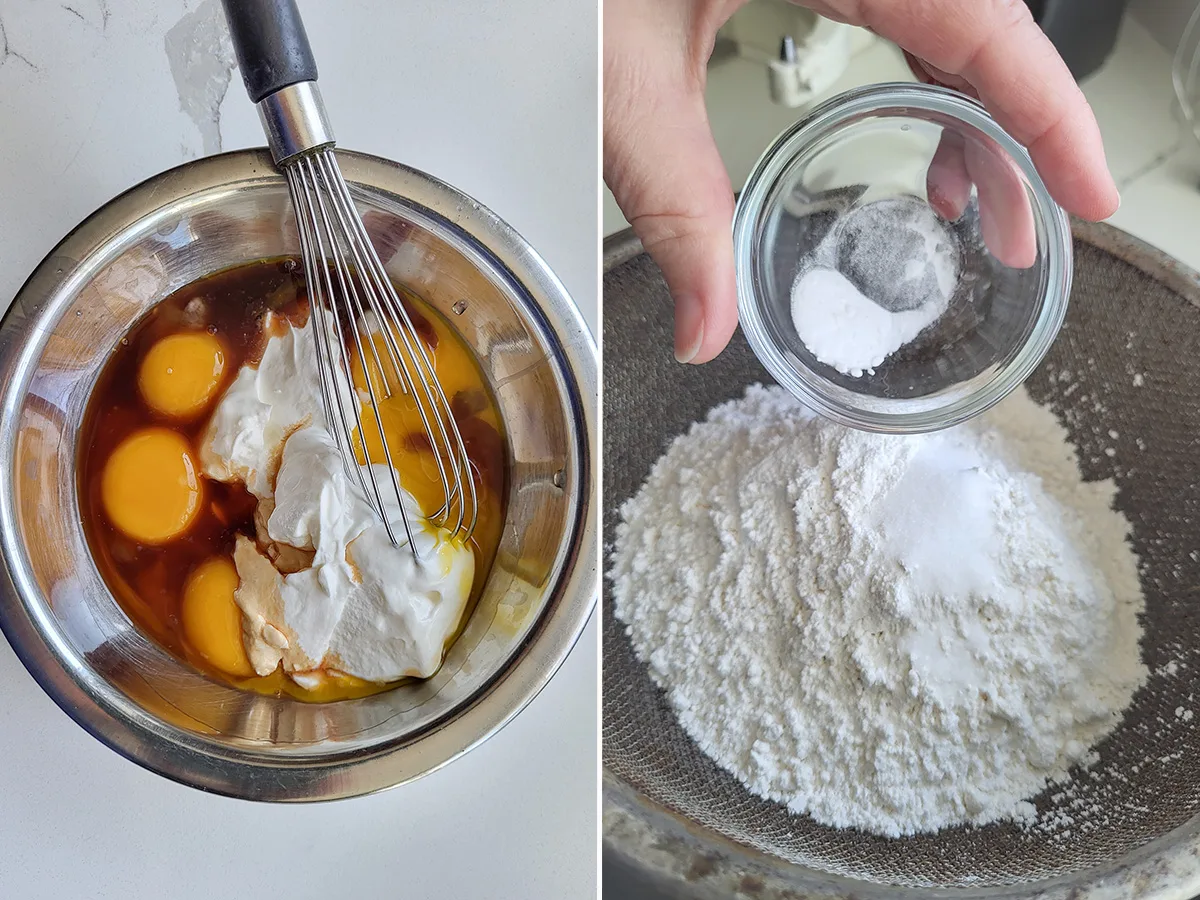
- In a small bowl whisk together the yolks, 1/2 the sour cream and vanilla.
- Sift the dry ingredients into a mixing bowl.
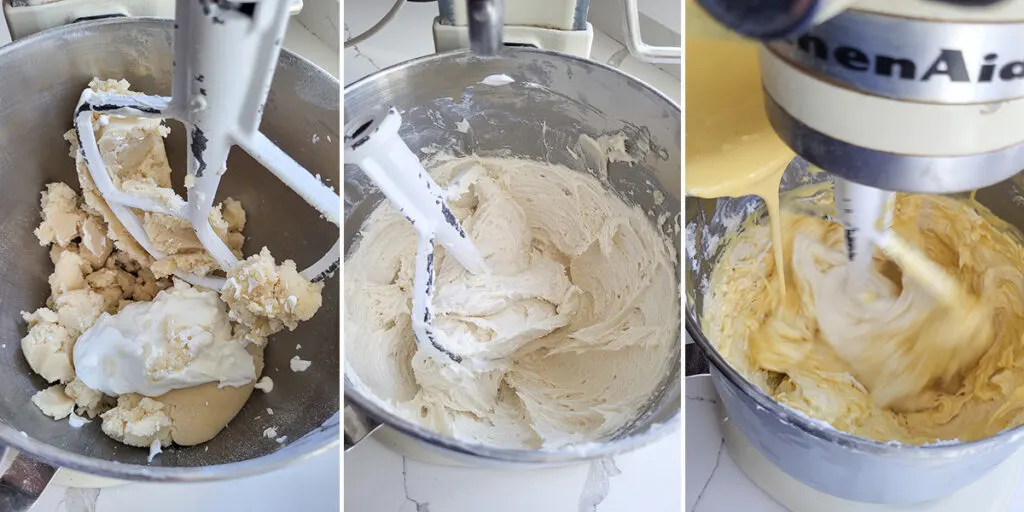
- Mix the dry ingredients on low speed and add the butter — this is the reverse creaming step — mix until it forms a thick paste. Add the reserved sour cream.
- Mix the batter on high speed until it is light and aerated. Scrape the bowl and beater.
- With the mixer running on low, add the yolk mixture. Mix until combined.
Whip and Fold the Egg Whites
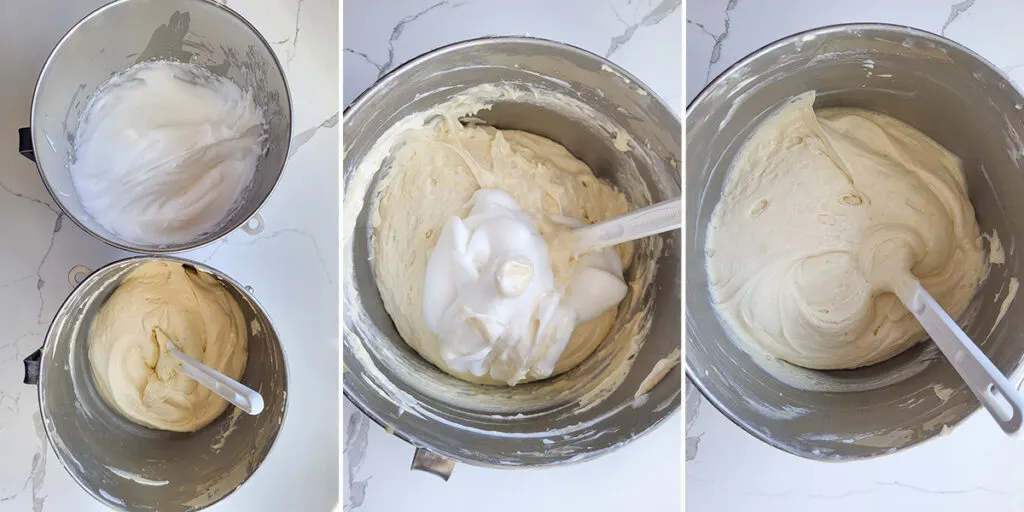
- Whip the whites with the cream of tartar and the remaining sugar to soft peak.
- Fold the whites into the batter in two batches. Stop folding as soon as there are no streaks of whites.
Why Soft Peak?
Soft whipped whites are easy to incorporate into the batter so prevents over-folding. Overwhipping the whites can result in a drier and less stable meringue which may compromise the rise on the cake.
Bake and Cool
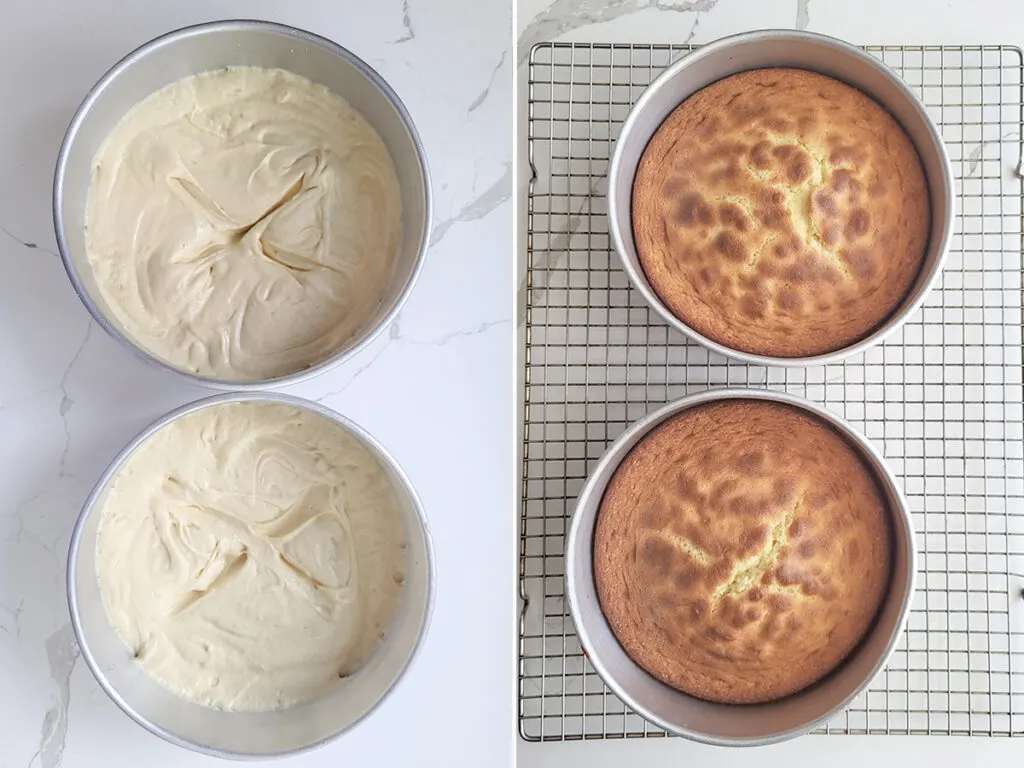
- Evenly divide the batter between the two pans. Smooth to even level then use the tip of your spatula to make an “X” in the center of each cake. This will help the cake rise more evenly in the oven.
- Bake until the center of the cake springs back when lightly pressed. Cool in the pan for 20 minutes then cool completely before icing.
Frosting Your Cake
I like this recipe filled and iced with Italian Meringue Buttercream or Swiss Meringue Buttercream.
American Buttercream is slightly sweeter than meringue buttercream and is also nice with this cake, especially when the cake is for children.
For a lighter finish you can fill and or ice the cake with simple whipped cream or Chocolate Whipped Cream.
Storage and Serving
To work ahead, the uniced cake can be held, tightly wrapped, for 2-3 days at room temperature or up to 3 months in the freezer. Defrost the cake in the wrapping.
Do not refrigerate the cake unless it is filled or iced with a perishable frosting. The refrigerator will accelerate the staling process, while the freezer stops it.
The cake is best served at room temperature. Just like a stick of butter, a chilled butter cake will be firm and won’t melt in your mouth the way a room temperature cake will. If your cake has a perishable filling and must be held in the refrigerator, take it out and hold it at room temperature for 2-3 hours before serving.
Occasions for This Cake
- This recipe is perfect for making birthday cakes. It’s wonderful as a simple vanilla cake, but you can also fold in colorful sprinkles to make a funfetti cake or mini chocolate chips.
- This cake can be used for making wedding and stacked cakes. You’ll need to use proper supports for stacking cake tiers.
- I used this cake many times to create carved and sculpted Cakes. Chill the assembled layers before carving the cake.
FAQs
Yes, the cake is yellow because of the egg yolks in the cake. Most people use the terms “vanilla cake” and “yellow cake” interchangeably. Vanilla is the flavoring in the cake.
That being said, not all vanilla cakes are yellow cakes. If you eliminate the egg yolks in the cake and make white cake flavored with vanilla, it too is a vanilla cake.
Any cake recipe that starts with the traditional “cream the butter and sugar” step can be adapted to reverse creaming. Start with the dry ingredients (flour, sugar, salt leavening), add room temperature butter and half the liquid. Finally add remaining liquid and eggs.
Now that you’ve made this recipe what should you do with all the extra egg whites? Check out this collection of recipes that use extra whites for some great ideas.
If you love this recipe as much as I do, I’d really appreciate a star rating and a quick comment. Ratings and comments help my recipes show in search results. Thanks!
Vanilla Butter Cake Recipe
Video
Ingredients
- 6 large egg yolks (room temperature)
- 8 ounces sour cream (1 cup, room temperature)
- 1 tablespoon vanilla extract
- 12 ounces granulated sugar (1 ½ cups)
- 9 ounces cake flour (2 cups, see note)
- ¾ teaspoon baking powder
- ¾ teaspoon salt
- ¼ teaspoon baking soda
- 8 ounces unsalted butter (room temperature, see note)
- 3 large egg whites (room temperature)
- ¼ teaspoon cream of tartar
Instructions
- Preheat the oven to 350 °F. Line two 8"x3" round cake pans with a circle of parchment paper or butter and flour the bottom of the pans only, not the sides.
- Combine 6 large egg yolks, 4 ounces sour cream and 1 tablespoon vanilla extract in a small bowl, whisk to combine, set aside.
- Into a mixer bowl sift 10 ounces granulated sugar, 9 ounces cake flour, ¾ teaspoon baking powder, ¼ teaspoon baking soda and ¾ teaspoon salt. Mix on low speed for 10 seconds to distribute the leavening. Add 8 ounces unsalted butter to the flour mixture. Mix on low until the butter is incorporated and the batter looks like a paste. Add 4 ounces sour cream to the flour and butter mixture. Increase the speed to medium and mix about 3 minutes until the batter lightens in texture. If you're using a hand mixer add another minute or two to the total time.
- Scrape the sides and bottom of the bowl. With the mixer on low, add ½ the egg yolk mixture. Mix until mostly incorporated. Scrape the sides and bottom of the bowl. Add the rest of the egg yolk mixture. Scrape the bowl and mix until incorporated.
- In another bowl, whip 3 large egg whites with ¼ teaspoon cream of tartar on medium high until foamy. Turn the mixer to medium low and slowly add 2 ounces granulated sugar. Turn the mixer to medium high and whip the whites to soft peak. Fold the whites into the base in 2 parts, folding just until there are no streaks of egg whites.
- Divide the batter between the 2 pans and spread so it's level. Use the tip of your spatula to form an "x" in the center of each cake. This will help the cake rise evenly.
- Bake until the center of the cake springs back when lightly pressed or a toothpick inserted into the middle of the cake comes out clean, about 25-30 minutes.
- Cool 10 minutes in the pan and then turn out onto a cooling rack. Wait until the cake is fully cooled before filling and assembling with your favorite frosting.
Would you like to save this recipe?



As an Amazon Associate and member of other affiliate programs, I earn from qualifying purchases.
It’s me again Eileen, please do you have a recipe for an excellent Red Velvet cake. Thing is, I don’t even know if the perfect Red Velvet cake should be more moist than fluffy or vice-versa.
Thoughts on my dilemma?
Thanks so much.
I have a Red Velvet Cake recipe I’ve been working on but isn’t published yet. It will be in the future. As far as moist vs. fluffy, that will always be a matter of taste. I prefer moist, but not gummy and wet.
Hahahahaha, now it’s hard to get that balance really… I can’t wait to see what you come up with Eileen. Thanks so much again.
PS: I prefer moist as well
Hi Eileen, I really appreciate the painstaking time and effort you put into getting at perfection.
In this recipe there’s no mention of milk or buttermilk, can I ask why? Cos I’ve seen either (especially the latter) used in recipes for this same cake by others.
A detailed explanation would be really awesome.
Thanks.
Hi Tobi, the sour cream takes the place of milk or buttermilk. I like it because it adds fat and the acidity tenderizes the cake crumb.
Oh really?
Thanks… I can’t get sourcream here, can I use normal yoghurt instead (no Greek either)?
Yes, you can use regular yogurt instead of the sour cream.
Hi Eileen, I have the same problem as Tobi, I would love to do this cake but in my country (Argentina) we don’t have sour cream. So, can I replace it with the same amount of plain yogurt? Is there another option to replace the sour cream? Thanks!
Hi Marina, Yes, you can use plain yogurt to replace sour cream. I don’t know what yogurt is like in Argentina since the texture can vary. Here, regular yogurt is a little thinner than sour cream. Greek yogurt is very rich and thick, more like sour cream. I would suggest using a full fat yogurt to get as close to sour cream as possible.
Hi Eileen,
I have the same problem as Tobi because where I live (Argentina) we don’t have sour cream. So, can I replace it with the same amount of plain yogurt? Can I replace it with something else? Thanks!
Sorry for posting twice! I thought I could not send the first post!
Good Morning! I was so excited to find your post. My granddaughters, 8 & 9 this year, always request I make their cakes, and I decided it time to make a good homemade cake instead of a box cake for them. This year my challenge is a unicorn and mermaid cake, so I need a cake that will make and hold up to layers (6″ cake).
I have tried both the vanilla and chocolate butter cakes. I had trouble with both cakes, but especially the chocolate cake falling after taking it out of the oven. It has the consistency of a brownie instead of a cake. The vanilla did the same thing but not to the same extent. I personally prefer the vanilla, it was delicious! I have also tried the Italian Buttercream Icing. LOVE it! I must admit the first batch I made with the vanilla cake, I used salted butter by mistake and I could taste the salt. Some people liked it, and it was good, but I could taste the salt. So this time with the chocolate cake trial run I made sure to use the unsalted butter, much better (for my taste) Interesting lesson to learn.
Can you give me any insight as to why the cakes fell or compressed? I did use the reverse creaming method and folded in the egg whites.
I appreciate your time and look forward to your reply.
Hi Tina. I’ve been making the vanilla and chocolate version of this cake for more than 10 years and have never had a “brownie” type of texture for the cake. The cake will “settle” once it comes out of the oven. It may bake up with a hump in the middle that will settle down as it cools. But it should still be the texture of a cake, not a brownie. Did you butter the sides of the pan? I’ve found the cake bakes better if the sides of the pan are not buttered at all.
Thanks Eileen, I did butter the bottom of the pans, but not the sides. I read more this morning and I am going to try just the parchment paper, no butter on my next try as you suggested. I don’t think that brownie is the best description, but the chocolate was not as light as the vanilla, but still very tender and moist. I can ‘t wait to try it again! My co-workers don’t seem to mind!!!
Hi Tina. If you’re used to baking from a cake mix, this cake does have a different texture than a box cake. It’s not as light as a cake mix because it’s more buttery. My Old Fashioned Chocolate Cake has that lighter texture if you want to try that recipe. The cake also should be eaten at room temperature, not cold. Let me know if I can answer any other questions.
Hi Eileen! Thank you for such a wonderful website. This recipe says “Turn the mixer to medium low and slowly add the remaining 1/4 cup of sugar.” Do I add the 1/4 sugar to the batter or to the whipped egg whites? I added it to the whipped egg whites but was not quite sure. The cake turned out incredibly delicious although I inadvertently left out the 1/4 baking soda. Hence, the cake fell a little when I removed it from the oven, but still incredibly moist and yummy.
Hi Kay. You did it exactly right, the last 1/4 cup of sugar goes in with the egg whites. This type of cake always “settles” when it comes out of the oven. If you read the update at the end of my White Cake post it explains why.
Hi Eileen!
I just found the Baking Sense site because I will be making my brother-in-law’s wedding cake this fall. Your site is so informative and easy to understand! Would you recommend this cake for a semi-naked style presentation? I know that the edges have to caramelize a bit so you can see the color of the cake but you also don’t want to drag a lot of crumb during the smoothing process so it has to be somewhat dense (and probably chilled during the frosting process I would think). Additionally, are there any frosting recipes you would suggest for the semi-naked style cake? Thank you so much for your help!
Hi Brittany. I’ve used this recipe for semi-naked cakes. Personally, I prefer to lightly trim the edges so the sides are less brown when they show through. You can see a video in this post that shows photos of how I trim the sides of the cake. Yes, it is easier to trim and stack the cakes when they’re chilled. I’ve done the semi-naked cakes with both whipped cream and Italian Meringue Buttercream filling/frosting.