
Vanilla Butter Cake Recipe
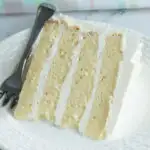
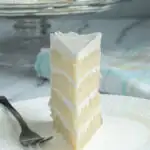
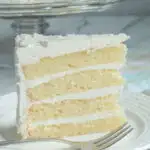
This is the vanilla butter cake I used for years in my wedding cake business — moist enough to eat without frosting, adaptable enough to layer with frosting or stack into tiers. Careful recipe testing and specific ingredient and technique choices get it there. The baked layers freeze well, so you can make this ahead of a birthday or a bigger cake project.
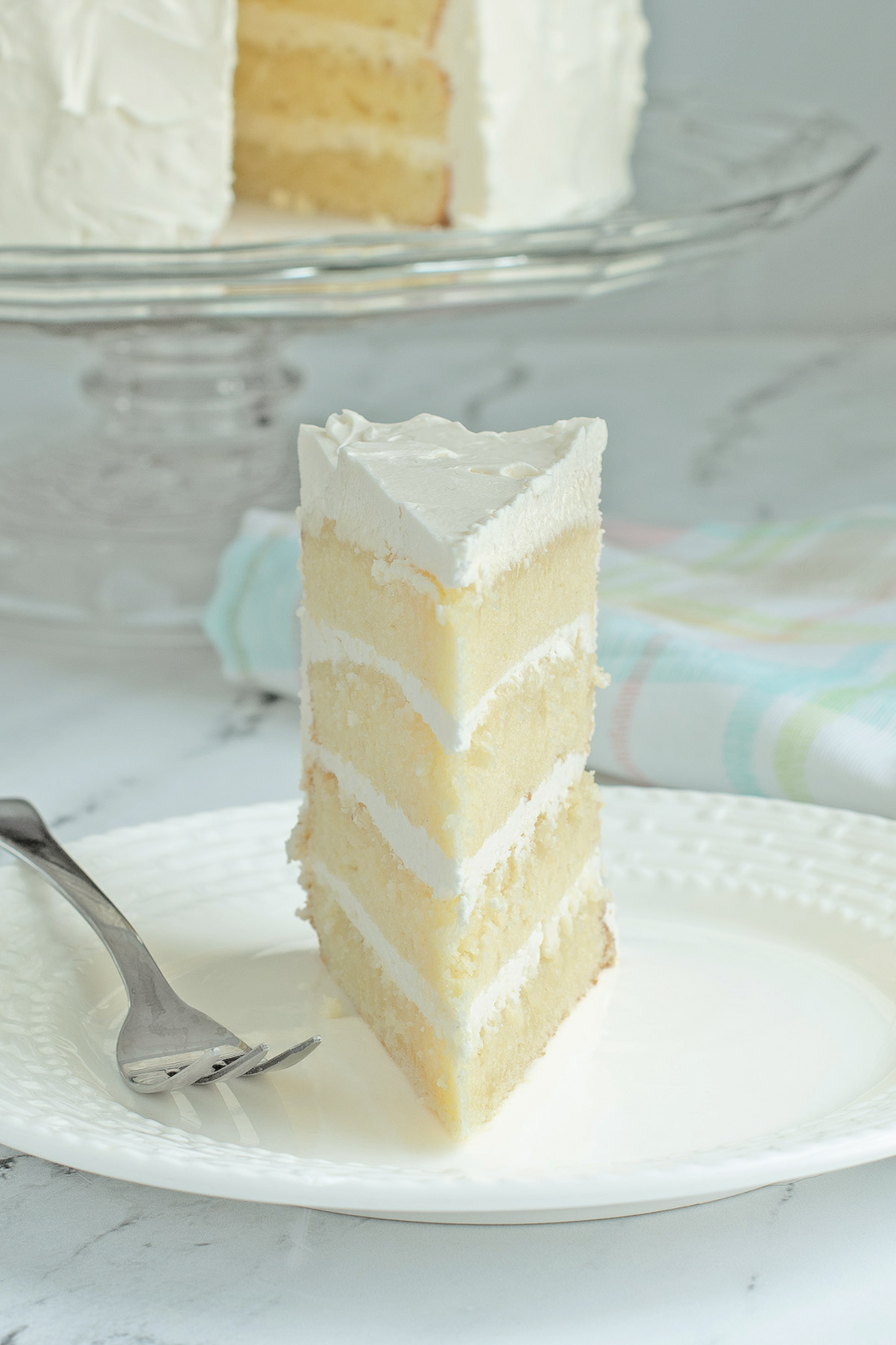
Table of contents
Why This Vanilla Butter Cake Works
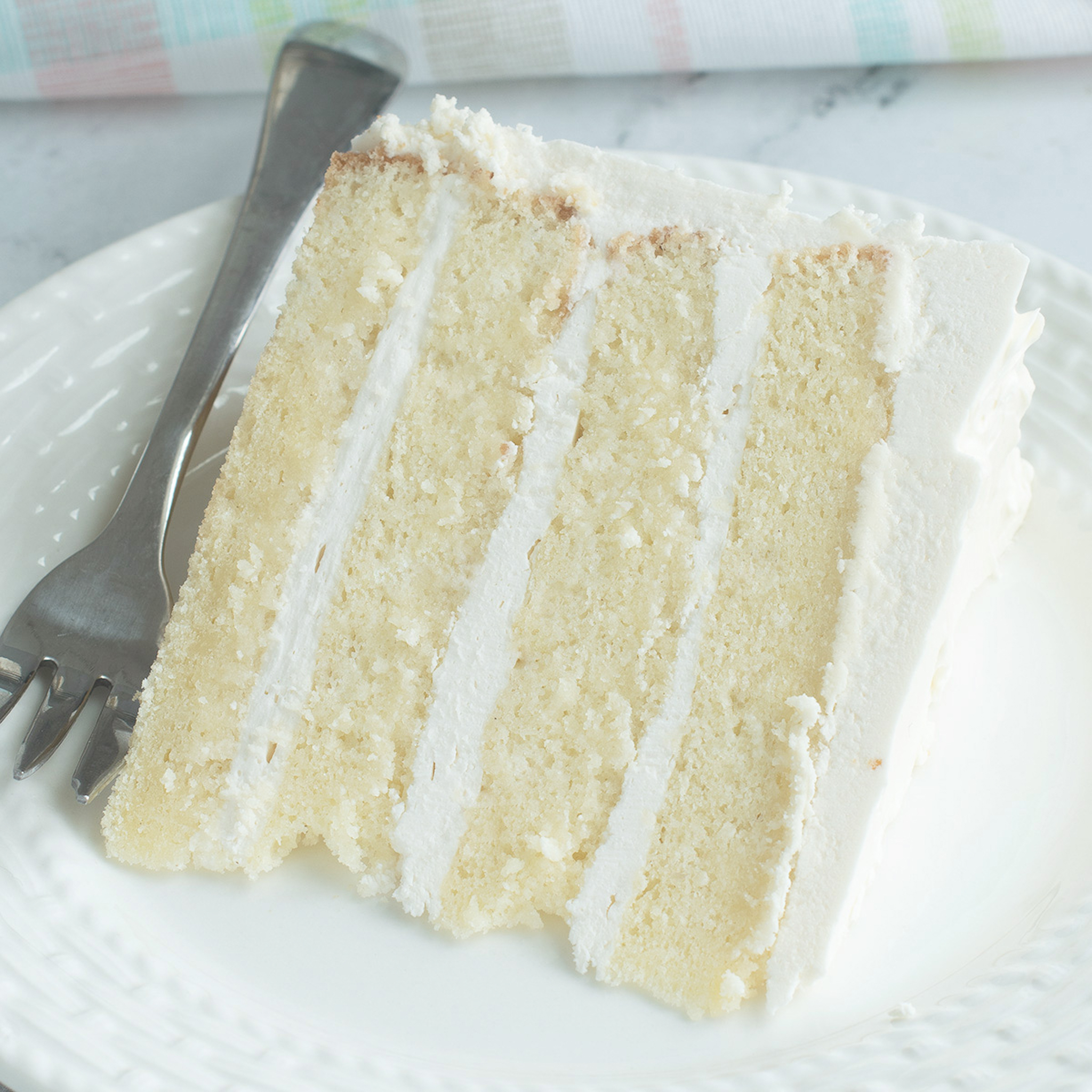
You’ll love this recipe for all the reasons you love butter (you do love butter, don’t you?). The cake is rich with a full vanilla flavor and the velvety crumb melts in your mouth like, well, like butter.
There are three important factors that really set this recipe apart:
✓ Extensive Recipe Testing
This exact recipe was the base for hundreds and hundreds of wedding cakes I sold when I had my wedding cake business.
Professional bakers use the “Baker’s Percentage” to balance the ingredients in a recipe. With this knowledge I worked for months developing the softest and moistest vanilla cake that could be appropriate for a simple birthday cake or stacked into a towering wedding cake.
You can find the percentages for this Vanilla Butter Cake recipe in this all-encompassing post describing how to create the best cake recipes.
✓ Rich Ingredients
In addition to balancing the recipe, I made very specific ingredient choices. Sour cream, extra egg yolks and whipped egg whites create a soft and moist cake. See the ingredient notes section for more information.
✓ Reverse Creaming Method
Traditional cake recipes cream butter and sugar together first, then add the dry ingredients. This recipe uses reverse creaming instead — the butter is mixed directly into the dry ingredients before any liquid is added, coating the flour in fat. The result is a finer, more velvety crumb with less risk of the tunnels or dense streaks that can show up in a traditionally creamed cake.
Ingredient Notes
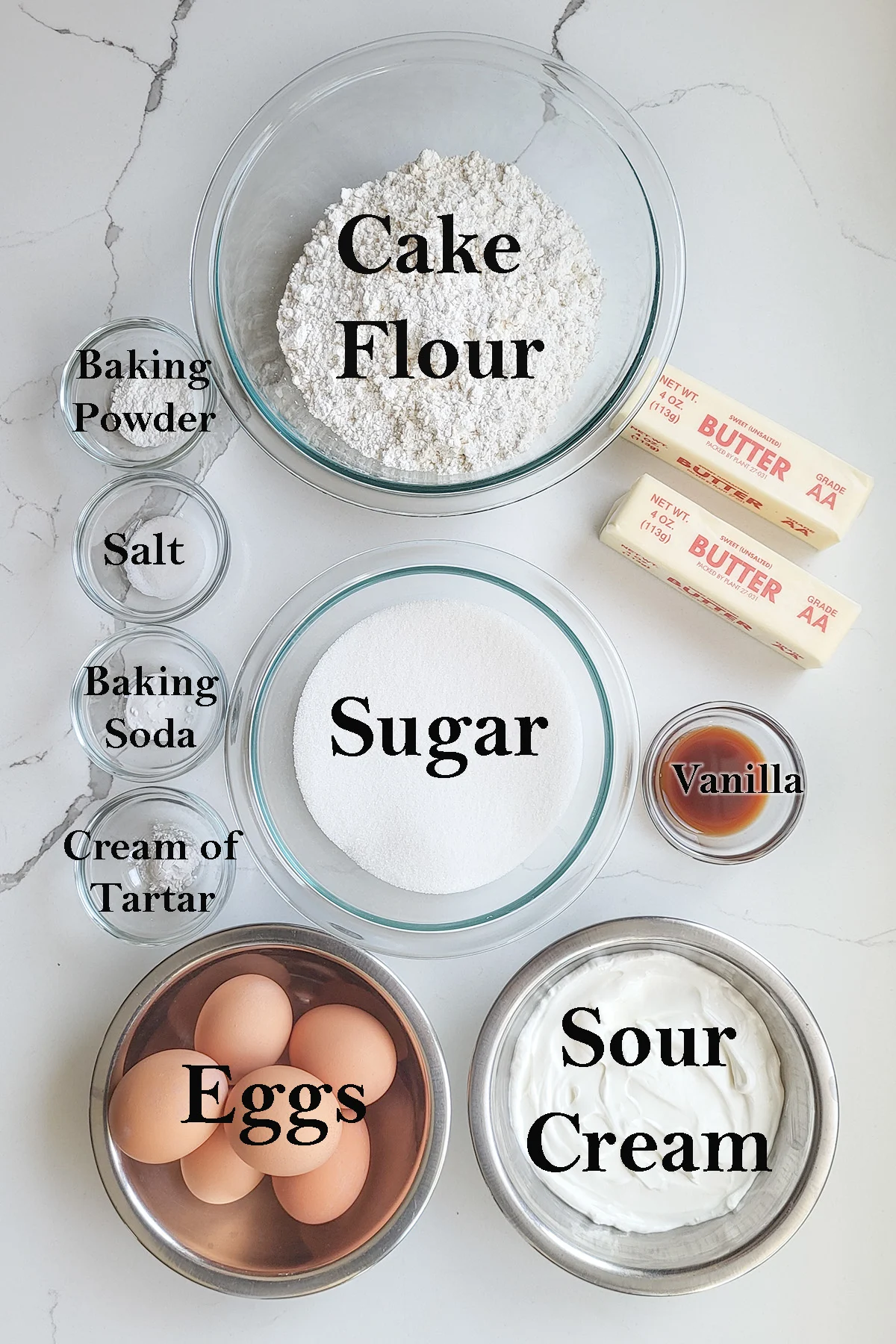
- Cake Flour – Has a lower protein content than all purpose flour so it makes a softer cake. I prefer bleached cake flour. Bleached cake flour is acidic which tenderizes the cake and allows the batter to absorb more liquid for a moister cake. Although you will definitely get the best results with cake flour, in a pinch, for every cup of cake flour use ¾ cup of all-purpose flour mixed with 2 tablespoons of corn starch.
- Unsalted Butter – I prefer unsalted butter so I can control the amount of salt in the recipe. If you use salted butter eliminate the salt listed in the ingredients. The butter must be room temperature for the best results. Room temperature butter is about 65F-70°F (21°C). The butter should be pliable but not soft and melty.
- Sour Cream – Is used instead of milk as the “liquid” in this batter. Sour cream softens the cake and the added fat enriches the batter. Full-fat, unsweetened Greek yogurt would be the best substitute for sour cream.
- Eggs – Extra egg yolks in the batter enriches the cake and emulsifies the batter for an even and tender crumb. The whites are whipped and folded into the batter for an extra light cake crumb.
- Cream of Tartar – This acidic ingredient stabilizes the whipped egg whites and acidifies the batter for a softer crumb.
How to Make Vanilla Butter Cake
See the recipe card for detailed instructions and measurements.
Prep the Pans
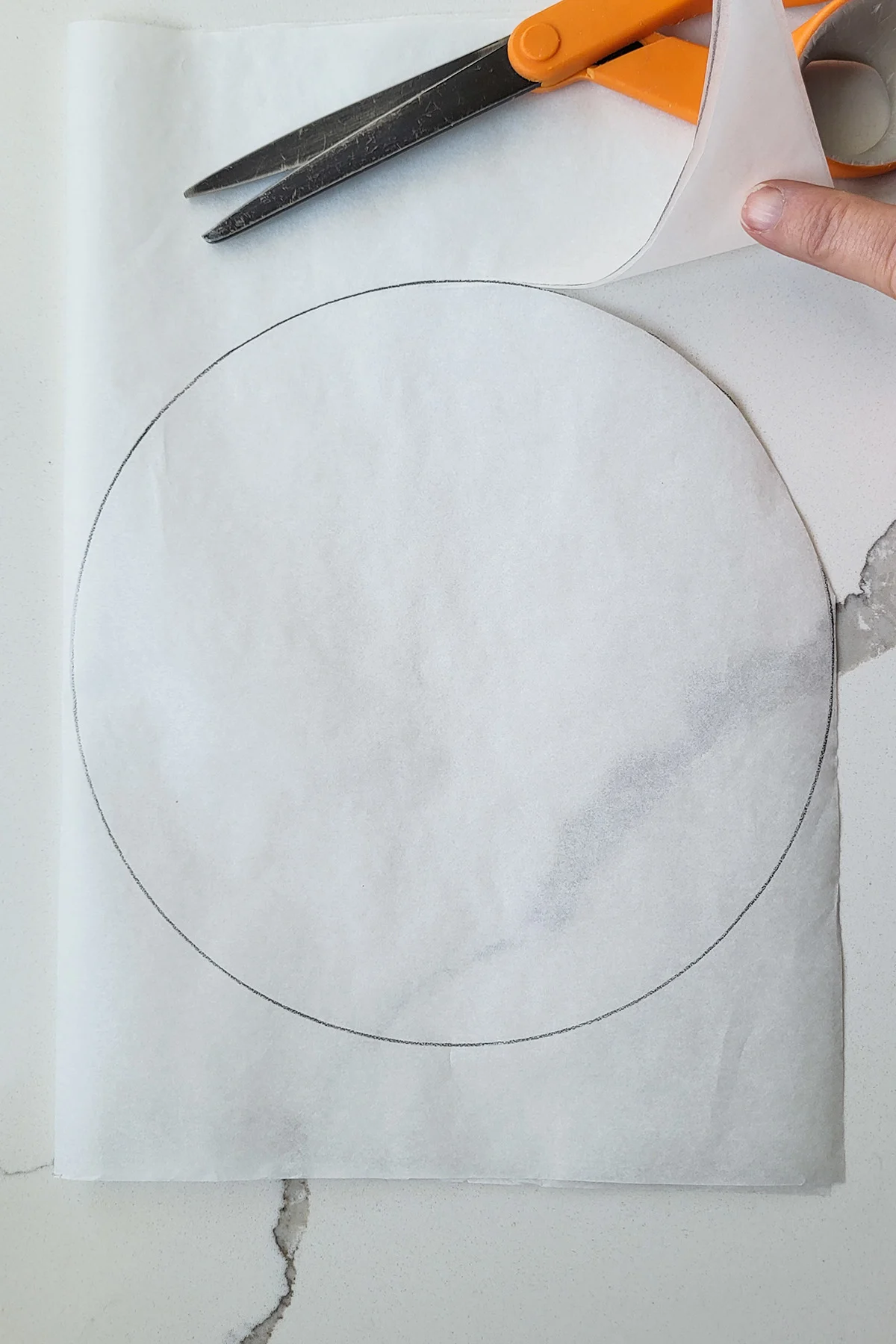
- Draw an 8″ circle on parchment paper using your cake pan as a guide. Cut out two circles and use them to line your cake pans.
- If you don’t have parchment paper butter and flour the bottom of the cake pan only, not the sides.
My Easy Pan Prep Method
After baking thousands of cakes in my career I have learned that the best way to prep a cake pan is the simplest. Just line the bottom of the pan with a round of parchment paper.
By leaving the sides of the pan without any grease, the cake batter slightly grips the pan as it bakes. This encourages straight, tall sides on the cake and a thinner and more delicate crust. But don’t worry, since the bottom doesn’t stick it’s very quick to release the cake from the pan.
Even better, pan cleanup is much easier!
Mix the Batter
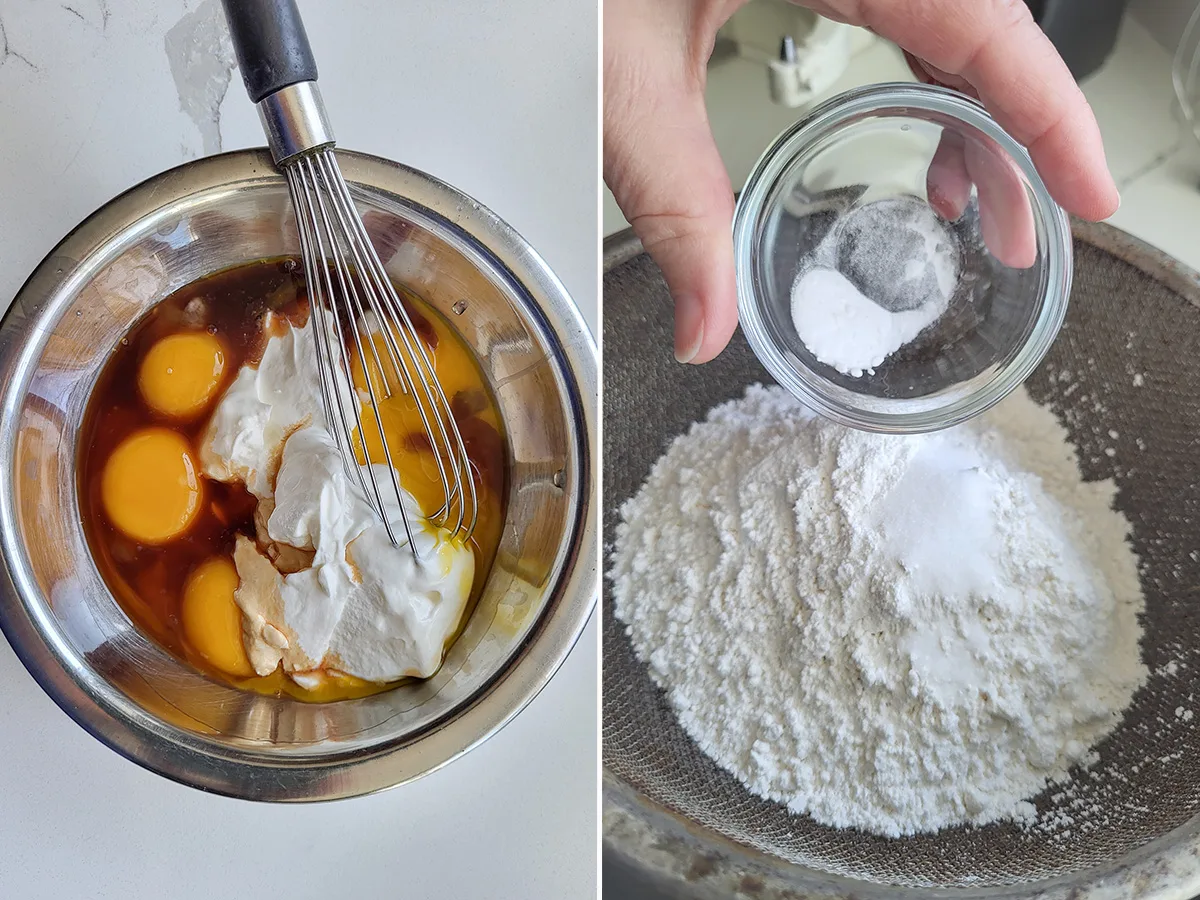
- In a small bowl whisk together the yolks, 1/2 the sour cream and vanilla.
- Sift the dry ingredients into a mixing bowl.
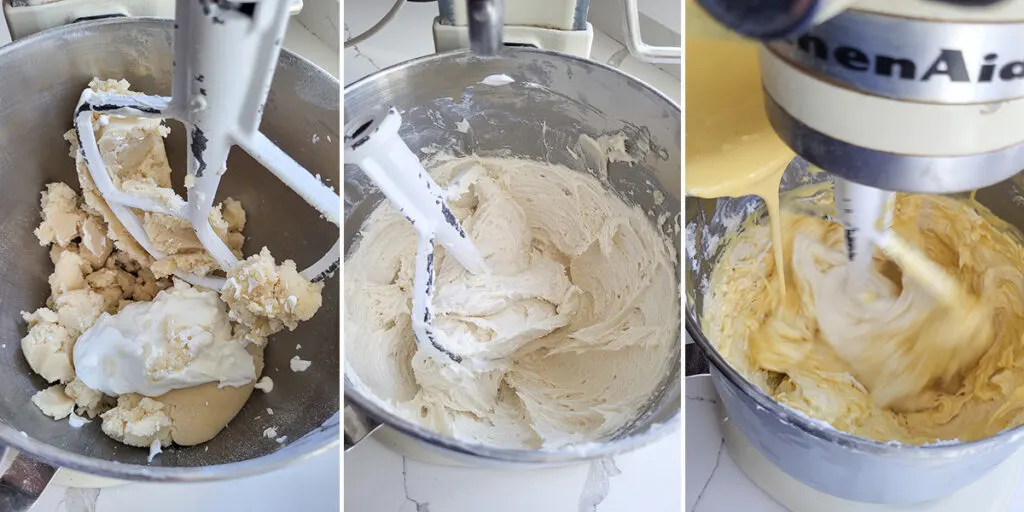
- Mix the dry ingredients on low speed and add the butter — this is the reverse creaming step — mix until it forms a thick paste. Add the reserved sour cream.
- Mix the batter on high speed until it is light and aerated. Scrape the bowl and beater.
- With the mixer running on low, add the yolk mixture. Mix until combined.
Whip and Fold the Egg Whites
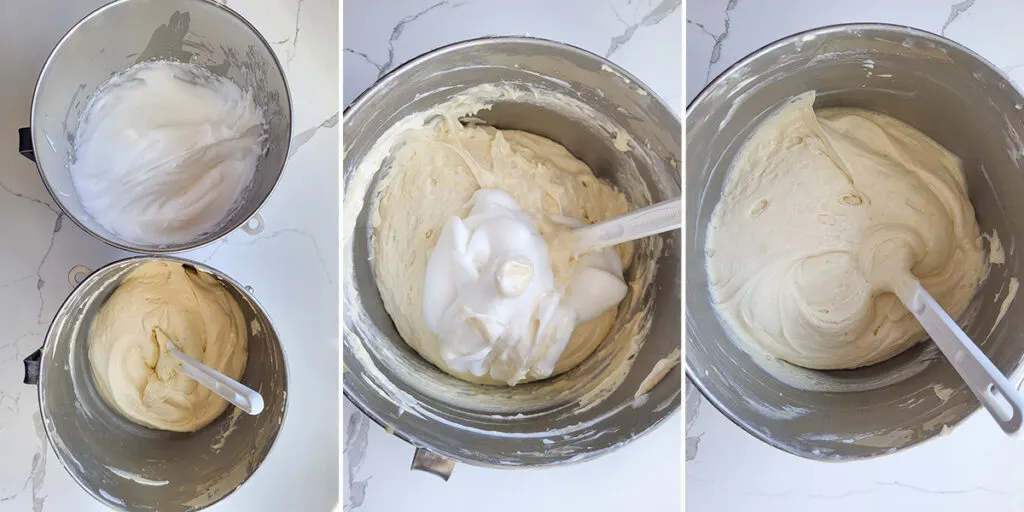
- Whip the whites with the cream of tartar and the remaining sugar to soft peak.
- Fold the whites into the batter in two batches. Stop folding as soon as there are no streaks of whites.
Why Soft Peak?
Soft whipped whites are easy to incorporate into the batter so prevents over-folding. Overwhipping the whites can result in a drier and less stable meringue which may compromise the rise on the cake.
Bake and Cool
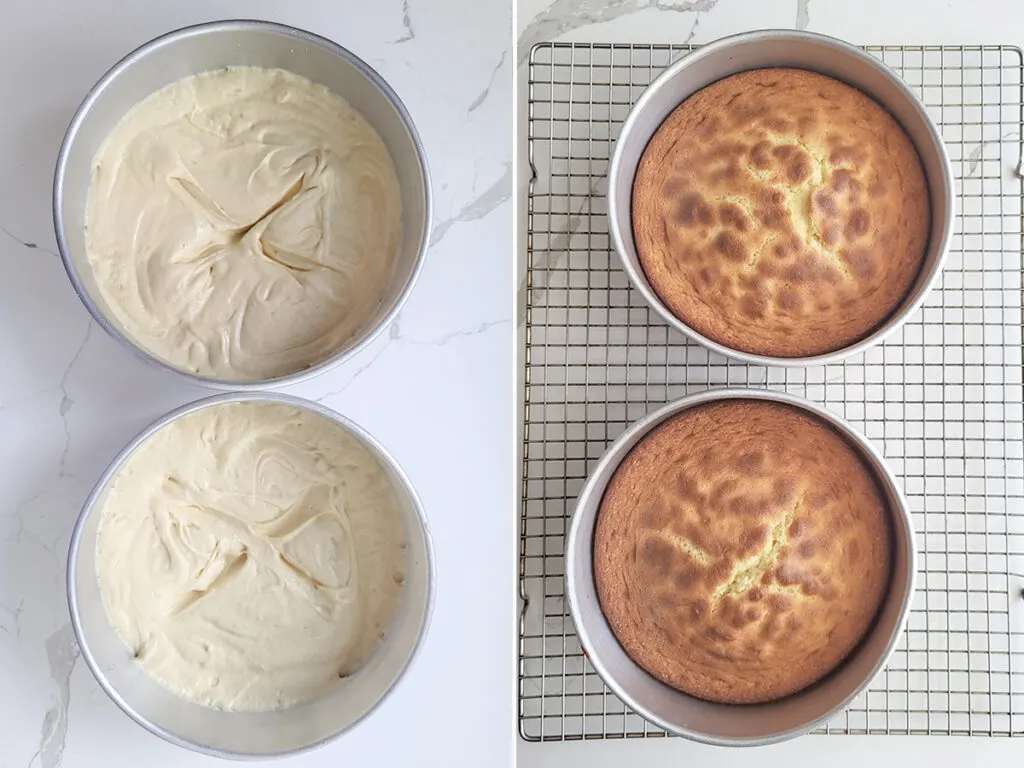
- Evenly divide the batter between the two pans. Smooth to even level then use the tip of your spatula to make an “X” in the center of each cake. This will help the cake rise more evenly in the oven.
- Bake until the center of the cake springs back when lightly pressed. Cool in the pan for 20 minutes then cool completely before icing.
Frosting Your Cake
I like this recipe filled and iced with Italian Meringue Buttercream or Swiss Meringue Buttercream.
American Buttercream is slightly sweeter than meringue buttercream and is also nice with this cake, especially when the cake is for children.
For a lighter finish you can fill and or ice the cake with simple whipped cream or Chocolate Whipped Cream.
Storage and Serving
To work ahead, the uniced cake can be held, tightly wrapped, for 2-3 days at room temperature or up to 3 months in the freezer. Defrost the cake in the wrapping.
Do not refrigerate the cake unless it is filled or iced with a perishable frosting. The refrigerator will accelerate the staling process, while the freezer stops it.
The cake is best served at room temperature. Just like a stick of butter, a chilled butter cake will be firm and won’t melt in your mouth the way a room temperature cake will. If your cake has a perishable filling and must be held in the refrigerator, take it out and hold it at room temperature for 2-3 hours before serving.
Occasions for This Cake
- This recipe is perfect for making birthday cakes. It’s wonderful as a simple vanilla cake, but you can also fold in colorful sprinkles to make a funfetti cake or mini chocolate chips.
- This cake can be used for making wedding and stacked cakes. You’ll need to use proper supports for stacking cake tiers.
- I used this cake many times to create carved and sculpted Cakes. Chill the assembled layers before carving the cake.
FAQs
Yes, the cake is yellow because of the egg yolks in the cake. Most people use the terms “vanilla cake” and “yellow cake” interchangeably. Vanilla is the flavoring in the cake.
That being said, not all vanilla cakes are yellow cakes. If you eliminate the egg yolks in the cake and make white cake flavored with vanilla, it too is a vanilla cake.
Any cake recipe that starts with the traditional “cream the butter and sugar” step can be adapted to reverse creaming. Start with the dry ingredients (flour, sugar, salt leavening), add room temperature butter and half the liquid. Finally add remaining liquid and eggs.
Now that you’ve made this recipe what should you do with all the extra egg whites? Check out this collection of recipes that use extra whites for some great ideas.
If you love this recipe as much as I do, I’d really appreciate a star rating and a quick comment. Ratings and comments help my recipes show in search results. Thanks!
Vanilla Butter Cake Recipe
Video
Ingredients
- 6 large egg yolks (room temperature)
- 8 ounces sour cream (1 cup, room temperature)
- 1 tablespoon vanilla extract
- 12 ounces granulated sugar (1 ½ cups)
- 9 ounces cake flour (2 cups, see note)
- ¾ teaspoon baking powder
- ¾ teaspoon salt
- ¼ teaspoon baking soda
- 8 ounces unsalted butter (room temperature, see note)
- 3 large egg whites (room temperature)
- ¼ teaspoon cream of tartar
Instructions
- Preheat the oven to 350 °F. Line two 8"x3" round cake pans with a circle of parchment paper or butter and flour the bottom of the pans only, not the sides.
- Combine 6 large egg yolks, 4 ounces sour cream and 1 tablespoon vanilla extract in a small bowl, whisk to combine, set aside.
- Into a mixer bowl sift 10 ounces granulated sugar, 9 ounces cake flour, ¾ teaspoon baking powder, ¼ teaspoon baking soda and ¾ teaspoon salt. Mix on low speed for 10 seconds to distribute the leavening. Add 8 ounces unsalted butter to the flour mixture. Mix on low until the butter is incorporated and the batter looks like a paste. Add 4 ounces sour cream to the flour and butter mixture. Increase the speed to medium and mix about 3 minutes until the batter lightens in texture. If you're using a hand mixer add another minute or two to the total time.
- Scrape the sides and bottom of the bowl. With the mixer on low, add ½ the egg yolk mixture. Mix until mostly incorporated. Scrape the sides and bottom of the bowl. Add the rest of the egg yolk mixture. Scrape the bowl and mix until incorporated.
- In another bowl, whip 3 large egg whites with ¼ teaspoon cream of tartar on medium high until foamy. Turn the mixer to medium low and slowly add 2 ounces granulated sugar. Turn the mixer to medium high and whip the whites to soft peak. Fold the whites into the base in 2 parts, folding just until there are no streaks of egg whites.
- Divide the batter between the 2 pans and spread so it's level. Use the tip of your spatula to form an "x" in the center of each cake. This will help the cake rise evenly.
- Bake until the center of the cake springs back when lightly pressed or a toothpick inserted into the middle of the cake comes out clean, about 25-30 minutes.
- Cool 10 minutes in the pan and then turn out onto a cooling rack. Wait until the cake is fully cooled before filling and assembling with your favorite frosting.
Would you like to save this recipe?



As an Amazon Associate and member of other affiliate programs, I earn from qualifying purchases.
Hello,
How would you add dulce de leche to this cake? Would it be a sub ingrediant or just added in addition at the end?
Thanks!
Hi Vicki – I’m not sure exactly what you have in mind. I wouldn’t add ingredients directly to the batter because it would change the texture of the cake batter. You’d need to revise the recipe to accommodate the new ingredient. I’ve drizzled cajeta, which is similar to dulce de leche, onto cake layers and let is soak in. You can see an example of such a cake in the cajeta post. You could also add the dulce de leche to a buttercream filling to create a buttercream with that flavor.
Hi Eileen,
I’m a mother who likes to bake her kids’ birthday cakes and have been on a quest for the perfect cake. Your recipe sounds delicious and I’m going to try it but was wondering if it’s possible to reduce the sugar content without compromising the taste and texture of the cake.
Hi Stephanie-Sugar doesn’t only add sweetness to cake batter, it also contributes moisture and helps make the cake more tender for a melt-in-your-mouth texture. I wouldn’t reduce the sugar to less than the amount of flour in a recipe. This recipe calls for 10 ounces of flour and 12 ounces of sugar. So I wouldn’t reduce the sugar by more than 2 oz. If you reduce much more than that you’ll get something with a texture more like a muffin or quick bread, rather than a cake.
I’m currently writing a series of articles for American Cake Decorating Magazine looking at the role of each ingredient in a cake batter. I’ll be doing the series in my blog as well. This should help anyone looking to change a recipe to suit their own tastes.
Hope this was helpful. If you try reducing the sugar, let me know how it turns out.
Hi,
I love baking and I will definitely try your butter cake recipe… Actually I was searching for a butter cake recipe using reverse creaming method because I want to see how is it done… I found this vanilla buttermilk bunds cake that used reverse creaming method… I’ve made this recipe countless of time and turned out well every time. Moist, soft in the inside and a lil crispy on the outside. However, I’ve baked using the same recipe a few times recently but unfortunately doesn’t turned out as desired. Soft on the outside and didn’t cooked evenly on the inside…. Btw, the reverse creaming method used in this recipe has called to add butter and half of liquid mixture (buttermilk, eggs, egg yolks and vanilla essence) in the flour mixture, beat well and then the other half of the liquid mixture. What do you think I would have done wrong?
Hi Sakinah,
I’m not sure what could be going wrong if you’d been getting good results until recently. Did you change anything about how you make the batter? Did you change the type of pan that it was baked in? If you switched from a Bundt pan to a round pan it could affect the baking time and give you a different result.
Fascinating … I’m new to baking and love to experiment and can’t wait to try this. I Love to bake cupcakes. Would you recommend this recipie and method for cupcakes? Also, you did not mention the all in one method in this blog. Is there a reason for that?
Hi Julie, I have used this very same batter to make cupcakes and they bake up beautifully. I fill the cupcakes pans about 2/3 full and end up with a nicely domed top. I have not tried the all in one method. The reason the two stage or reverse creaming makes a tender cake is because the flour is coated with the fat before any liquid (eggs) is introduced. I’m concerned that mixing all the ingredients together might make for a less tender cake since the liquid goes in with the flour from the beginning. I do plan to do some experimenting with the traditional pound cake recipe so I might give this method a try to see the results. Thanks for reading and happy baking!
Beautiful! I stumbled upon this blog by accident and am quite glad I did!! I am now a stay at home mom who was a trained pasyry chef as well. At one of my shorter lived jobs I made a recipe I was given to test for the best vanilla cake I habe ever tasted. The problem is I cannot for the life of me remember the exact recipe. It was a dense cake but very moist with a not too tight crumb. I do remember it had mayo (i know… Usually only in chocolate cakes your grandmother made) AND buttermilk! Do you by chance know how to “sub or add” mayo into a cake? It still had a few eggs in it so I am guessing just throwing it in addition? Any thoughts would be helpful. Thank you!!
Hi Alexandra. Hmmm, I haven’t made a mayo cake in years. The ingredients for Hellman’s Mayo lists oil as the first ingredient and eggs as the second ingredient.If I were experimenting with this recipe and wanted to add mayo I think I’d start by substituting some of the sour cream to exchange the fat in the mayo for the fat in the sour cream. You might even eliminate the sour cream and add a mix of mayo and buttermilk and then tweak it from there. If you experiment I’d love to know how it goes.
Thank you for the advice! I will let you know if I test your cake with the changes 🙂 I am on the search for the perfect birthday cake for my son in a few months!