
The Best Shortcake Biscuit Recipe
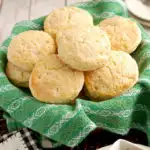
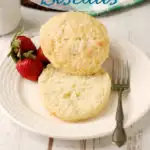

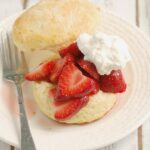
A great shortcake starts with the right biscuit — and not just any biscuit will do. My shortcake biscuit recipe is specifically designed for the job: a little sweeter, a little lighter, and made to soak up all that fruit syrup. Once you try these, you’ll never go back to a plain biscuit for shortcake.
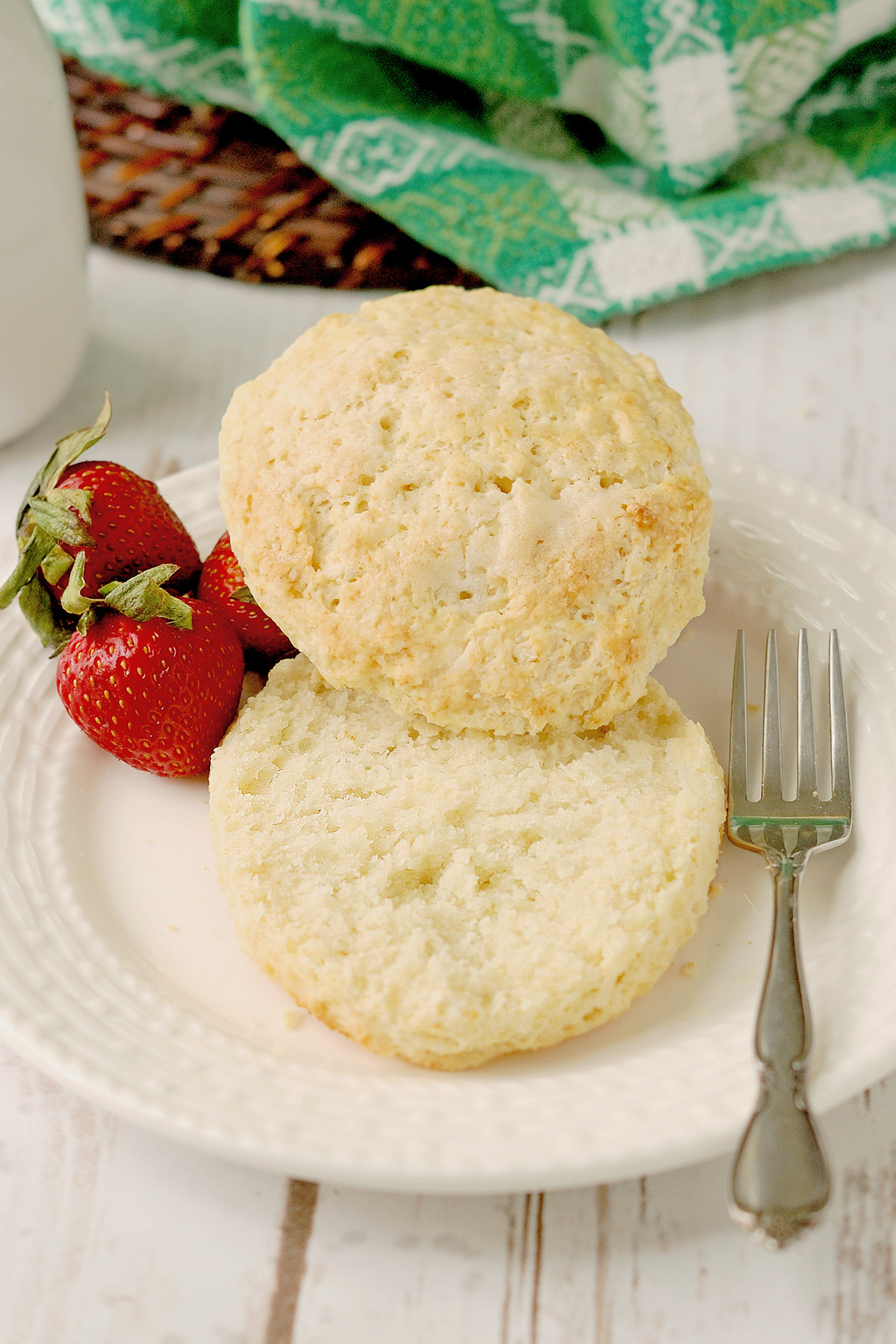
Table of contents
What is a Shortcake?
Despite the name, a true shortcake is more biscuit than cake. The clue is in the word “short.”
“Short” refers to a specific type of dough where fat is cut into the flour. The lumps of fat interfere with gluten development, creating a pastry that is crumbly and tender rather than chewy or stretchy. Shortbread cookies, pie dough, and shortcrust pastry are all “short” doughs made the same way.
So a shortcake is really just a sweetened, enriched biscuit — which is exactly what makes it so good with fruit and cream.
What Makes a Shortcake Biscuit Different from a Regular Biscuit?
A standard buttermilk biscuit is savory, flaky, and functions as a bread. A shortcake biscuit has a different job. Here’s how I adapted my flaky biscuit recipe specifically for shortcake:
- More sugar — enough to taste like dessert, not a dinner roll.
- More baking powder — for a lighter, more open crumb that drinks up fruit juices.
- Eggs in the dough — regular biscuits don’t have eggs. The eggs give shortcake biscuits a slightly cakey, more tender texture.
- No folding — flaky biscuits are folded repeatedly to build layers. Shortcake biscuits skip that step, keeping the crumb soft and absorbent rather than flaky and crisp.
The result is a biscuit that’s rich enough to taste like dessert on its own, but light enough to let the fruit shine.
Ingredients
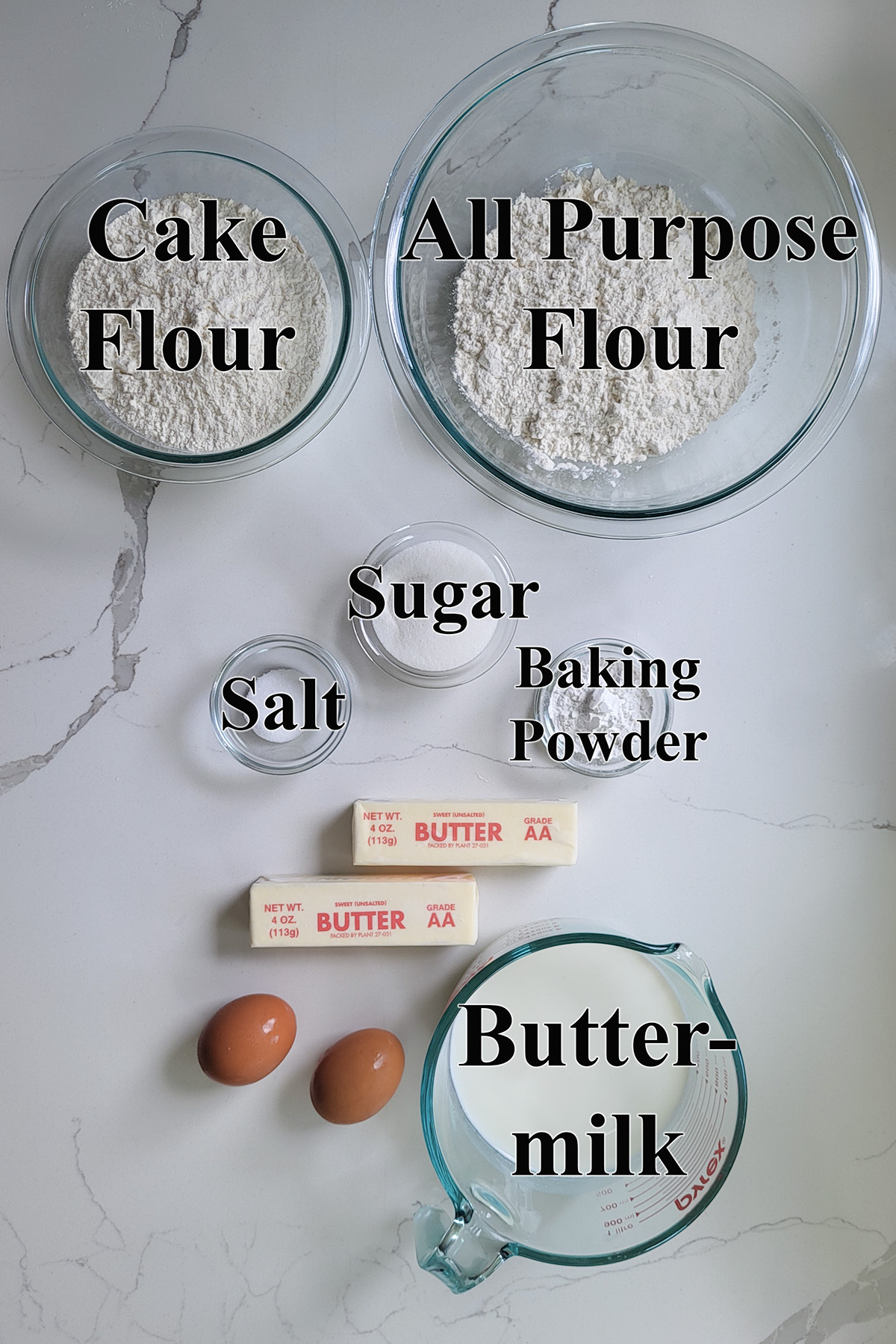
Ingredient Notes
- Buttermilk – Buttermilk powder is the best substitute for fresh buttermilk. In a pinch you can use whole milk thickened with a tablespoon of lemon juice or vinegar.
- AP & Cake Flour – A mixture of medium protein all purpose flour and low protein cake flour makes a balanced biscuit with a soft crumb that can still hold its shape in the oven.
- Unsalted Butter – If you use salted butter reduce or eliminate the salt listed in the recipe.
Step by Step Photos
Here’s what the recipe process looks like at each stage. Refer to the recipe card below for measurements and exact instructions.
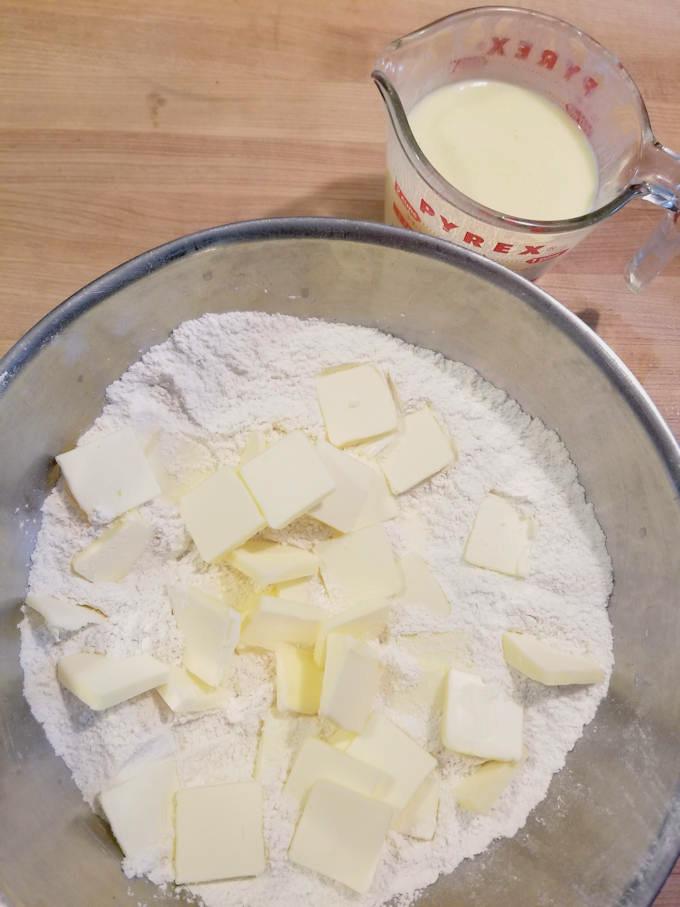
- Mix together the dry ingredients, then work in the cold butter. You’re looking for visible lumps of butter throughout — that’s what keeps the dough crumbly and short.
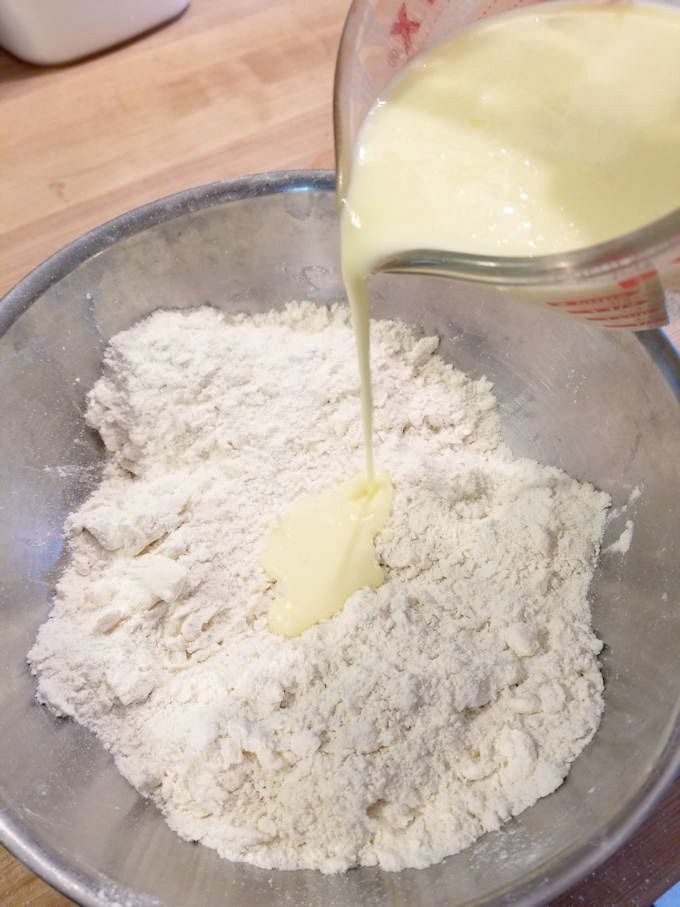
- Add the buttermilk and eggs, then mix and briefly knead just until the dough comes together. Don’t overwork it.
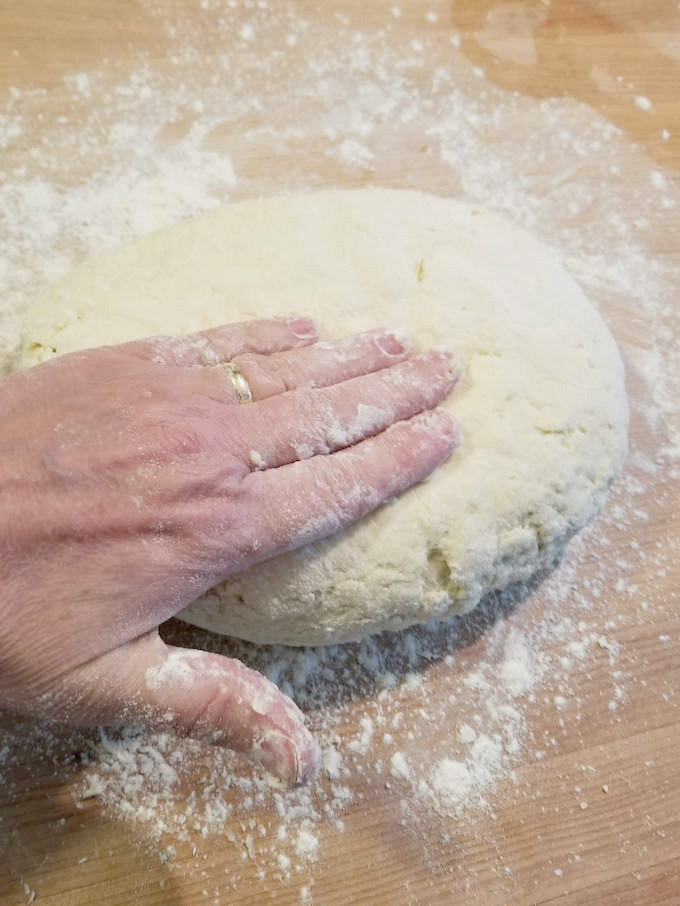
- No rolling pin needed. Pat the dough by hand to about ¾” thick — gentler handling means a more tender biscuit.
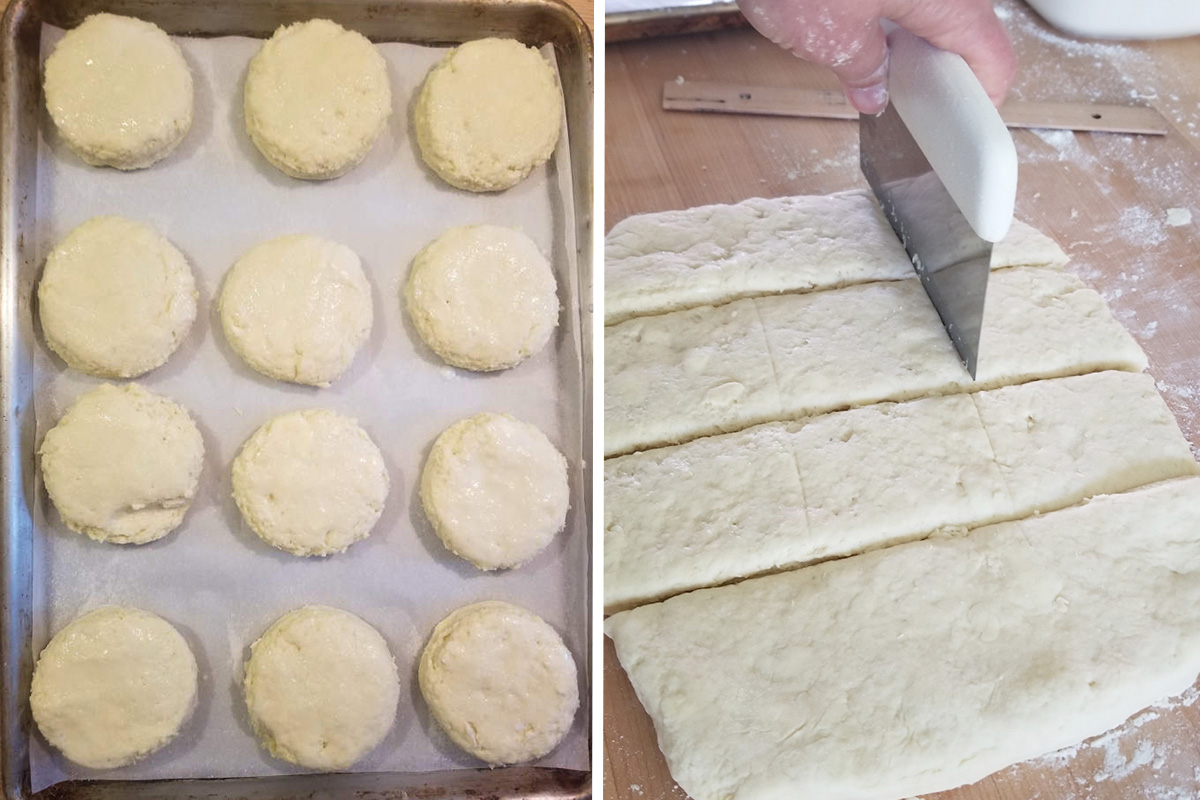
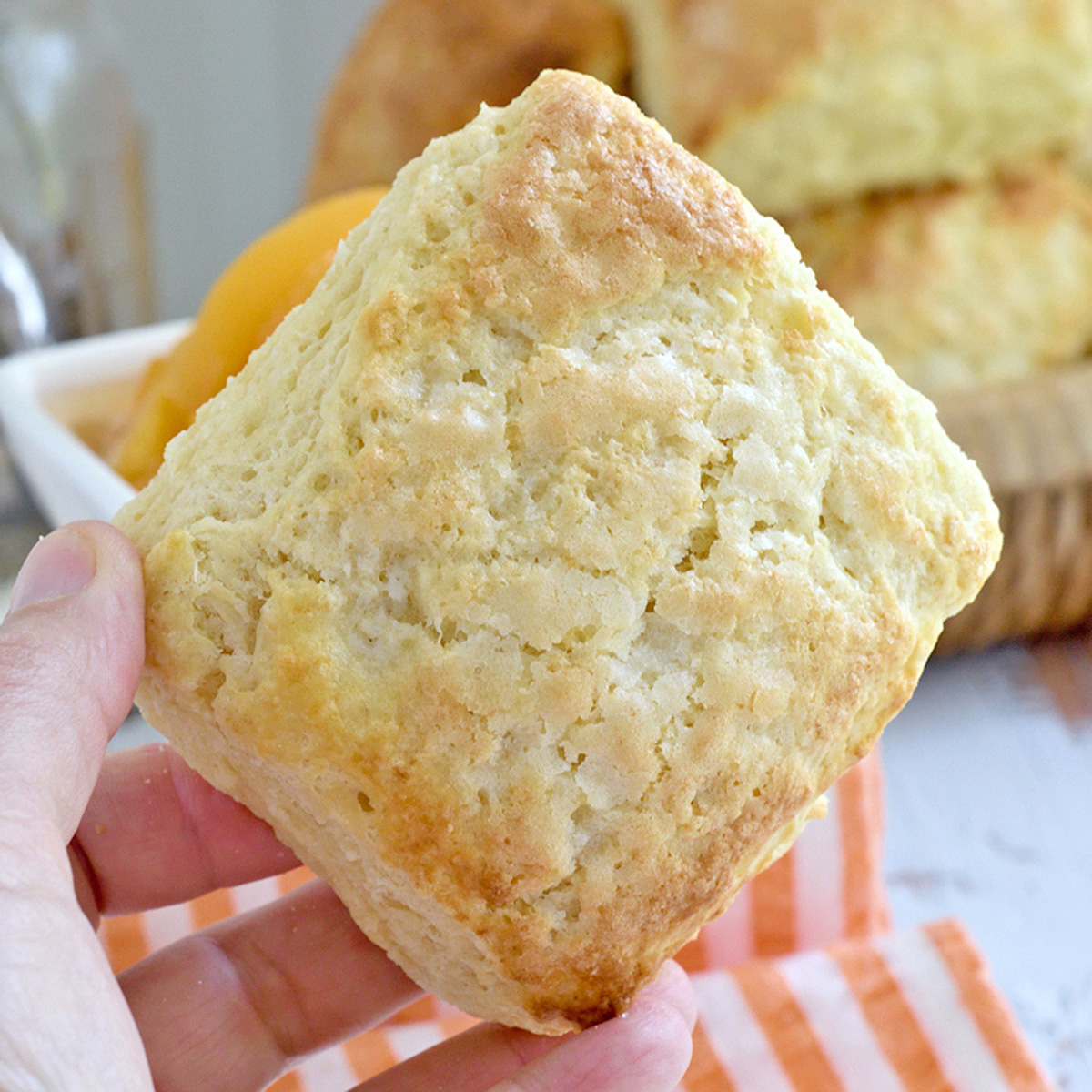
- Use a biscuit cutter for rounds, or pat the dough into a rectangle and cut into squares. Both work equally well.
- Brush with buttermilk and sprinkle with granulated sugar before baking. The biscuits will spread slightly in the oven. Bake until lightly browned and just set in the center.
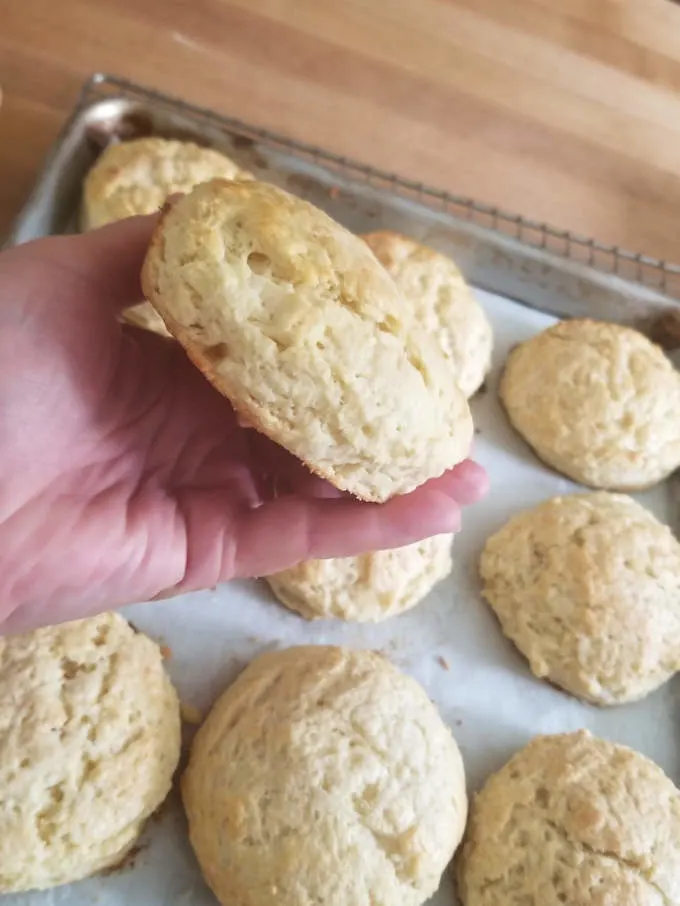
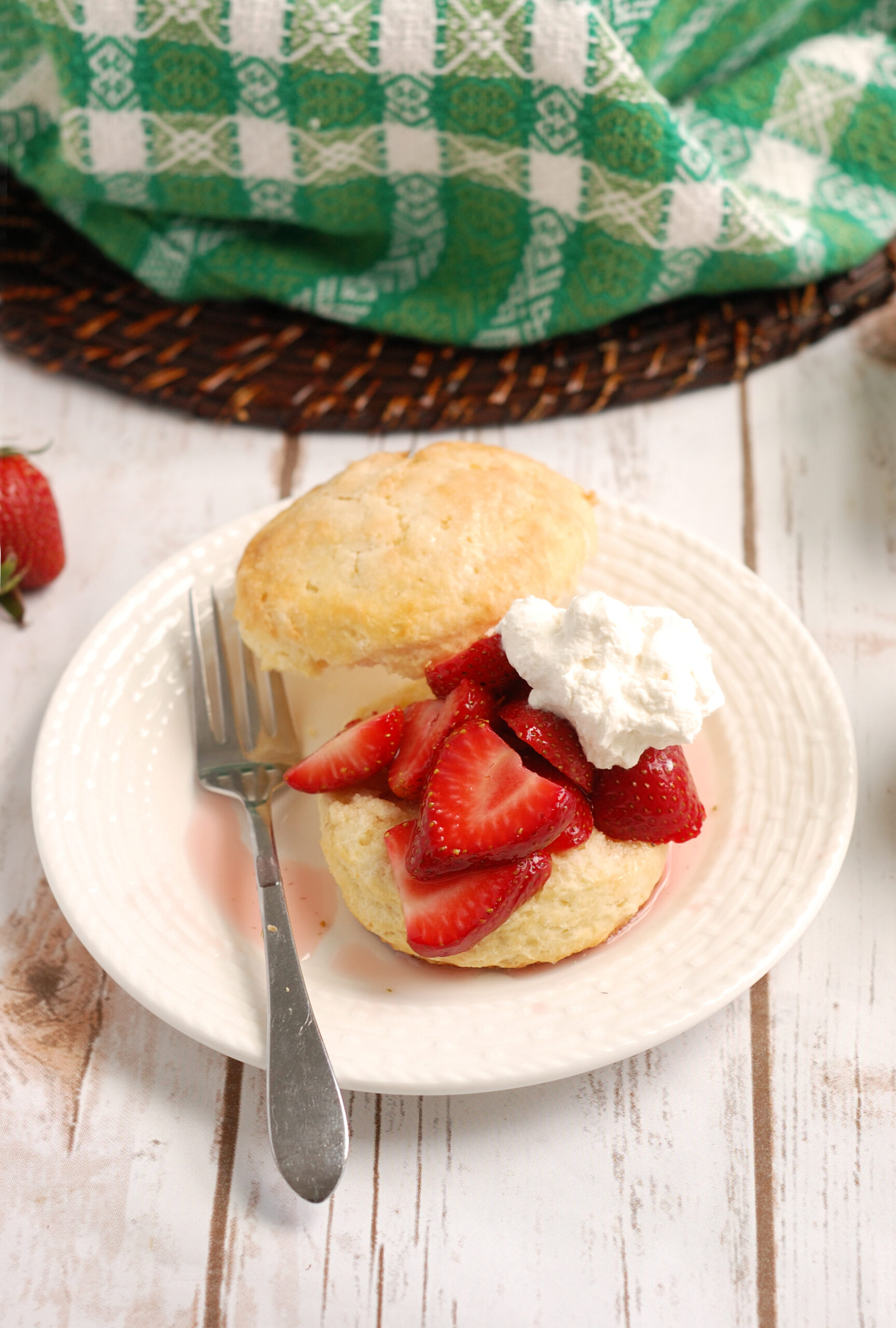
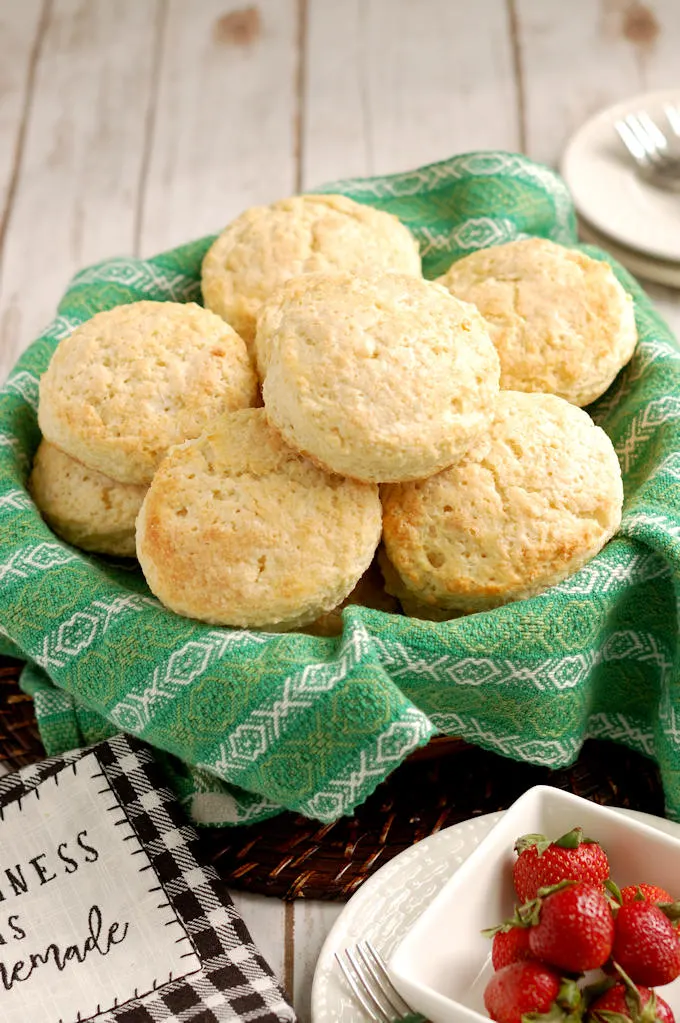
- The finished biscuits are light with an open crumb — exactly what you want for soaking up fruit juices.
What is the Secret to a Perfect Shortcake Biscuit?
Cold butter and a light hand. Let me show you what happens when you get it wrong — because I did, and it’s instructive.
Trying to work ahead for the next morning, I mixed the dry ingredients the night before, sprinkled cold butter cubes over the mix, covered the bowl, and left it at room temperature overnight.
I mixed the dough first thing in the morning. Because the butter softened overnight, it broke down instead of staying in distinct lumps. The butter completely mixed into, and coated, the flour. The coated flour couldn’t properly absorb the buttermilk and eggs. I saw right away that the dough was too wet.
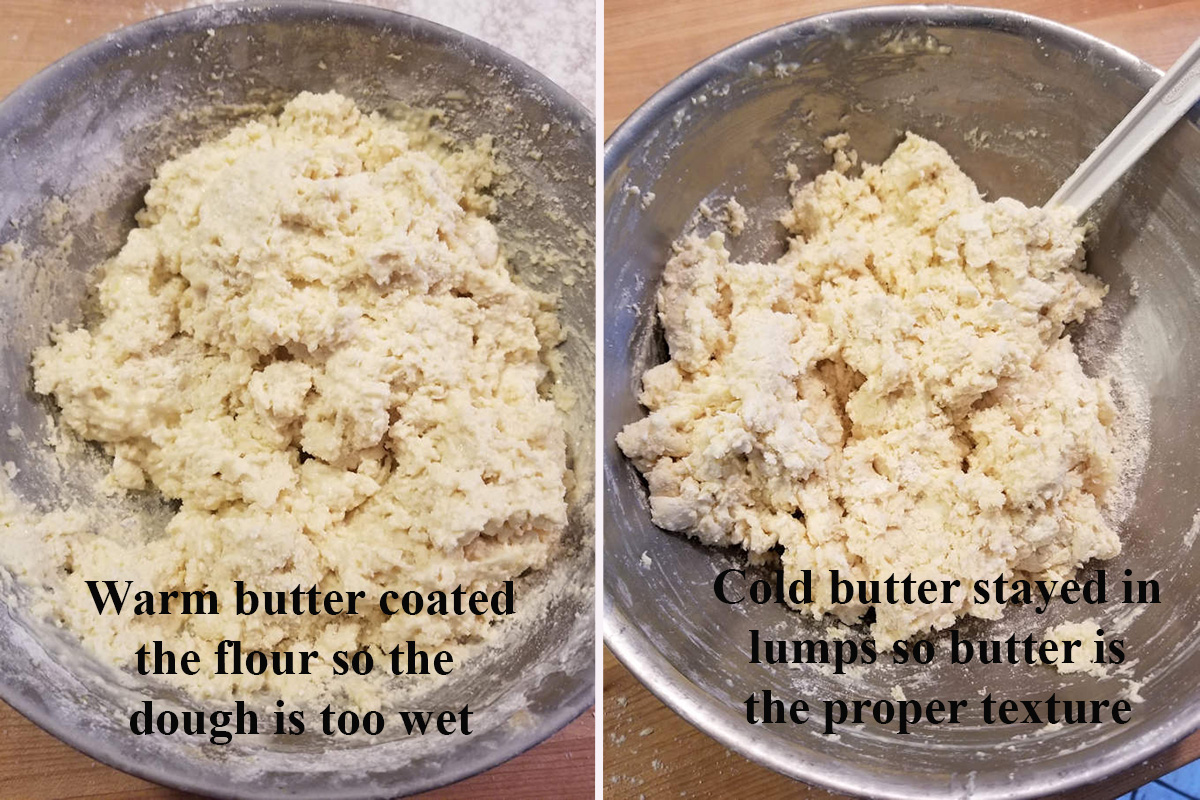
The biscuits spread badly in the oven — you can see in the photos how flat they turned out. I tried to rescue the scraps by kneading in more flour, but overcorrected — too much flour, too much kneading, and the second batch rose too tall with a tight, dense crumb.
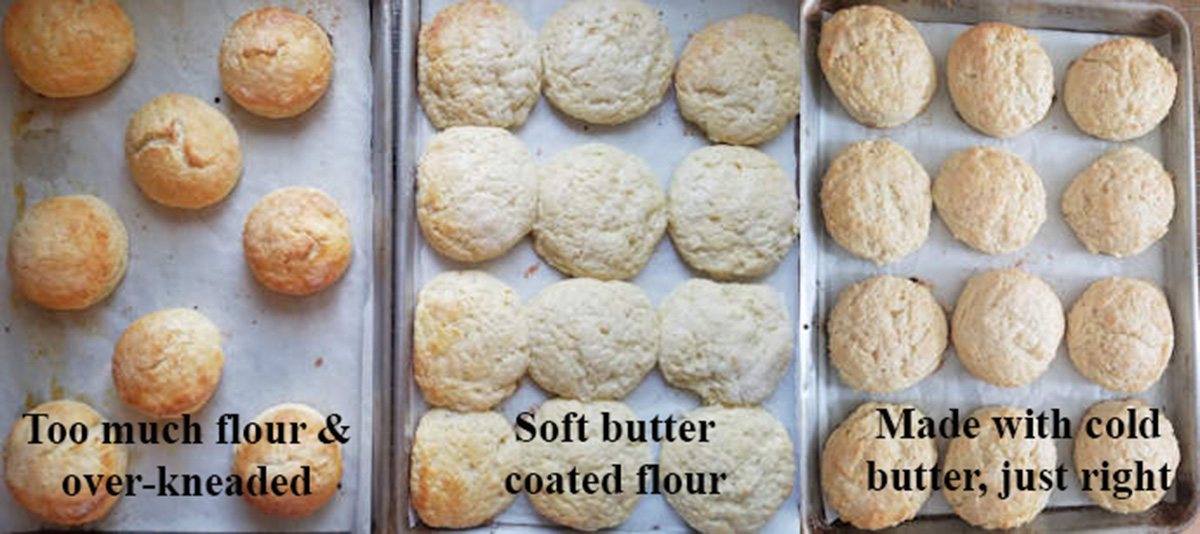
The third batch, made properly with cold butter and minimal kneading, was just right.
The lesson: how you mix a recipe matters as much as what’s in it. Cold butter, straight from the refrigerator. Mix until just combined. 30 years of professional baking doesn’t make you immune to this one.
Shortcake Biscuit Storage
Shortcake biscuits are best the day they’re baked. If you need to make them ahead, here are your options:
- Prep Ahead: Whisk together the dry ingredients and hold them at room temperature. Cube the butter and hold it in the refrigerator. Mix the buttermilk and eggs and hold in the refrigerator. Mix and bake the dough when you’re ready.
- Cut & Hold Briefly: Once the biscuits are cut and on the tray, you can hold the covered tray in the refrigerator for several hours before baking.
- Freezer: Freeze the baked biscuits for up to 3 months. The day of serving, rewarm in a low oven to revive the texture. This is the best make-ahead strategy for parties.
Now Build Your Shortcake
These biscuits are the foundation for any seasonal shortcake. Here’s the full collection:
- Strawberry Shortcake — the classic. Macerated berries, real whipped cream, done.
- Peach Shortcake — peak summer. Use ripe, fragrant peaches and let them macerate just like the strawberries.
- Rhubarb Shortcake — tart and a little unexpected. One of my favorites.
- Blueberry & Cherry Shortcake — a beautiful midsummer combination.
- Chocolate Shortcake Biscuits — for the chocoholics. Chocolate chips in the dough, chocolate whipped cream on top.
If you love this recipe as much as I do, I’d really appreciate a star rating and a quick comment. Ratings and comments help my recipes show in search results. Thanks!
Shortcake Biscuit Recipe
Ingredients
- 10 oz all-purpose flour (2 cups, see note)
- 9 oz cake flour (2 cups)
- 1 teaspoon table salt
- 2 tablespoons baking powder
- 2 oz granulated sugar (¼ cup)
- 8 oz unsalted butter (cold, cut into ¼" slices)
- 2 large eggs
- 12 oz buttermilk
- Extra buttermilk and sugar for topping
Instructions
- Preheat the oven to 375 °F. Line a ½ sheet pan with parchment paper or a silicone baking mat.
- Whisk together 10 oz all-purpose flour, 9 oz cake flour, 1 teaspoon table salt, 2 tablespoons baking powder, 2 oz granulated sugar. Toss 8 oz unsalted butter slices into the flour.
- Use your fingers to work the butter into the flour until the pieces are no larger than a pea.
- Whisk 2 large eggs into 12 oz buttermilk. Pour the buttermilk into flour mixture. Toss the mixture with a spoon or spatula until it begins for form a dough. Turn the dough out onto a well floured surface and lightly knead about 5-10 times to bring the dough together. This is a very wet dough so keep your hands well floured and use a light touch while kneading. You don't want to knock all the air out of the dough.
- Use your hands to pat dough to 3/4" thick. Cut rounds with a 3" biscuit cutter. Gently knead together the scraps to cut remaining biscuits. Place the rounds on the sheet pan. For square shortcakes, pat the dough to a 3/4" thick rectangle and cut the dough into 12 squares. Brush with buttermilk and sprinkle with granulated sugar. Bake until golden brown, 12 to 14 minutes (see note).
Would you like to save this recipe?


As an Amazon Associate and member of other affiliate programs, I earn from qualifying purchases.
Notes
This is a great recipe. We have a big family gathering at the 4th of July with over 20 people in attendance. This year I made enough Shortcakes for both Peach and Strawberry deserts.
It was a great hit. Everyone made their own and was able to choose their fruit. Both got great reviews.
The recipe was easy to follow and put together. I echo Meg’s comments on how well you organize and describe the steps, making the process almost foolproof. Even I got it right.
Thank you.
Thanks!
Thank you for your clear no nonsense instructions. What I mean is, every direction and instruction you provide is not attached to some long winded irrelevant story, but is concise and directly related to the point at hand. So, thank you for sharing your knowledge and vast experience. It is much appreciated, aspecially for the way you provide it.
Wow, thanks!
I made these biscuits for a group of 50 people and got great comments from everybody I have sine made several times for friends using the same recipe for blueberry short cake? Awesome recipe
Hi Eileen:
I rarely have cake flour in the house – will it ruin the biscuits if I use all regular flour?
Thanks,
Carol
For each cup of cake flour you can use ¾ cup of all-purpose flour mixed with 2 tablespoons of corn starch. So for this recipe use a total of 3 1/2 cups ap flour plus 1/4 cup of cornstarch.
why do you use cake flour also. and not just regular flour?
Using a combination of AP flour and Cake flour mimics “pastry flour”. That is slightly softer than AP flour for a tender biscuit, but it has a little more gluten than soft cake flour so the biscuits can rise nicely in the oven without falling flat.
To mix a combination of cake flour and all purpose flour what would be the ideal ratio?
Thank you
yvonne
The recipe has half all purpose and half cake flour.