
Sourdough Sandwich Bread


Sourdough Sandwich Bread has a soft crumb and neat, square slices you can depend on for sandwiches, toast, and everyday use.
Clear timing cues, pan-specific shaping, and visual proofing tips make this loaf predictable and reliable — even for home bakers.
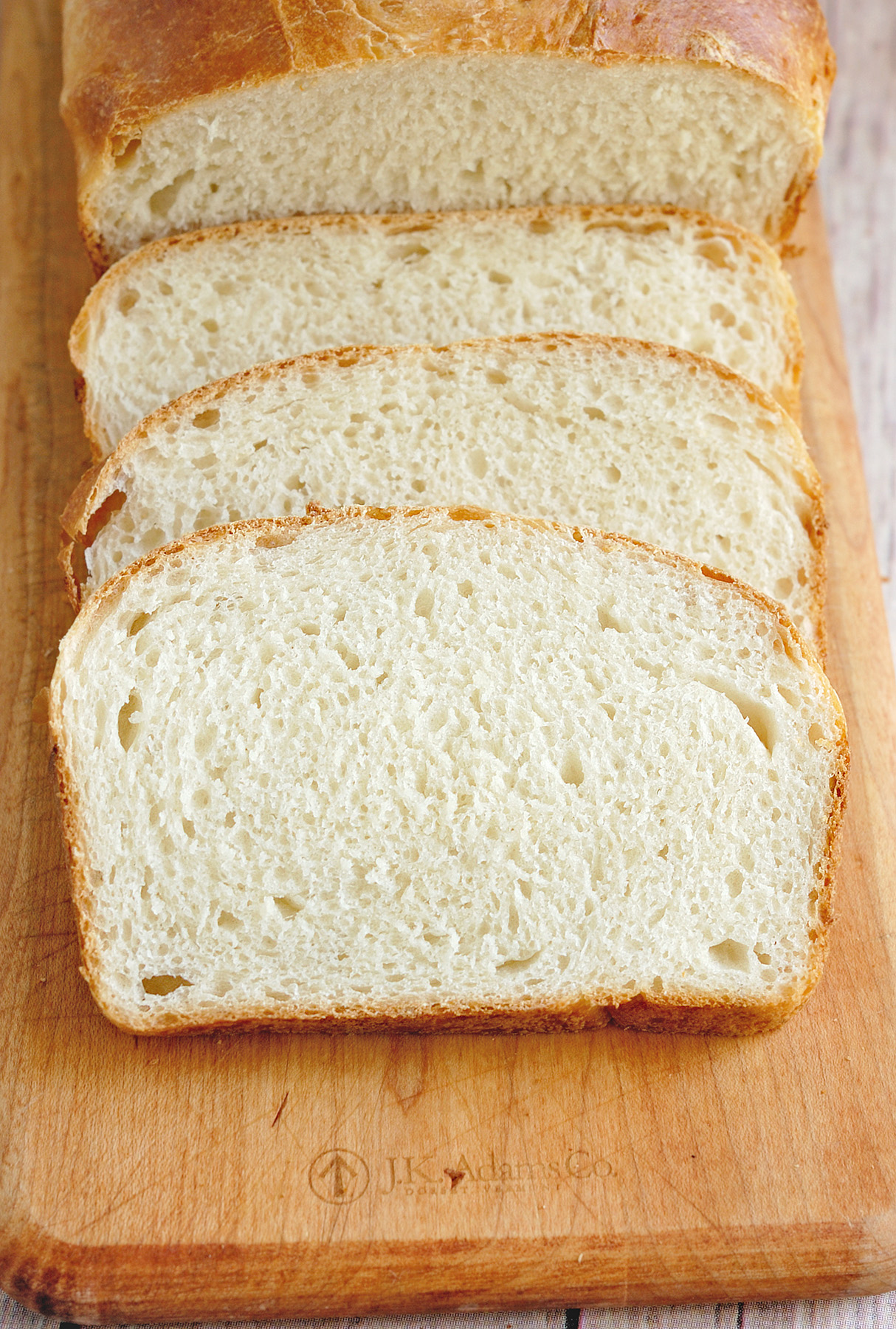
Table of contents
Why This Sourdough Works for Sandwich Bread
This sourdough sandwich bread has a soft, tender crumb, a mild sourdough flavor, and a thin, flexible crust — qualities that make it especially well suited for sandwiches.
Unlike artisan sourdough loaves, this recipe is designed specifically for baking in a loaf pan, producing even slices that hold fillings well — from PB&J to BLTs and grilled sandwiches.
Why Sandwich Sourdough Has a Tighter Crumb
An open, irregular crumb is a hallmark of artisan sourdough, but it’s not ideal for sandwich bread. A slightly tighter crumb creates structure, slices cleanly, and holds fillings without tearing or leaking.
This recipe balances softness with strength to produce even slices meant for everyday sandwiches rather than rustic presentation.
Soft Crumb and Even Slices
This loaf is formulated for structure and softness rather than an open, rustic crumb. Moderate hydration, pan shaping, and a small amount of fat help the bread rise evenly and slice cleanly without crumbling.
Mild Sourdough Flavor That Works With Fillings
Milk, butter, and a small amount of sugar soften the crumb and balance the flavor, keeping the sourdough tang present but not overpowering. The result is a bread that complements sandwich fillings rather than competing with them.
Although the recipe takes about 8–12 hours from start to finish, most of that time is hands-off.
For added flexibility, the dough can ferment overnight in the refrigerator. A long, cool rise improves both flavor and texture and makes the schedule easier to manage.
Ingredients
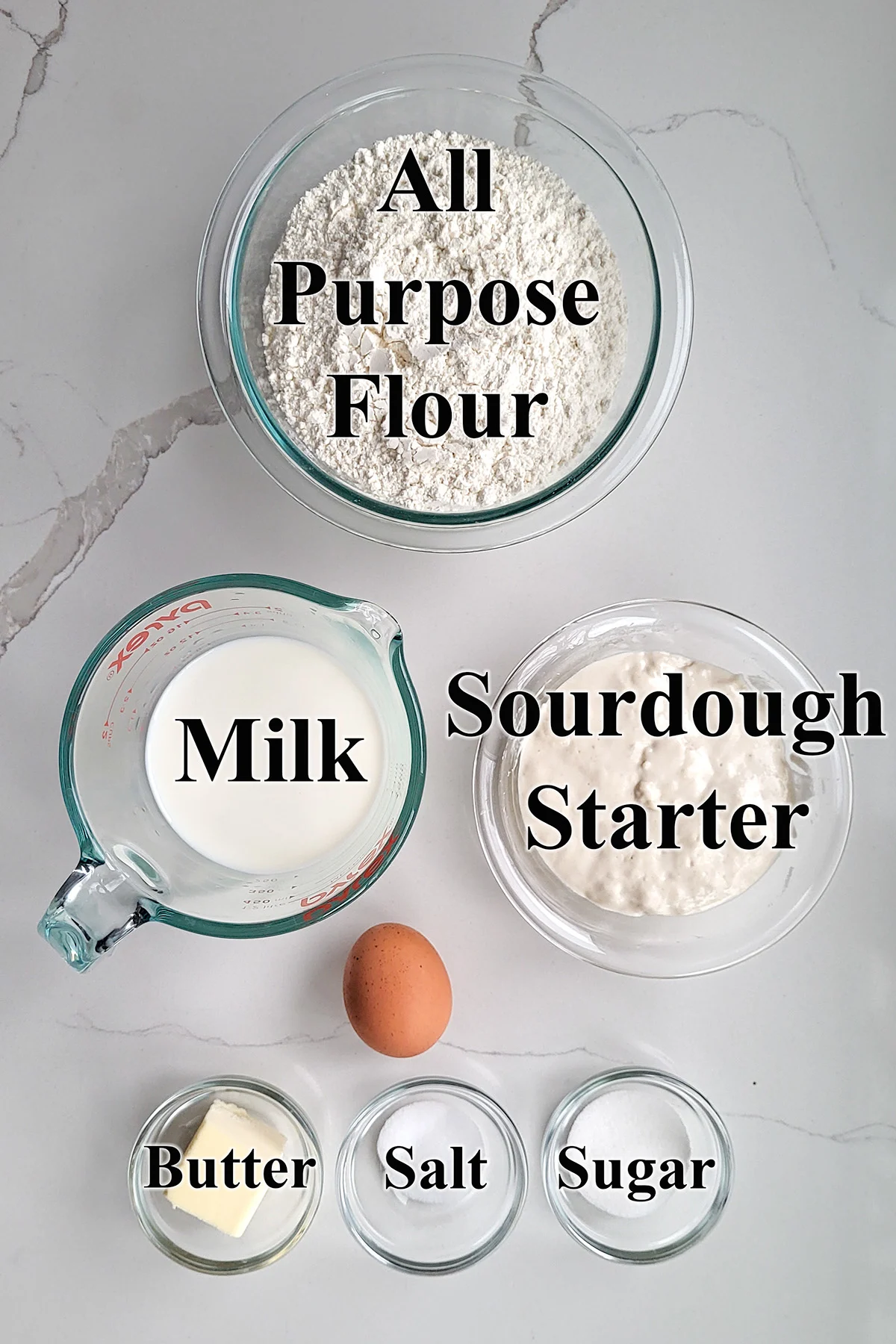
Ingredient Notes
- Sourdough Starter – This recipe was developed using a 100% hydration starter. If your starter is at a different hydration level, you will need to adjust the flour or liquid slightly.
- All-Purpose Flour – Medium-protein all-purpose flour creates a soft crumb while still developing enough gluten to support a tall loaf.
- Milk – Scalding the milk denatures proteins that can interfere with gluten development, resulting in better structure. The milkfat softens the crumb.
- Butter – A small amount of fat tenderizes the crumb and keeps the bread soft.
- Salt – Essential for flavor.
- Sugar – Enhances browning and contributes to a soft, lightly sweet crumb.
How to Make Sourdough Sandwich Bread (Step-by-Step)
Mixing the Dough and Bulk Fermentation
This stage builds structure and flavor in the dough and sets the foundation for a good rise.
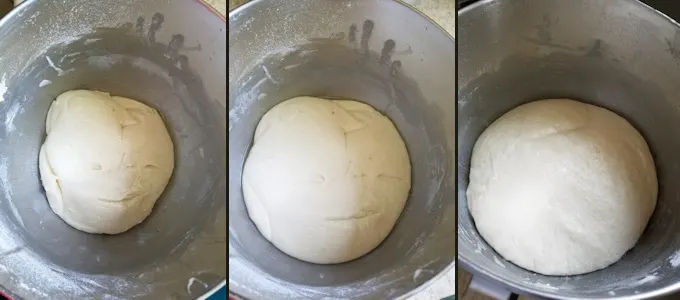
- Mix the dough and set it aside to ferment.
- As fermentation progresses, the dough will rise, become more elastic, and show visible signs of activity. Use visual cues — not just the clock — to judge readiness.
- After bulk fermentation, you can either shape and bake the loaf the same day or refrigerate the dough overnight. A long, cool rest in the refrigerator improves flavor and dough handling.
Shaping the Dough for a Sandwich Loaf
Shaping the dough forms the structure and form for the final loaf.
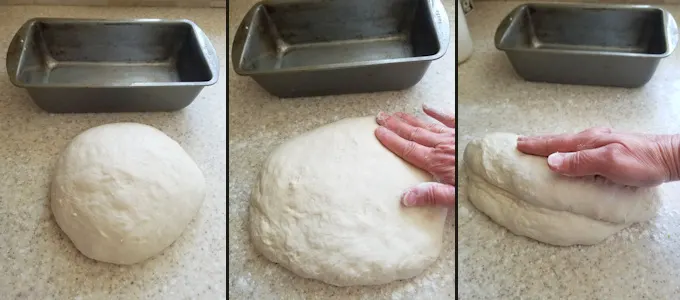
- Turn the dough out onto a lightly floured surface.
- Without kneading out the air, gently form the dough into a rectangle. Roll it into a tight log and place it seam-side down in a lightly greased loaf pan.
- Proper shaping helps the loaf rise evenly and produces neat slices ideal for sandwiches.
Final Proof: When the Dough Is Ready to Bake
The proofing stage forms the crumb and aeration of the final loaf.
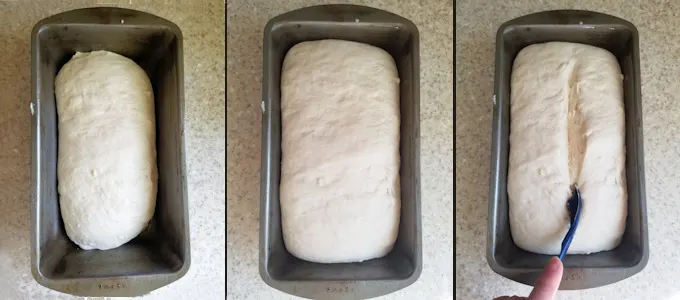
- Cover the pan and set the loaf aside to rise.
- The dough should expand to nearly fill the pan and feel light and aerated. When gently pressed, the dough should slowly spring back.
- Just before baking, slash the top of the loaf to encourage controlled expansion in the oven.
Baking for a Soft Crust and Tender Crumb
Baking the dough in a loaf pan provides structure and support, which helps the bread rise evenly and develop a finer crumb than free-form loaves.
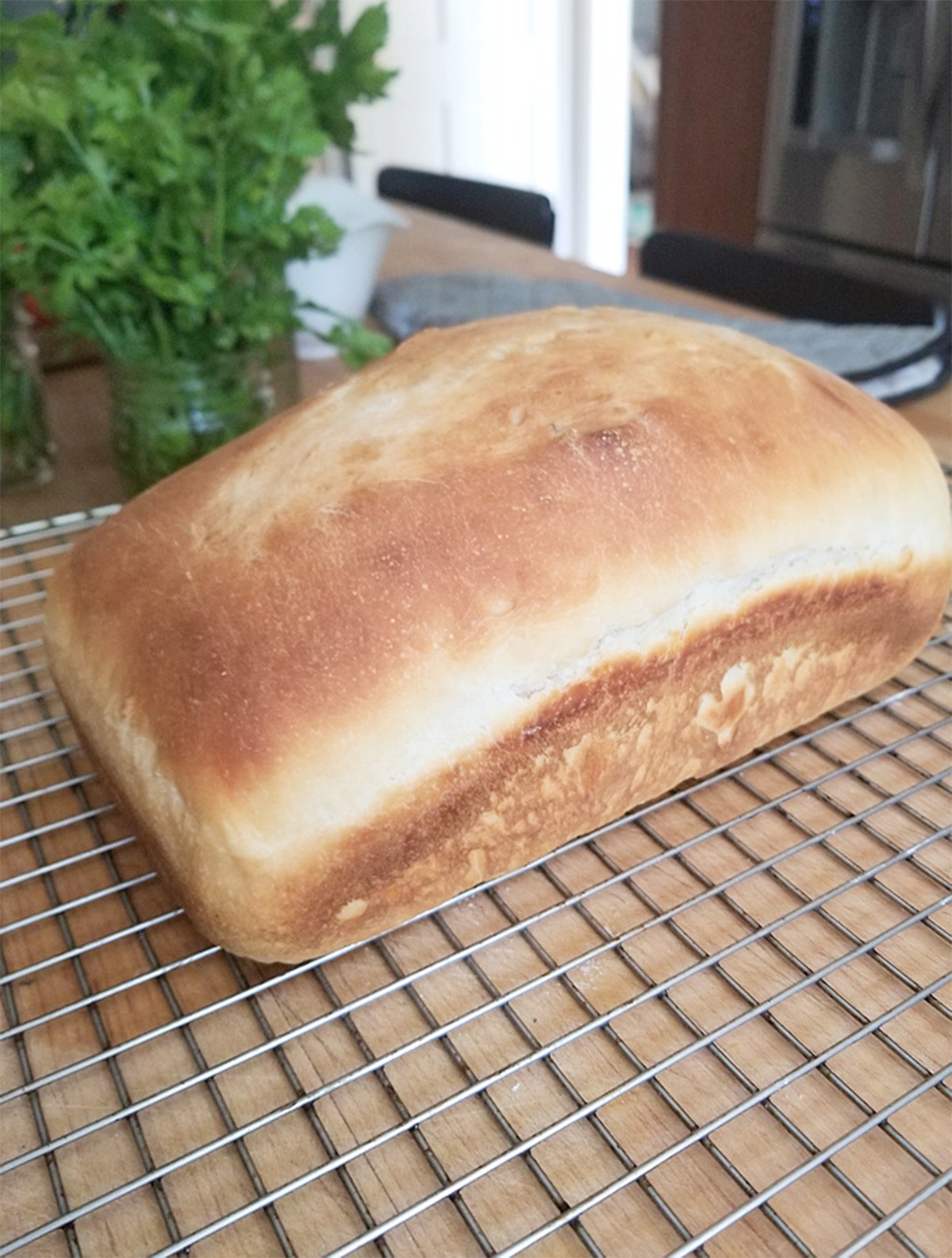
- Brush the loaf with egg wash and bake until the internal temperature reaches 200°F (93°C).
- Allow the bread to cool completely before slicing to avoid a gummy crumb.
Timeline Options (Same-Day or Overnight)
If your starter needs feeding, do so the night before or early in the morning on baking day.
Overnight option:
Mix the dough in the afternoon, allow it to ferment for 3–4 hours, then refrigerate overnight. In the morning, shape the loaf, place it in the pan, and allow it to come to room temperature and rise before baking.
To speed things up, you can briefly warm the oven, turn it off, and let the pan rest inside until the dough warms.
Same-day option:
Feed the starter the night before so it’s active in the morning. Start the dough early in the day and plan to bake by late afternoon or early evening.
Storage, Slicing, and Freezing
Sourdough sandwich bread keeps at room temperature for 2–3 days.
The loaf can be frozen whole or sliced for up to one month. Thaw at room temperature before using.
Troubleshooting Sourdough Sandwich Bread
Why Is My Loaf Dense or Heavy?
A dense loaf is usually the result of insufficient fermentation.
- The starter wasn’t fully active when the dough was mixed
- The dough didn’t ferment long enough during bulk fermentation
- The loaf was under-proofed before baking
Look for visible rise and a light, aerated feel in the dough rather than relying only on the clock.visible rise and a light, aerated feel in the dough rather than relying only on the clock.
Why Didn’t My Bread Rise Evenly in the Pan?
Uneven rise is most often caused by shaping or scoring issues.
- The dough wasn’t shaped tightly enough before going into the pan
- The seam wasn’t placed securely on the bottom
- The loaf wasn’t scored, or wasn’t scored deeply enough, before baking
Proper shaping creates internal structure, and scoring allows the loaf to expand evenly in the oven.tes internal structure, and scoring allows the loaf to expand evenly in the oven.
Why Is My Crumb Gummy?
Gummy crumb is usually caused by cutting the loaf too soon or by under-baking.
- The bread was sliced before it was fully cooled
- The loaf was under-proofed
- The bread was removed from the oven before it was fully baked
For best texture, allow the loaf to cool completely and bake until the internal temperature reaches about 200°F (93°C).°C).
Why Is My Bread Too Sour?
Sourdough flavor is strongly influenced by fermentation time, temperature, and starter hydration.
- Longer or cooler fermentation encourages the production of acetic acid
- A stiffer (lower-hydration) starter can increase sourness
For a milder loaf, shorten the fermentation time or keep the dough slightly warmer. For more detail on how fermentation affects flavor, see my Sourdough Baking Guide.
Frequently Asked Questions
Yes, but expect some changes in texture and hydration.
Whole wheat flour absorbs more liquid than all-purpose flour and may produce a slightly denser crumb. For best results, start by replacing up to 25% of the all-purpose flour with whole wheat flour. You may need to add a small amount of extra liquid to achieve the same dough consistency. Using a higher percentage of whole wheat flour will result in a firmer loaf with less rise and a more pronounced wheat flavor.
If you’re looking for a loaf designed specifically for 100% whole wheat flour, try my sourdough whole wheat bread recipe.
Yes. Most unsweetened non-dairy milks can be used in place of regular milk.
Non-dairy milk will still soften the crumb, but because it does not contain the same proteins as dairy milk, the texture may be slightly different. Choose an unsweetened, unflavored variety for best results.
You can substitute non-dairy milk in equal amounts without changing the rest of the recipe.
I know you hate to throw away that sourdough discard. Check out these recipes that use sourdough discard.
More Sourdough Sandwich Breads
- Whole Wheat Sourdough Bread
- Sourdough Hoagie Rolls
- Sourdough Multigrain Bread
- Sourdough Oatmeal Bread
- Sourdough Rye Bread
If you love this recipe as much as I do, I’d really appreciate a star rating and a quick comment. Ratings and comments help my recipes show in search results. Thanks!

Sourdough Sandwich Bread Recipe
Ingredients
- 8 oz whole milk (1 cup)
- 1 oz unsalted butter
- 8 oz active sourdough starter (1 cup, 100% hydration)
- ½ oz granulated sugar (1 tablespoon)
- 1 ½ teaspoons salt
- 12 ½ oz all purpose flour (2 ½ cups, see note)
- 1 large egg (for egg wash)
Instructions
- Warm 8 oz whole milk in the microwave to until scalding hot (just before it comes to a boil.) Stir 1 oz unsalted butter into the warm milk to melt. Set the milk aside to cool until it's slightly warmer than body temp.
- In a mixer bowl, combine the warm milk with 8 oz active sourdough starter, ½ oz granulated sugar and 1 ½ teaspoons salt and stir to combine. Add 7 ½ oz all purpose flour and stir until the batter looks like thick pancake batter. If using a stand mixer, change to the dough hook.
- With the mixer running, slowly add the remaining 5 oz all purpose flour until the dough gathers on the hook and clears the sides of the bowl. Knead for 5 minutes. If mixing by hand, stir in as much flour as you can then turn the dough out onto a floured surface and knead in the remaining flour.
- Remove the dough from the bowl onto a lightly floured surface. The dough should be soft and slightly sticky. Knead to form a smooth ball.
- Place the dough in an oiled bowl, turning once to coat the dough. Cover the bowl and set it aside at room temperature.
- After 60 minutes uncover the bowl, lift one side of the dough and fold it into the middle of the dough. Repeat with the other three sides of the dough then flip the dough over. You're basically turning the dough inside-out to redistribute the yeast and strengthen the gluten. Cover the bowl and after 60 minutes repeat the procedure.
- Cover the bowl and after 60 minutes fold the dough one more time. By now the dough should be lively, elastic and airy. If the dough is still sluggish give it another hour or two at room temperature. If you want to finish making the bread in the morning return the dough to the bowl, cover tightly and refrigerate overnight. The next morning continue with shaping. Otherwise continue shaping the loaf on the same day.
- Grease a 9"x 5" loaf pan with a very light film of vegetable oil.
- Turn the dough out onto a floured surface and without kneading out the air, gently push the dough to a 9" rectangle. Tightly roll the dough to form a log.
- Set the dough into the pan and cover with a damp kitchen towel or oiled plastic wrap. Set in a warm place and rise until the dough is doubled in size, about 2-3 hours. The exact time will vary based on the ambient temperature and the temperature of your dough.
- Preheat the oven to 350 °F. When the dough is ready, use a sharp knife or razor to cut a 1/2" deep slash down the center of the loaf. Brush the loaf with egg wash.
- Bake about 30-35 minutes until golden brown and the interior temp is 200 °F.
- Cool in the pan for 5 minutes before turning out onto a cooling rack. Finish cooling to room temperature before slicing.
Would you like to save this recipe?


As an Amazon Associate and member of other affiliate programs, I earn from qualifying purchases.
Hello,
I am a bit confused on step 6. I am reading that you rise twice for 30 minutes each, then a 60 minute, then repeat all of step 6 again or just the 60 minutes? Then, after the repeat of step 6 move to step 7 for another 60 min rise? Thanks.
Hi Vicki. There’s a total of 4 folds over 3 hours. Wait 30 min and fold, wait 30 min and fold, wait 60 min and fold, wait 60 min and fold. By the end of 3 hours if the dough is aerated and cohesive you can move on to shaping the bread or put it in the fridge and finish the next day. If after the 3 hours and 4 folds your dough is still sluggish you can give it another hour or two before moving on. The total time can vary quite a bit based on the activity of your starter and/or the temp of the dough and the room.
Thank you… Just starting on my second 60 min. Looking forward to trying this bread.
I feed the starter last night and as per instructions kneaded the dough in morning.. but even after all the folds, the dough is still breaking when I am stretching it. What should I do? Should I throw it all and start again please suggest.
So you mixed the dough in the morning and then left it to ferment, folding every 30-60 minutes? What stage are you at? I’ve never had the dough break apart. What type of flour did you use?
Beautiful bread! I am so excited to have such a great result with my sourdough. Everyone loves this bread . I am making it for the second time today, and doubled the batch both times. Thank you!!
So glad you like it!
I live at 5500 feet above sea level. Any changes to the recipe for high altitude?
Thanks
Great recipe! I made it last week, and my kids went wild for it. I doubled the recipe today, and was worried about dividing dough for loaves, but they came out beautifully. I cut the bulk dough in half with a pastry cutter after 2-ish hours of rise before I shaped the loaves, taking care not to deflate the dough as I cut. I also noticed that for me, mixing by hand, my dough takes closer to 3.5 C of AP flour. Thanks so much!
Thanks for the feedback. Have fun! Are the kids getting their hands in the dough too?
Megan, You’re exactly right! The first time I made this i thought I was going crazy adding extra flour little by little but I’m glad I trusted my gut. It turned out fabulous! Making it for a second time today and it required slightly less flour this time… I suppose it depends on just how active your starter is and how much is “actually” in one cup, contributing to more liquid? At least that’s my theory, but I’m no expert! Either way, I LOVE this recipe… and the Sourdough Pizza Crust. Thanks Eileen, for the quality content!
Just made this and it looks great! Waiting for it to cool before slicing. Is there any special care in storing sourdough bread? Should I keep in refrigerator? What is the shelf life? I know it has no preservatives like store bought. Thanks for any tips!
Melinda
Keep it at room temperature for a day or two, and then freeze. Never refrigerate bread as it actually accelerates the staling process. Freezing stops the process. For all my breads I slice the loaf once it’s cooled, eat what I want that day and the rest of the loaf goes directly into the freezer. Most loaves fit nicely in a 1 gallon freezer bag. I clean and reuse the freezer bags.