Sourdough Cinnamon Raisin Bagels
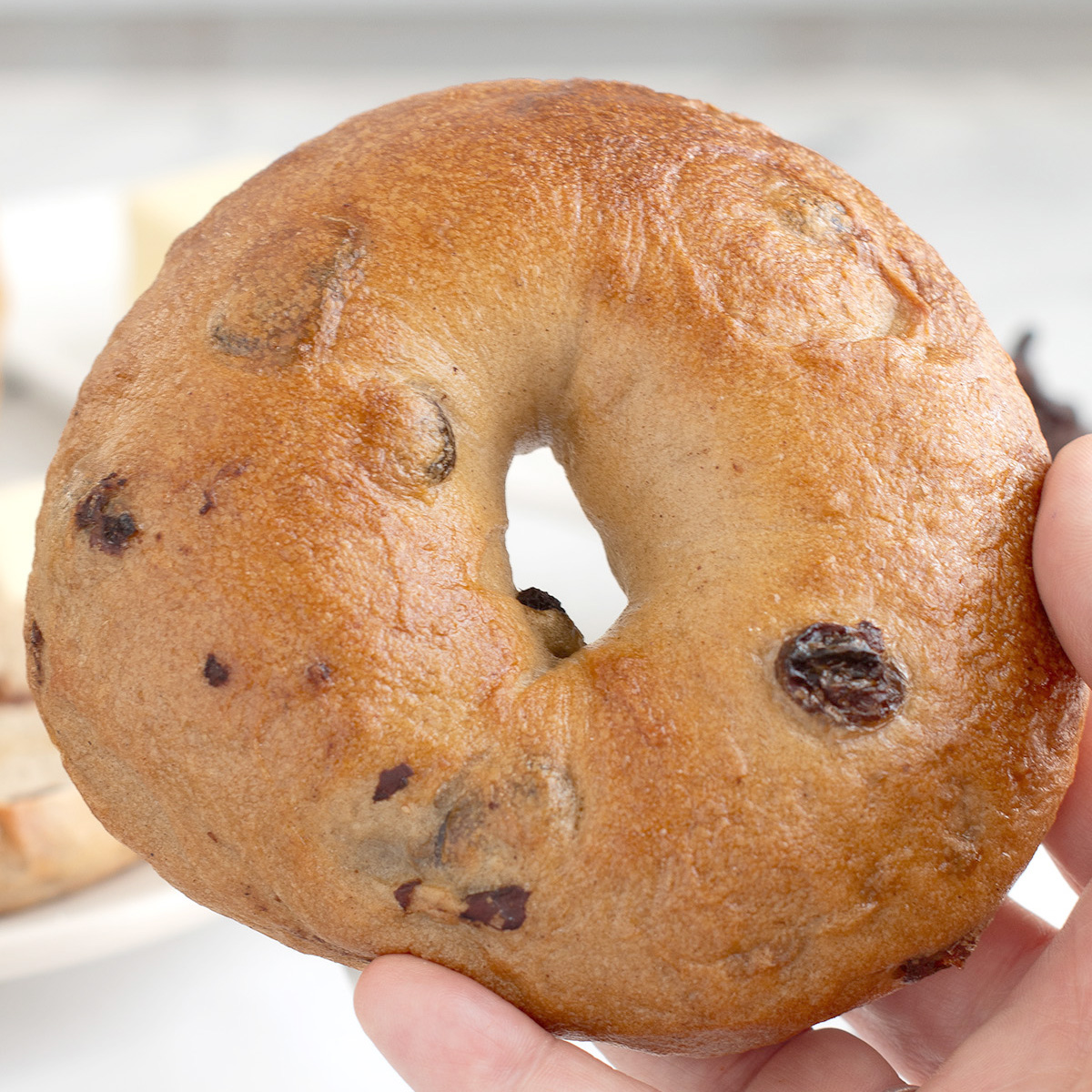
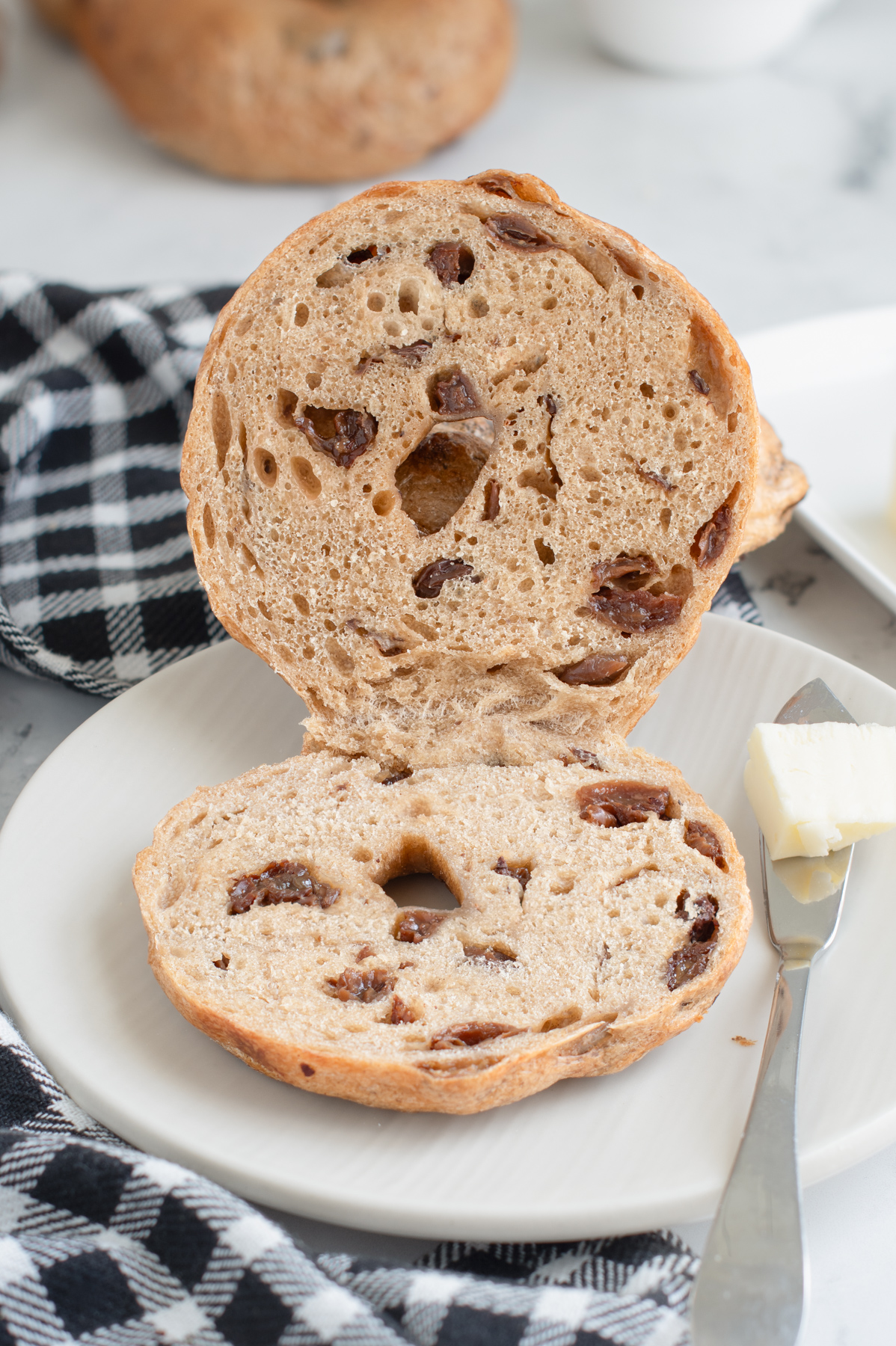
Sourdough Cinnamon Raisin Bagels are chewy, crusty and properly dense New York style bagels. They’ve got an extra depth of flavor thanks to the sourdough starter, plump raisins and a good dose of fragrant cinnamon.
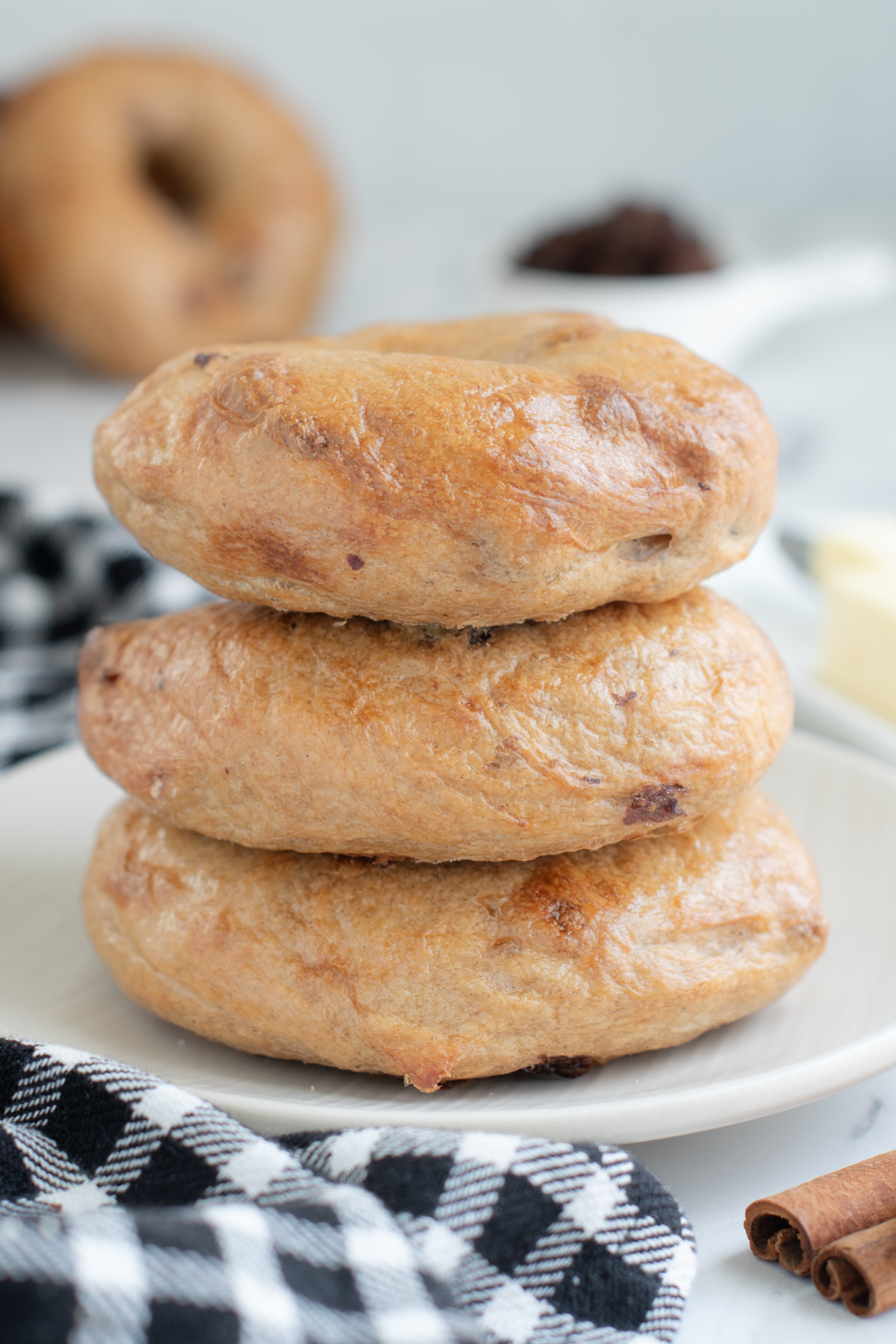
Table of contents
About this recipe
If you carefully follow this recipe you can make a good sourdough cinnamon raisin bagel at home.
Obviously I added cinnamon and raisins to my Sourdough Bagel base recipe, but I also thought carefully about how the ingredients are put together.
After the dough is mixed and set aside for bulk fermentation, we soak the raisins in boiling water. This plumps the raisins so they meld into the bagels for a soft and luscious bite.
Homemade sourdough bagels freeze beautifully. If you set aside a little time over a weekend, you can stock up the freezer for weeks to come.
About My Sourdough Approach
These recipes follow the same sourdough process I use across my site. For starter care, fermentation timing, and troubleshooting, see my Sourdough Baking Guide.
Ingredients
Ingredient Notes
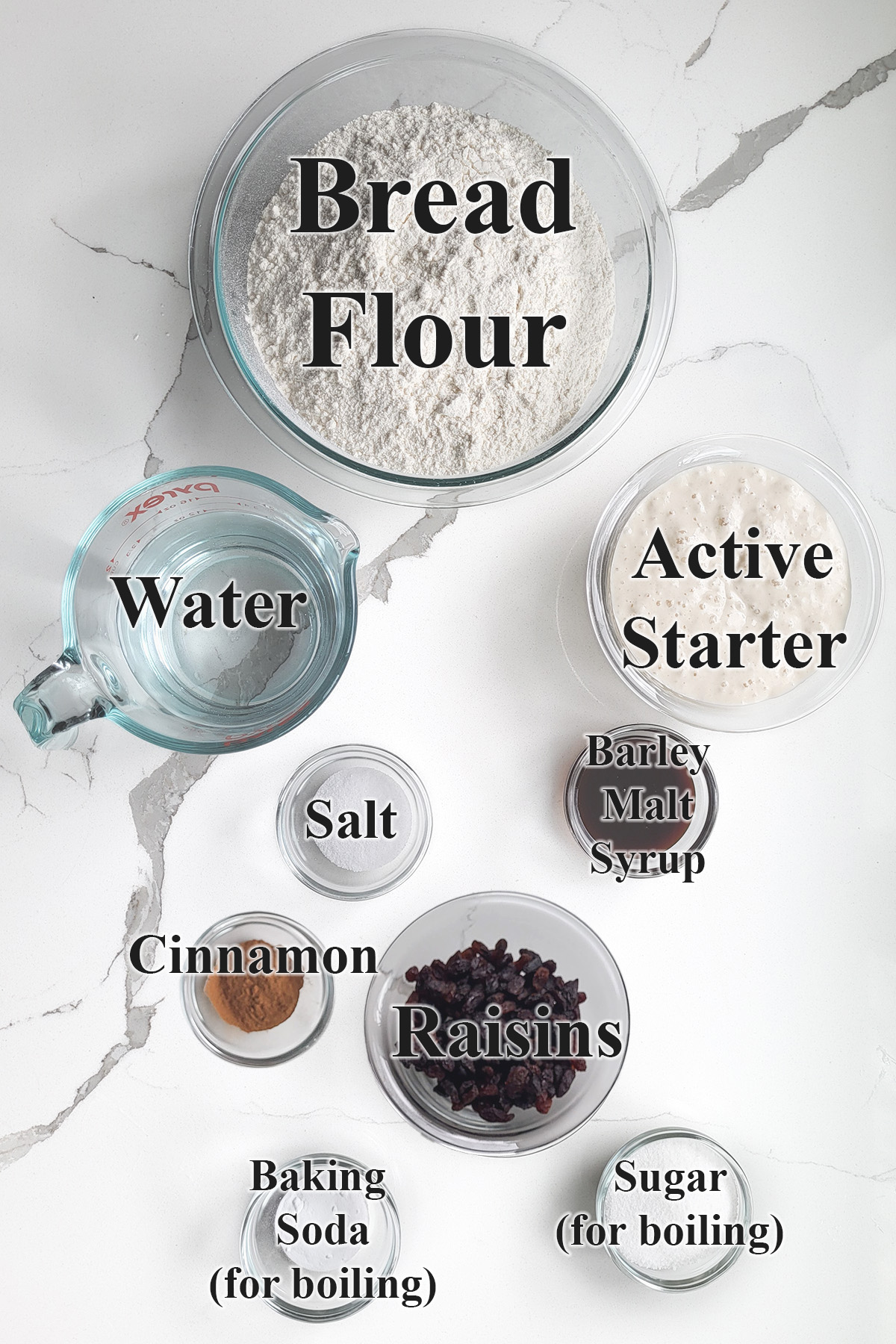
- Bread Flour – Bagels should have a very chewy crumb from a strong gluten network in the dough. High protein bread flour develops plenty of gluten.
- Sourdough Starter – The recipe was developed using 100% hydration starter. You will need to adjust the liquid or flour in the recipe if your starter isn’t at 100% hydration. Your starter should be fed and active when you mix the bagel dough.
- Barley Malt Syrup – Adds a traditional slightly sweet note to the dough. You can substitute honey or a combination or honey and molasses for the barley malt syrup.
- Cinnamon – Ground cinnamon adds a warm spice flavor to the bagels. The natural anti-microbial properties of cinnamon can slow down bulk fermentation. See the info box below for more information.
- Raisins – The raisins are soaked in boiling water to plump them before adding them to the dough. Dark or light raisins can be used.
- Baking Soda & Sugar – For boiling the bagels. The boiling process creates the specific shiny and chewy bagel crust.
Process Photos
Here’s what the recipe process looks like at each stage. Refer to the recipe card below for measurements and exact instructions.
Mixing The Dough
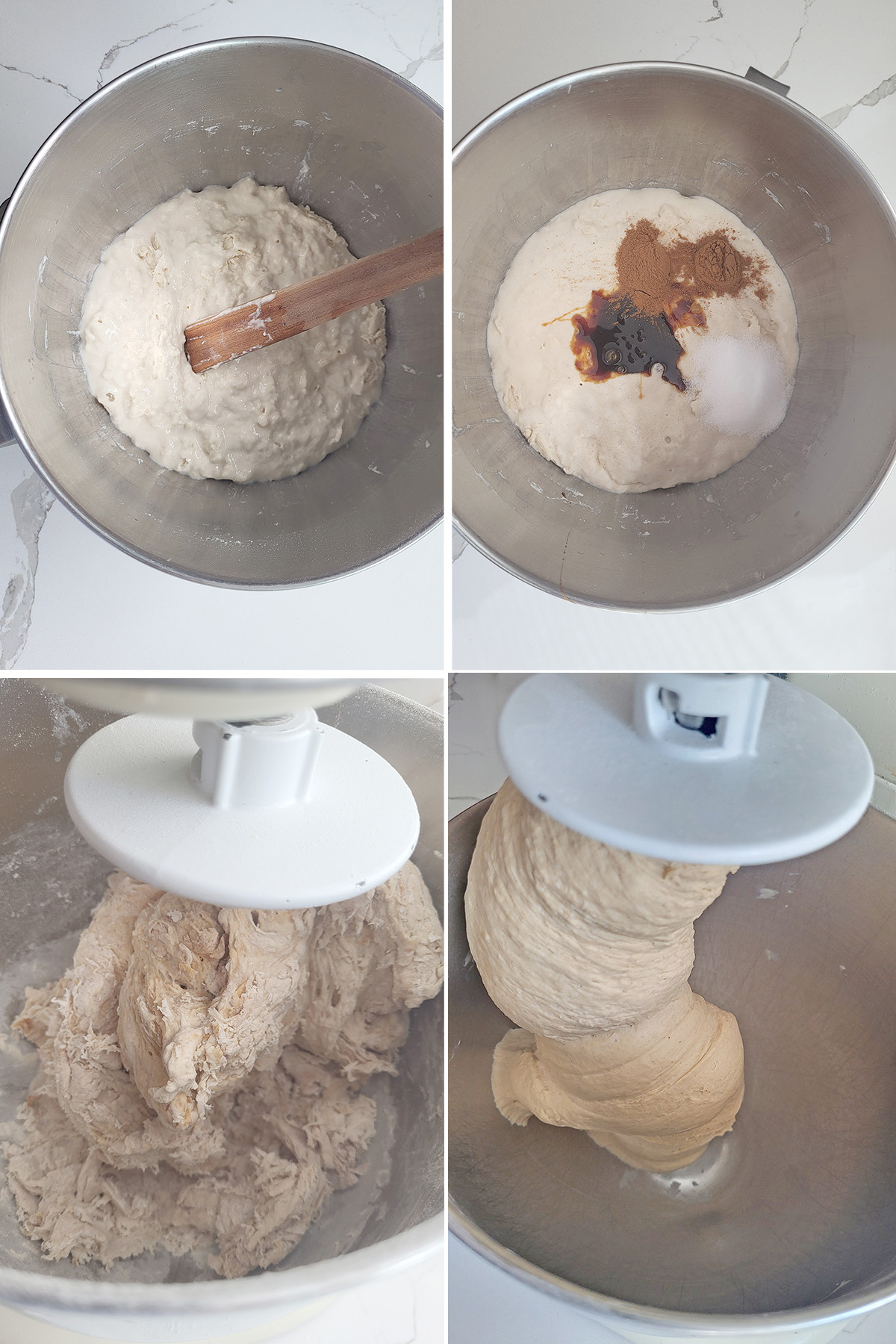
- Combine the active starter with water and flour. Set aside for 30-60 minutes. The flour starts to absorb water to begin gluten formation. The flour feeds the starter and amps up the yeast growth.
- Add the malt syrup, salt, cinnamon and more flour.
- The dough will start out quite shaggy and look dry since this is a lower hydration dough.
- Knead 5 minutes. If you’re using a stand mixer the dough should cling to the hook and clear the sides of the bowl. If kneading by hand the dough should be smooth and elastic.
Bulk Fermentation
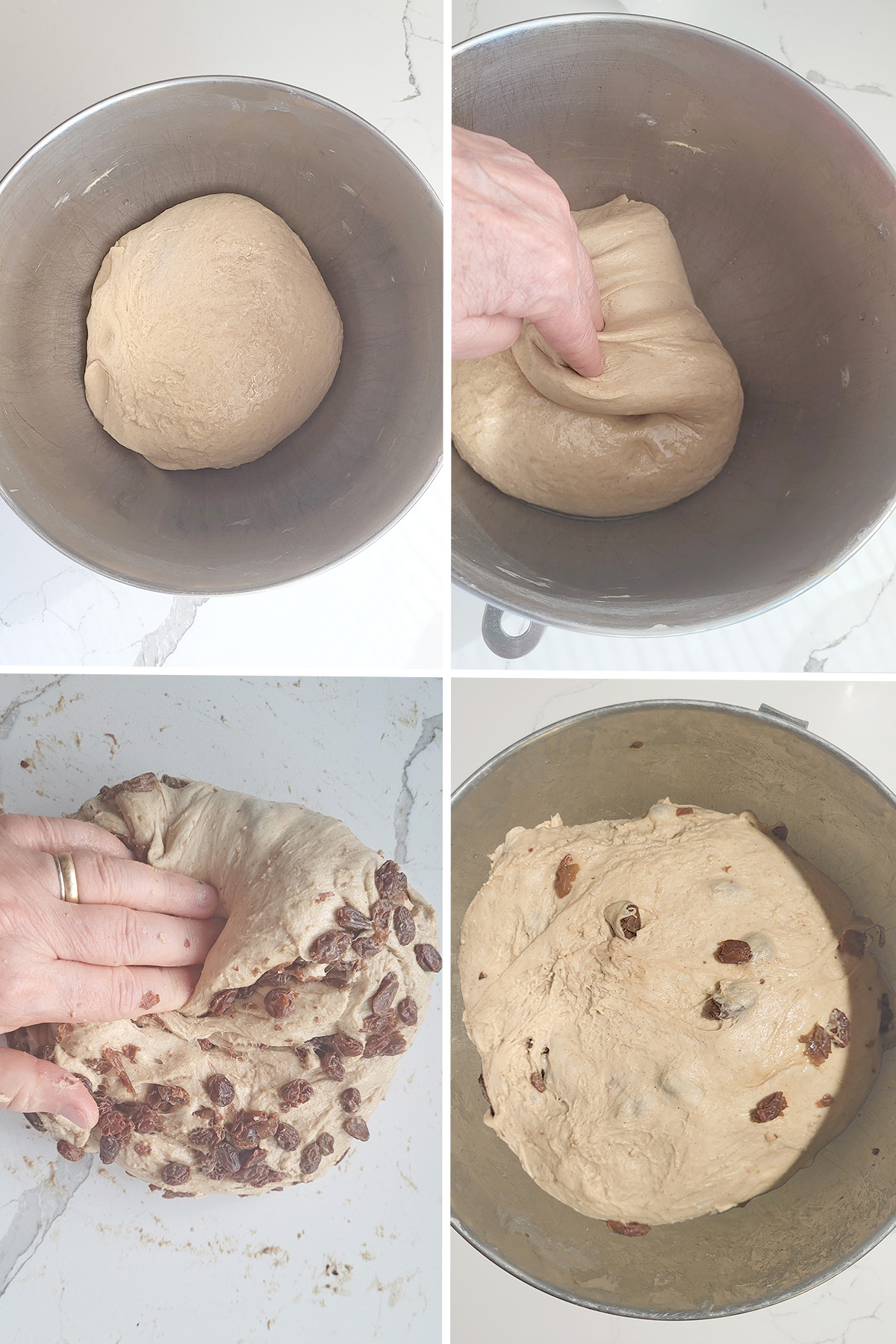
- Set the dough aside at room temperature for bulk fermentation.
- Every hour fold the dough.
- During the third fold, add the raisins.
- Set the dough aside until it is light, aerated and elastic.
Baking Sense Tip
Enriched doughs rise more slowly than lean doughs. Sugar (the barley malt syrup in this recipe) and cinnamon slow yeast activity, so both the bulk fermentation and final proof may take a bit longer.
Shaping
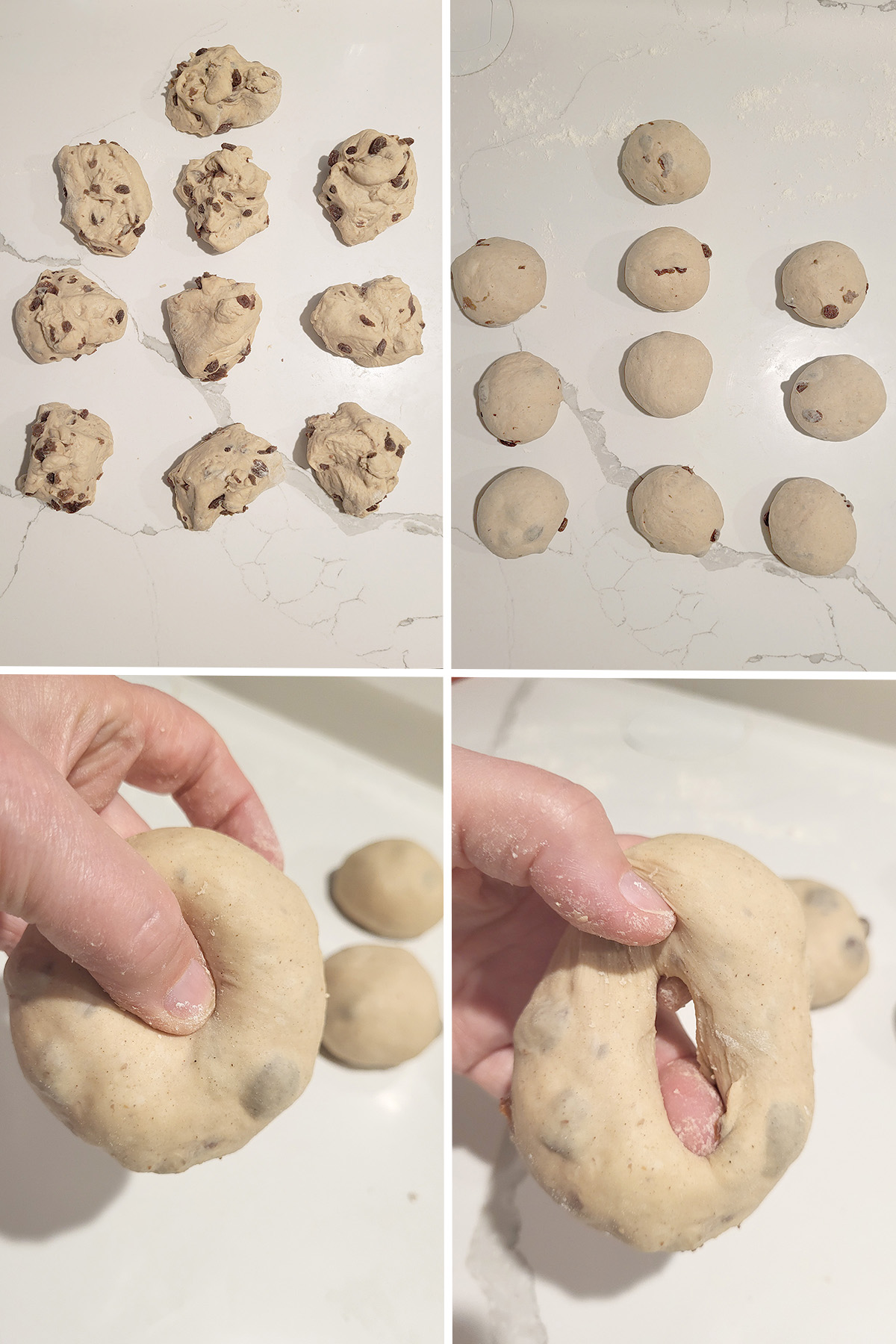
- Divide the dough into 10 equal pieces. I do this by weight. Weigh the entire ball of dough (grams makes this easier) and divide by 10. If you have 1400 grams of dough, each dough ball should weigh 140 grams.
- Roll each piece of dough under your cupped hand to form a smooth ball. This action helps organize and align the gluten in the bagels.
- Poke a hole in the center of a ball.
- Roll the bagel around two fingers to widen the hole in the center.
Proofing, Boiling, Baking
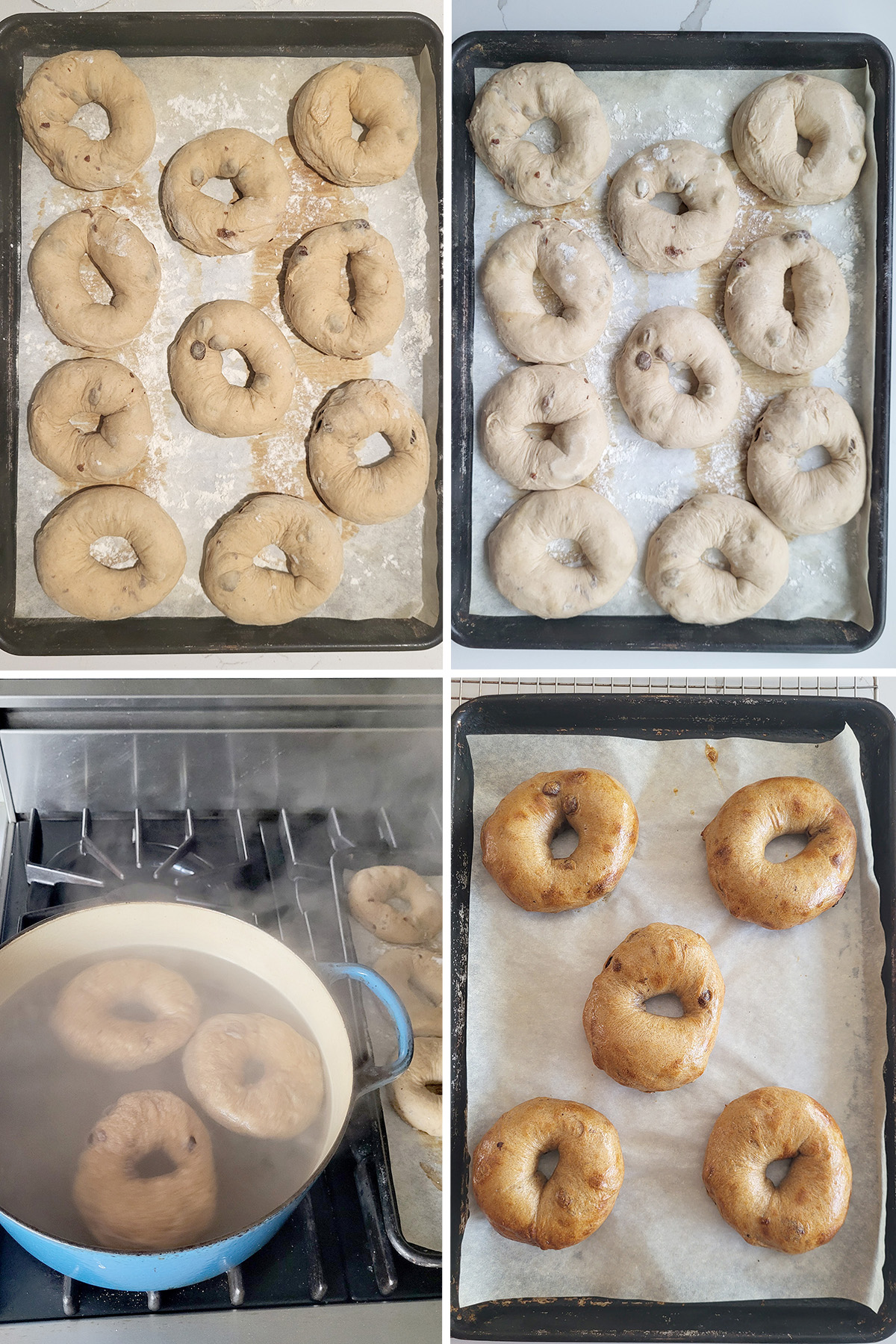
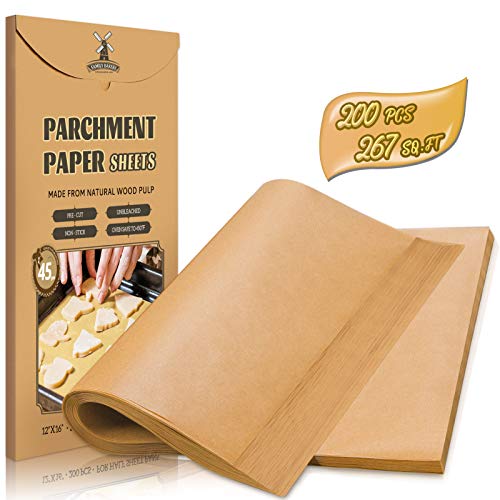
- Line the bagels onto a parchment lined baking sheet. Wrap the entire tray in plastic and refrigerate overnight (see the baking schedule for details).
- In the morning, take the tray out of the refrigerator and allow the bagels to come to room temp while the oven preheats and the water boils. The bagels should be slightly puffed, but not doubled in size. Think of it as a “half-proof”.
- Boil the bagels and drain on a rack.
- Bake the bagels until golden brown and crisp.
Baking Schedule
- Feed your starter the night before.
- Mix the dough in the early afternoon and you should be ready for shaping the bagels by evening.
- In the evening, form the bagels. In cooler months when my starter and dough are less active, I give the shaped bagels 60 minutes at room temperature then put them in the refrigerator for the night. In warmer months when my starter and dough more more active, I put the shaped bagels right into the refrigerator for the night without leaving them out.
- Take the bagels out in the morning.
- Once the oven is preheated and the bagels are at room temperature, start boiling the bagels.
Storage
Sourdough Cinnamon Raisin Bagels are best the day they are baked. Fresh bagels never need toasting, but after day-one a light toast brings them back nicely. Do not refrigerate the bagels. Pre-slice leftover bagels 3/4 through, pack them in a storage bag and freeze for up to 3 months.
If you love this recipe as much as I do, I’d really appreciate a star rating and a quick comment. Ratings and comments help my recipes show in search results. Thanks!
Sourdough Cinnamon Raisin Bagels
Ingredients
- 8 oz active sourdough starter (1 cup (100% hydration))
- 12 oz warm water (1 ½ cups)
- 22 ½ oz bread flour (4 ½ cups, divided, see note)
- 1 ½ oz barley malt syrup (2 tablespoons (or honey + molasses))
- 1 tablespoon table salt
- 2 teaspoons ground cinnamon
- 5 oz raisins (1 cup )
- 2 oz granulated sugar (¼ cup (for boiling))
- 2 teaspoons baking soda (for boiling)
- 1 egg white (whisked lightly)
Instructions
- Combine 8 oz active sourdough starter, 12 oz warm water and 10 oz Bread Flour in a mixing bowl. Mix to form a thick batter. Cover the bowl and set aside for 30-60 minutes.
- Add 1 ½ oz barley malt syrup 1 tablespoon table salt and 2 teaspoons ground cinnamon. Switch to the dough hook. Add the remaining 12 ½ oz Bread Flour and mix to combine.
- Knead 5 minutes on medium speed. If working by hand, stir in as much of the flour as you can, then turn the dough out onto a lightly floured surface and knead in the remaining flour. Knead 5 minutes until the dough is smooth and elastic. If you're working on a mixer, the dough should cling to the hook and clear the sides of the bowl.
- Put the dough into a lightly oiled bowl, turning once to coat the dough. Cover the bowl and set it aside at room temperature. After 60 minutes uncover the bowl, lift one side of the dough and fold it into the middle of the dough. Repeat with the other three sides of the dough then flip the dough over. You're basically turning the dough inside-out to redistribute the yeast. Cover the bowl and repeat the procedure every 60 minutes for a total fermentation time of about 4-5 hours. The dough should be lively, elastic and airy. If the dough is still sluggish give it another hour or two at room temperature.
- While the dough is fermenting, place 5 oz raisins in a small heat proof bowl. Pour boiling water over the raisins to cover. Set them aside for 30 minutes to plump. Drains the raisins, discarding the water. When you're ready to do the 3rd dough fold of the bulk fermentation, sprinkle the raisins over the dough. Fold the raisins into the dough then allow the bulk fermentation to finish.
- Line a baking pan with parchment paper then generously sprinkle the paper with flour. Turn the dough out onto a lightly floured surface. Divide the dough into 10 even pieces. Use a cupped hand to roll each piece into a smooth, tight ball.
- To form a bagel, poke your finger all the way through the center of a ball to make a hole. Use two fingers to gently open up the hole. Continue gently stretching to form the bagel or twirl the dough around your fingers to widen the center hole to 1 – 1½" wide.
- Place the bagel on the prepared sheet pan and continue to form the remaining bagels. The dough will probably spring back a bit so you can go back and re-stretch the holes once you're done forming all the bagels. If any raisins pop out of the dough push them back in with the tip of your finger. Cover the pan with plastic wrap. If the dough and the ambient temperature is on the cooler side, leave the shaped bagels at room temperature for 30-60 minutes then place the pan in the refrigerator overnight. If the dough and ambient temp is warmer and the dough is quite active, place the bagels into the refrigerator without leaving them out for 30 minutes. If you want to finish the bagels the same day leave them at room temperature to proof.
- In the morning take the bagels out of the refrigerator and bring them to room temperature.
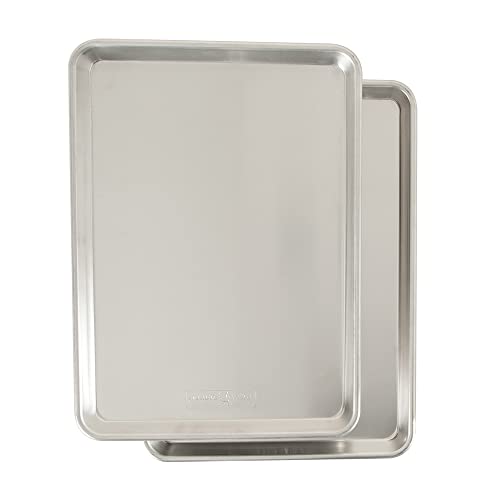
- Preheat the oven to 450 °F. In a large pot combine 1 gallon of water with 2 oz granulated sugar and 2 teaspoons baking soda and bring it to a boil. Reduce the heat to keep the water at a rolling simmer. Set a cooling rack over a sheet pan or kitchen towel and place it next to the stove. Line two half-sheet pans with parchment paper or silicone baking mats.
- Once the oven is preheated and you're bagels are room temperature and slightly puffed, you're ready to boil. Gently lift a bagel off the sheet pan and lower it into the water, bottom side down. It should sink to the bottom and then rise within about 10 seconds if properly proofed. Depending on the size of your pot, you can boil 3-4 bagels at a time.
- Boil the bagels for 30 seconds then flip them. Boil the other side for 30 seconds. Repeat the process again for a total of 2 minutes boiling time. Remove the boiled bagels from the water and set them on the cooling rack to drain.
- Place 5 of the boiled bagels on each sheet pan. You could fit them all on one pan but they may stick together as they bake.
- Brush the bagels with egg white for a shiny finish. Bake until golden brown, about 15 minutes.
Would you like to save this recipe?



As an Amazon Associate and member of other affiliate programs, I earn from qualifying purchases.