
Sourdough Pumpernickel Bread
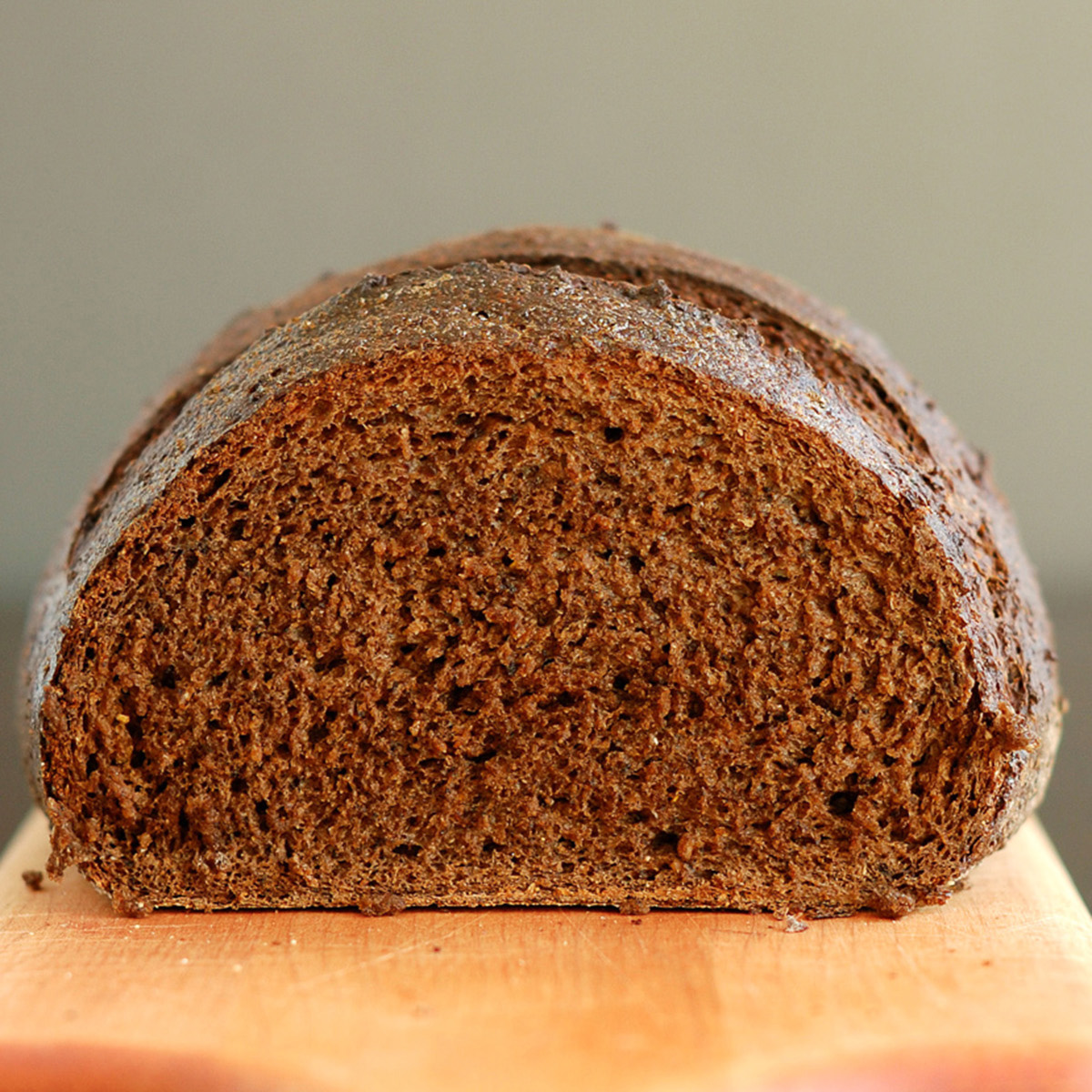
This Sourdough Pumpernickel Bread makes an excellent sandwich loaf, with deep color, bold flavor, and a sturdy crumb. The dough is built with rye flour, whole wheat flour, and bread flour, along with a few traditional ingredients that deepen both flavor and color.
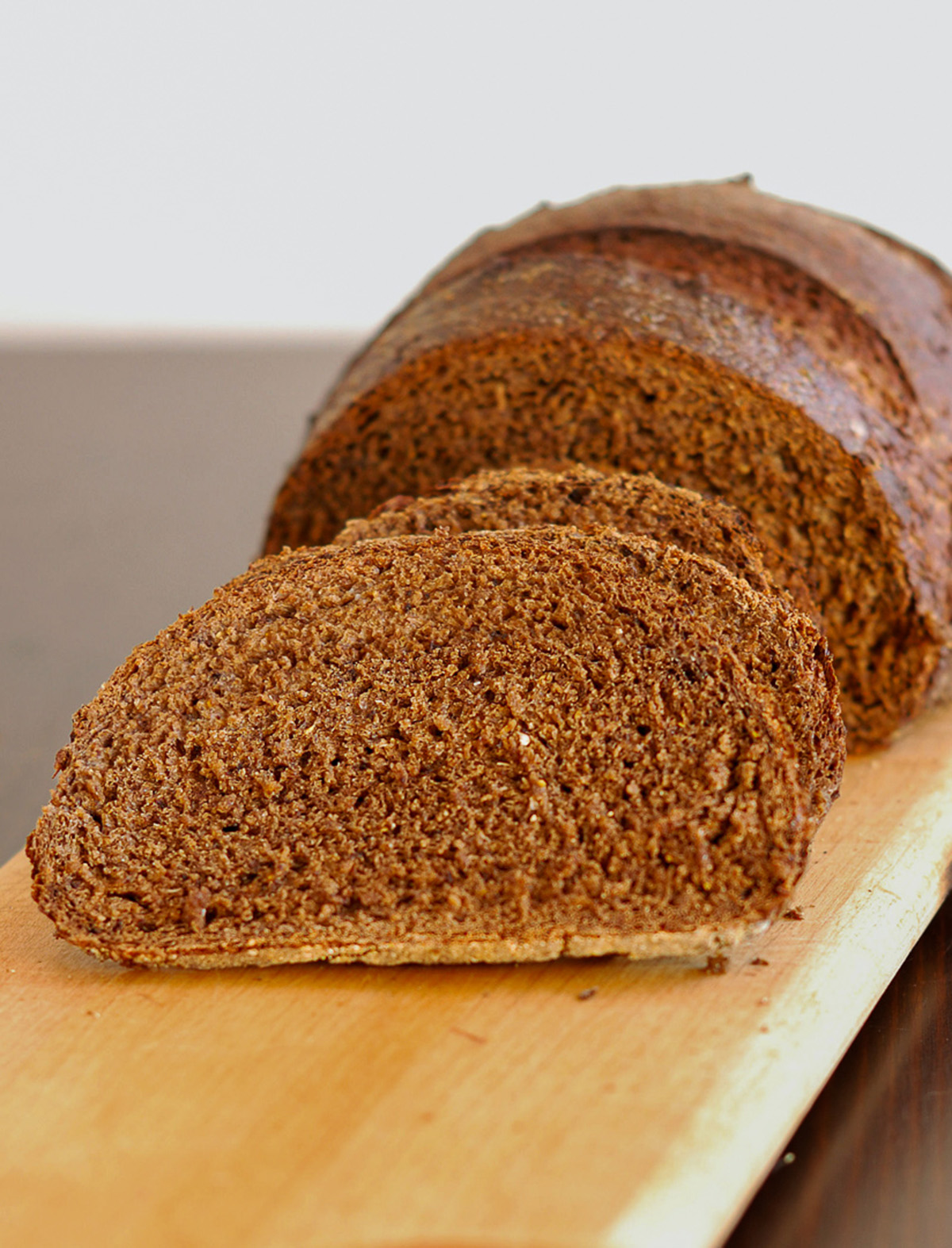
Table of contents
Why I Love This Recipe
As I mentioned in my Rye Bread post, I grew up in New Jersey, just outside of New York City. Being near to New York meant having access to wonderful delis and bakeries, so it was easy to find a good deli sandwich on fresh bread.
One of my absolute favorite deli-style breads is a deep, dark loaf of sourdough pumpernickel bread. This version captures the flavor and character I remember—bold, hearty, and perfect for sandwiches.
If you don’t have one, check out my post to learn How to Make a Sourdough Starter. Then check out my system to Feed and Maintain Sourdough Starter.
Rye Bread vs Pumpernickel Bread
Rye bread and pumpernickel bread are closely related, but they differ in both ingredients and technique.
Rye bread is made with some proportion of rye flour, often blended with wheat flour for structure and lift.
Pumpernickel bread recipes use additional ingredients to deepen color and flavor—often making use of what bakers had on hand.
In my research, I found old recipes that use leftover bits of bread as the basis for a new loaf. Waste not, want not, right? I could see that toasted bread crumbs would add interesting texture and deep flavor to pumpernickel bread.
I settled on a combination of coffee, barley malt syrup, cocoa, and toasted bread crumbs to deepen the color of the loaf. These ingredients contribute a balanced bitter-sweet note rather than sweetness.
Sourdough pumpernickel bread recipes range from just a hint of rye flour to all-rye loaves, with every combination in between.
Without gluten from wheat flour, the loaf would be too dense. There are traditional European all-rye pumpernickel loaves that are super concentrated and very, very dense. They’re interesting in their own right, but that’s not the style I was aiming for here.
This recipe uses equal parts rye and wheat flour. A small amount of whole wheat contributes flavor, while bread flour provides enough elasticity for a good rise.
Ingredients
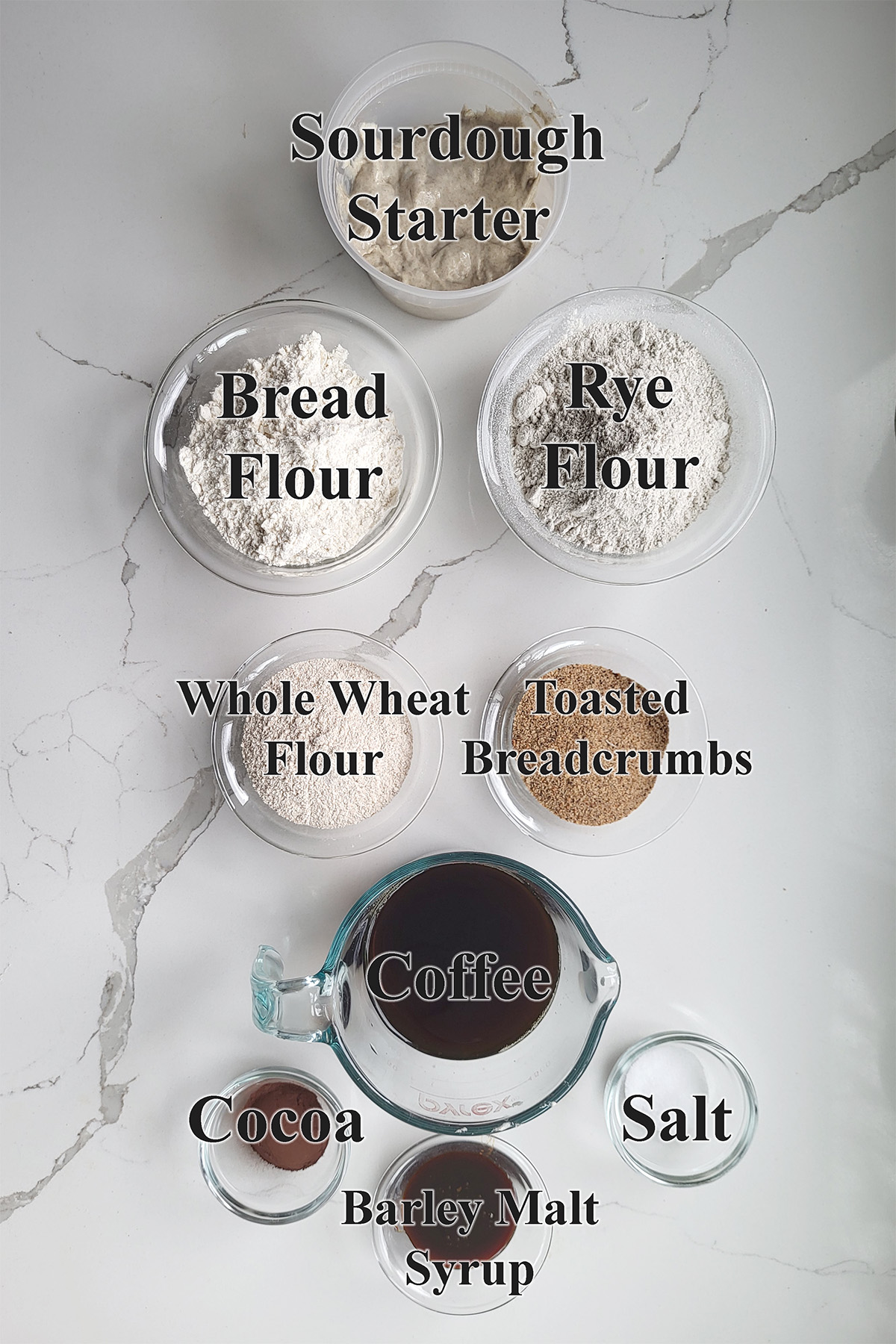
Ingredient Notes
- Sourdough Starter: The recipe was developed using unfed 100% hydration starter. Feeding the starter with rye flour creates a rye-based levain that complements the flavor of the finished loaf.
- Rye Flour does not have the gluten-forming properties of wheat flour. Use any type of rye flour in this recipe, light, medium or whole grain.
- Bread Flour is a wheat flour with a high protein content. Higher protein means better gluten development.
- Whole Wheat Flour adds flavor and texture to the loaf.
- Toasted Bread Crumbs are a traditional addition to pumpernickel bread. Use homemade or commercial bread crumbs, toasted.
- Coffee primarily contributes color and bitterness. You can substitute water, but the finished loaf will be slightly lighter in color and less complex in flavor.
- Cocoa is used for color and subtle bitterness, not chocolate flavor. In small amounts, it deepens the dark brown color of the loaf and balances the natural sweetness of rye and malt without being detectable in the finished bread.
- Barley Malt Syrup: You can substitute honey, or a combination of honey and molasses, though barley malt syrup provides the most traditional pumpernickel flavor.
Process Photos
Here’s what the recipe process looks like at each stage. Refer to the recipe card below for measurements and exact instructions.
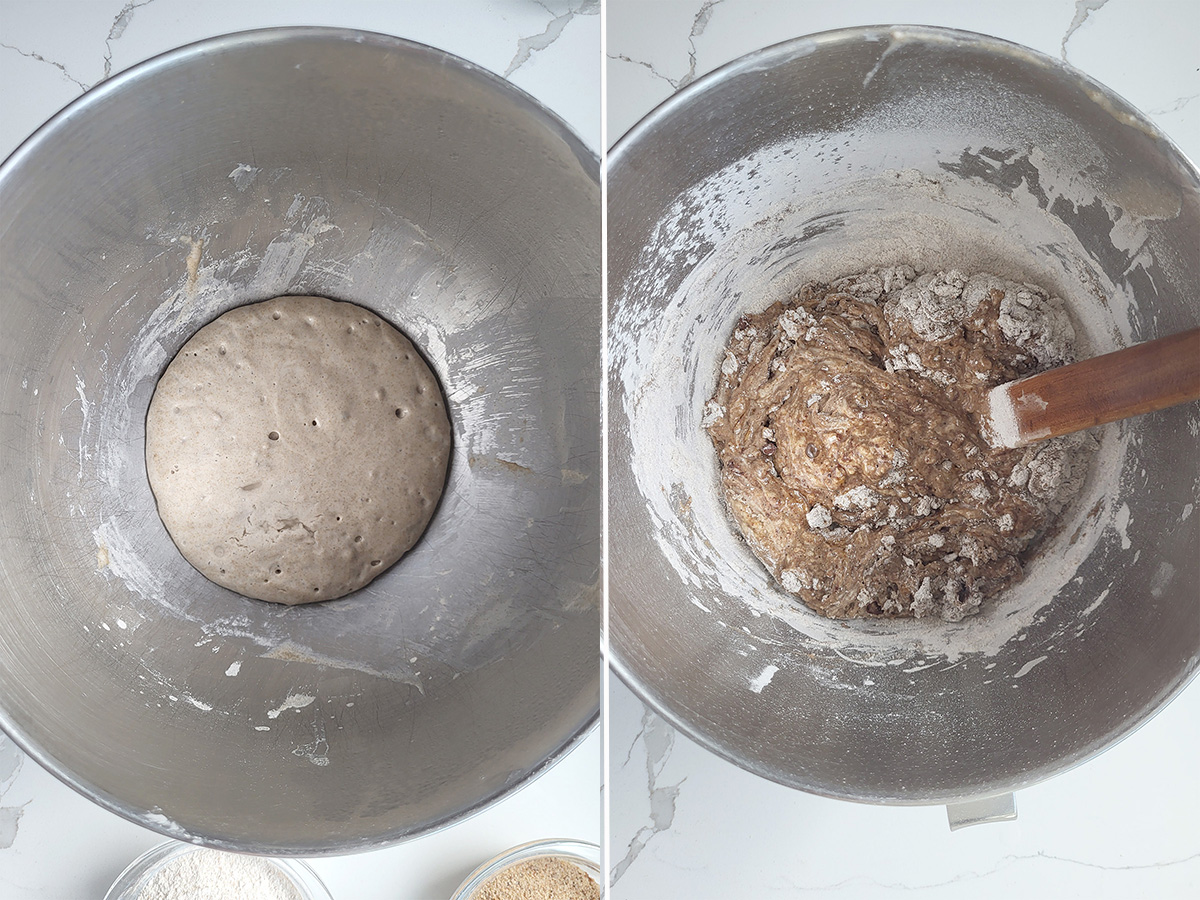
- Combine unfed starter with rye flour and water. Several hours later the rye starter is active and ready to use.
- Add the coffee, barley malt syrup, cocoa powder, salt, rye flour, toasted bread crumbs and whole wheat flour. Mix to combine.
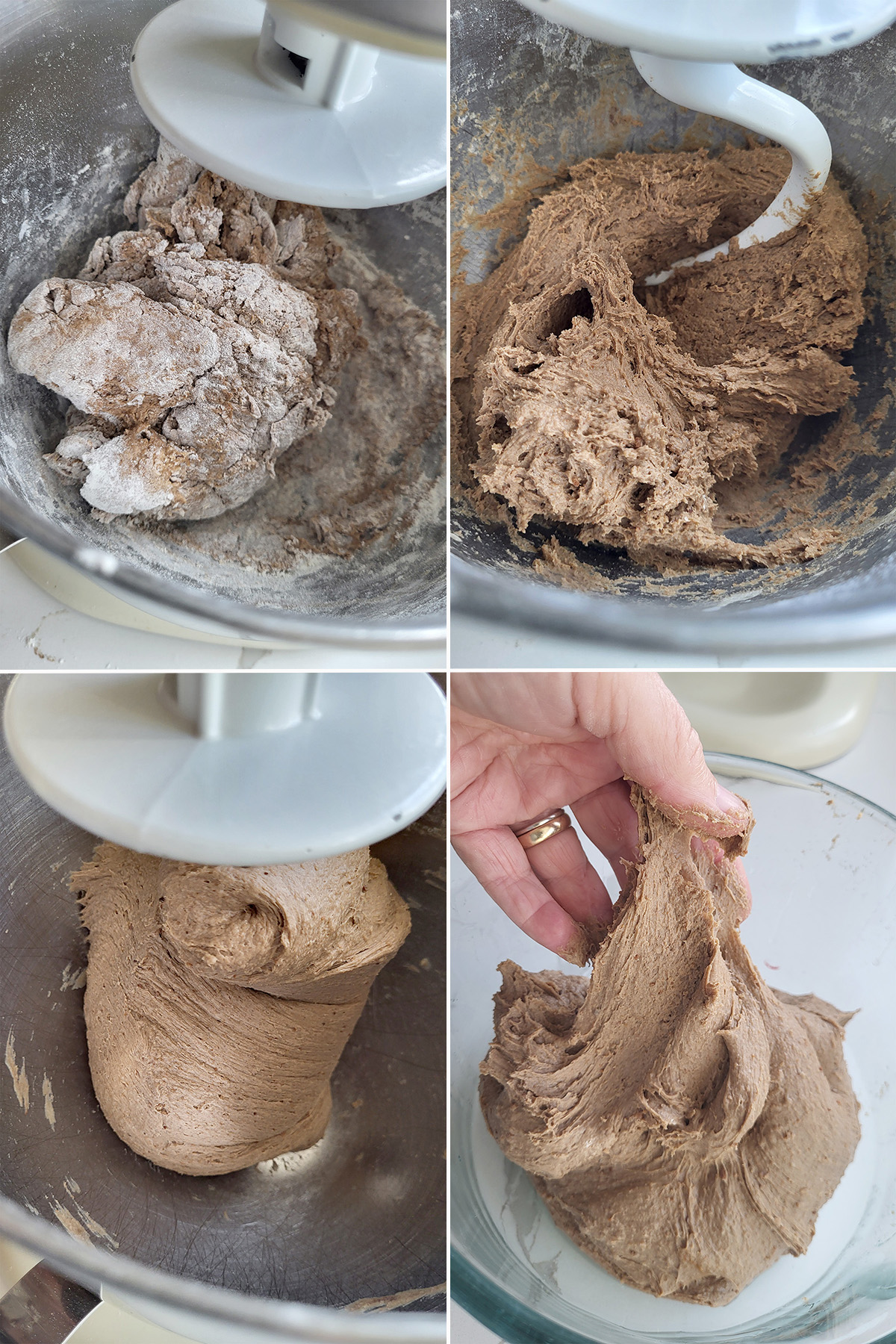
- With the mixer running, add the bread flour.
- The dough will start out quite sticky.
- After 5 minutes of kneading the dough should cling to the hook and clear the sides of the bowl. The dough will feel sticky even when properly mixed—avoid adding extra flour.
- Transfer the dough to a lightly oiled bowl and set aside for 3-5 hours of fermentation.
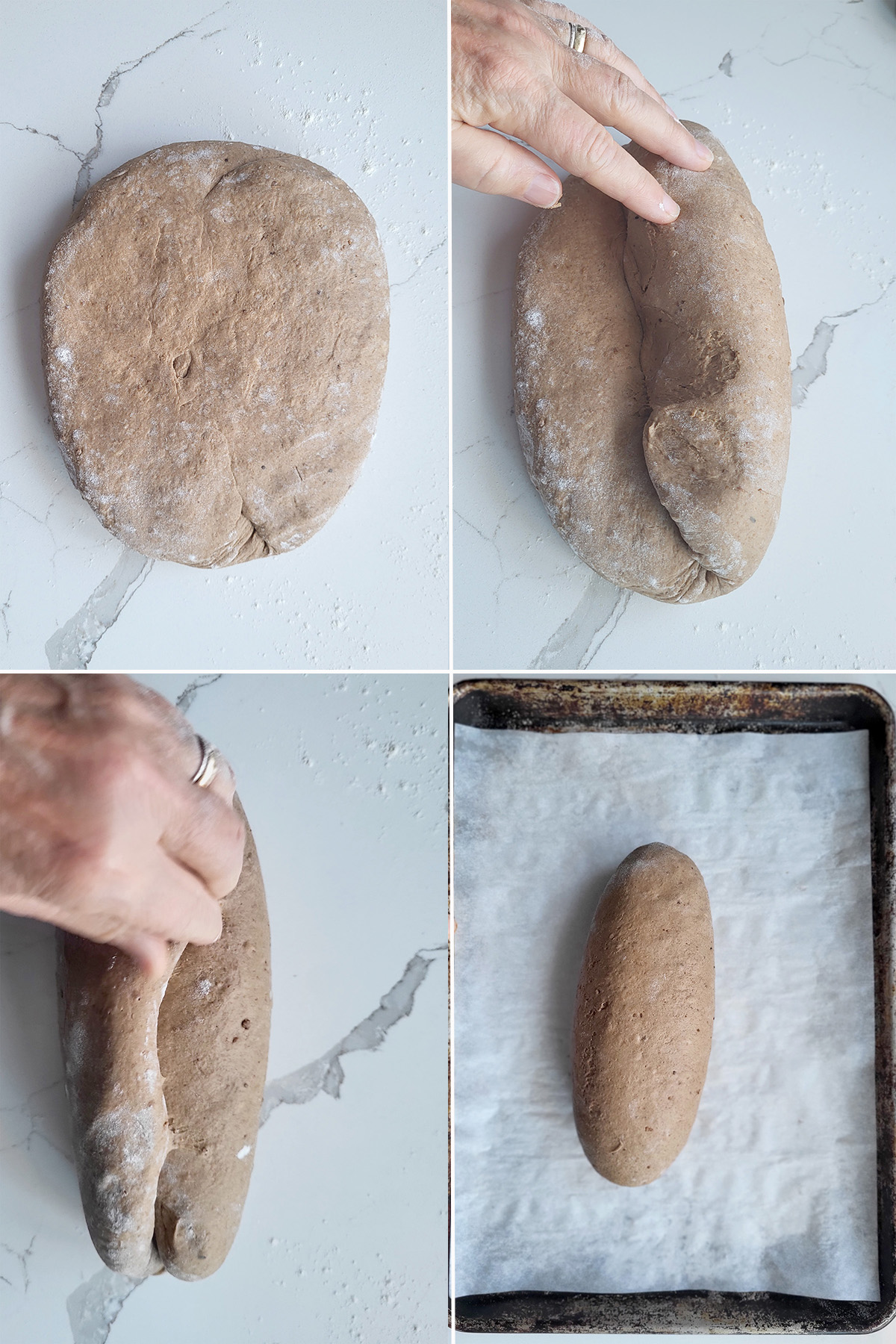
- To shape the loaf, pat the dough to a 9″ oval.
- Roll the dough to a cigar shape with tapered ends.
- Pinch the seam closed.
- Flip the dough and set it seam side down onto a sheet pan or wooden peel.
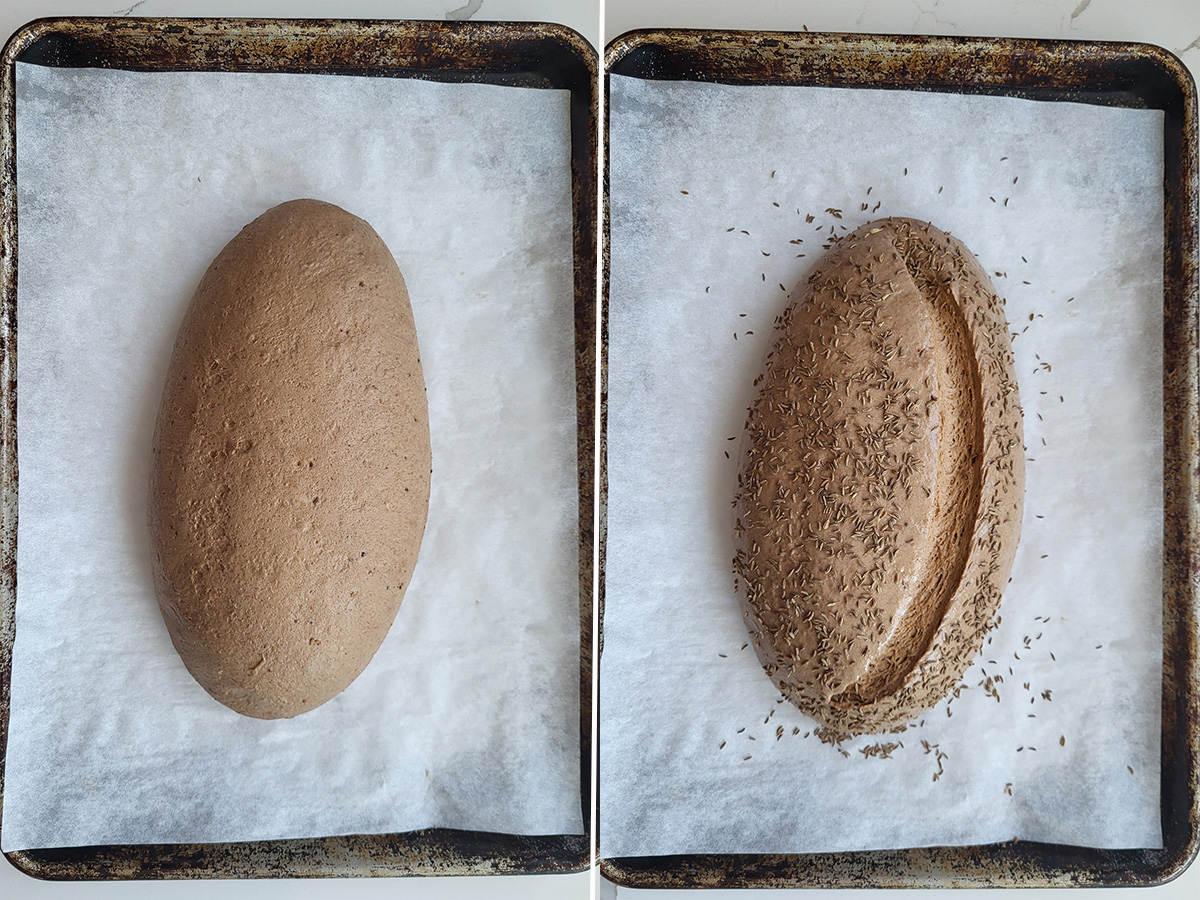
- The loaf is ready to bake when it has doubled in volume and the dough springs back slowly when lightly pressed.
- Brush the loaf with egg white. Optionally you can sprinkle with caraway seeds. Make one long slash or 3-4 diagonal slashes.
🍞 Baking Sense Tip:
Bulk vs. Cold Fermentation
This dough can be fermented entirely at room temperature or finished with an overnight cold fermentation.
Bulk fermentation at room temperature develops structure and allows the dough to rise efficiently. Cold fermentation slows yeast activity while continuing enzymatic development, which deepens flavor and makes the dough easier to handle the next day.
If your schedule allows, the overnight rest in the refrigerator will produce a more complex, well-rounded flavor. If you prefer to bake the same day, a longer room-temperature bulk fermentation works beautifully—just move on to shaping once the dough is well-aerated and slightly puffy.
Mixing & Baking Timeline
- Feed the starter with rye flour the night before or early in the morning of the day you want to make the dough.
- Mix the dough in the afternoon and set it aside for 3-5 hours of fermentation. Refrigerate the dough in the evening before going to bed.
- Take the dough out first thing in the morning and shape the loaf.
- Leave the loaf at room temperature to rise for 2-3 hours.
- To make and bake the bread in the same day, start the dough early in the morning. Allow a full bulk fermentation at room temperature, then skip the cold retard and proceed directly to shaping and baking.
Storage
Sourdough Pumpernickel Bread stays fresh at room temperature for 2-3 days. For longer storage, freeze the sliced loaf in a heavy-duty freezer bag.
More Sourdough Bread Recipes
I know you hate to throw away that sourdough discard. Check out these recipes that use sourdough discard.
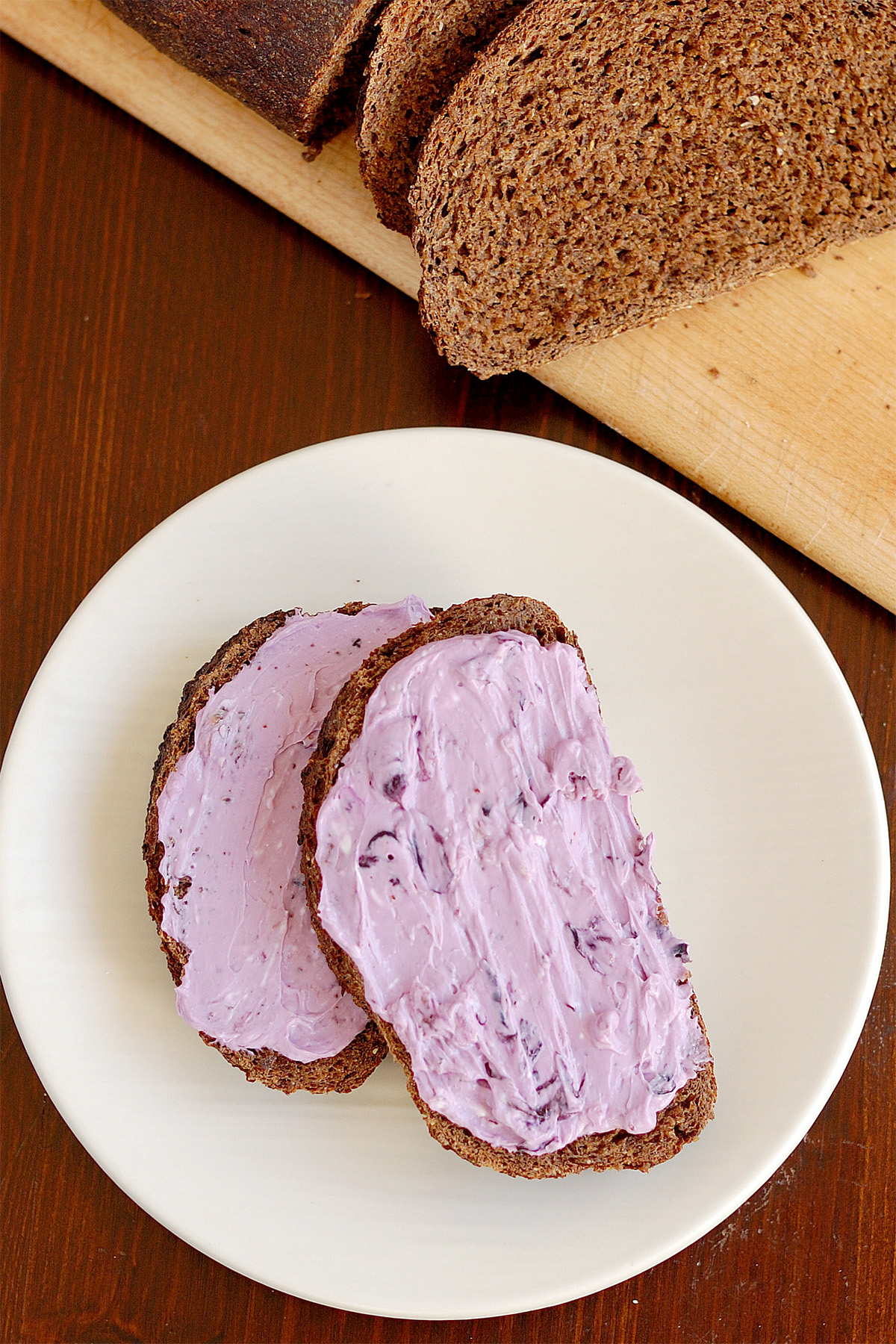
If you love this recipe as much as I do, I’d really appreciate a star rating and a quick comment. Ratings and comments help my recipes show in search results. Thanks!
Sourdough Pumpernickel Bread
Ingredients
Rye Starter
- 4 ounces unfed sourdough starter ((100% hydration))
- 2 ounces warm water (¼ cup)
- 2 ½ ounces rye flour (½ cup, see note)
Dough
- 10 ounces brewed coffee (1 ¼ cups, room temperature)
- 1 ½ ounces barley malt syrup (2 tablespoons (see note 2))
- 1 tablespoon cocoa powder
- 1 ½ teaspoons table salt
- 5 ounces rye flour (1 cup)
- 2 ounces toasted bread crumbs (½ cup (see note 3))
- 2 ½ ounces whole wheat flour (½ cup)
- 5 ounces bread flour (1 cup)
Instructions
Feed the Rye Starter
- Combine the 4 ounces unfed sourdough starter, 2 ounces warm water and 2 ½ ounces rye flour.
- Cover the bowl and let it ferment about 6-8 hours at room temperature (you can do this the night before and continue making the dough in the morning).
Make the Dough
- In the bowl of a stand mixer with a dough hook or a large a large mixing bowl, combine the rye starter with 10 ounces brewed coffee, 1 ½ ounces barley malt syrup, 1 tablespoon cocoa powder, 1 ½ teaspoons table salt, 5 ounces rye flour, 2 ounces toasted bread crumbs and 2 ½ ounces whole wheat flour. Mix to combine.
- With the mixer running, add 5 ounces bread flour. If working by hand, stir in as much of the flour as you can, then turn the dough out onto a lightly floured surface and knead in the remaining flour. Knead 5 minutes. The dough will start out quite sticky. After kneading the dough should cling to the hook and clear the sides of the bowl. Turn the dough out onto a lightly floured surface and knead into a ball. The dough will still be slightly sticky.
- Place the dough into an oiled bowl, turning once to coat. Cover and set at room temperature for 1 hour. After an hour, working from four corners of the dough (still in the bowl) use your hand to lift the top edge of the dough over into the middle of the dough. Repeat with the other 3 sides then flip the dough over. Cover and set at room temperature for another hour. Repeat the folding procedure 2 more times so the dough rises for a total of 3 hours. By now the dough should be lively, elastic and airy. If the dough is still sluggish give it another hour or two at room temperature. After the initial fermentation the dough can be refrigerated for up to 2 days before baking.
- Turn the dough out onto a floured surface and knead into a smooth ball and let it rest for 10 minutes. Pat the dough to a 9" oval then roll the dough into a torpedo shaped loaf. Transfer the loaf to a sheet pan lined with parchment paper or onto a baking peel dusted with cornmeal. If you want to bake in a Dutch oven shape the dough in to a round (boule) and preheat the pan in the oven.
- Cover the dough with plastic wrap or a damp kitchen towel and rise until about doubled in volume (about 2 – 2 ½ hours). The rising time will vary base on how active your starter was, the temp of the dough and the ambient temperature.
- While the dough rises preheat the oven to 375 °F. If you have a baking stone put it in the oven to preheat. When the bread is risen, use a sharp knife or blade to slash the top of the bread 4-5 times or do 1 long slash along the length of the loaf.
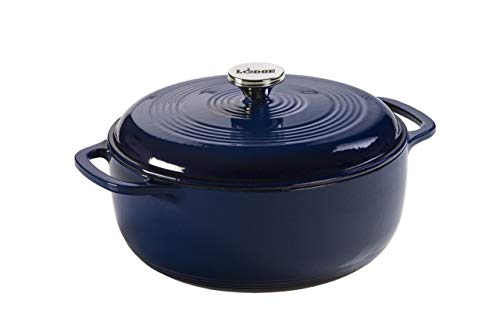
- If using the Dutch oven to bake follow these directions: Remove the preheated pan from the oven and remove the lid. Use the parchment paper to lift the loaf into the Dutch oven. Replace the lid on the pot and slide it into the oven. Bake for 20 minutes. Remove the lid from the Dutch oven. The loaf should be well risen and pale in color. Continue baking another 20 minutes until the loaf is nicely browned and beginning to crisp. Remove the pan from the oven. Use the parchment to lift the loaf out of the pan.
- If baking on a sheet pan or baking stone bake until the temperature reaches 200°F in the center of the loaf, about 35 minutes.
Would you like to save this recipe?



As an Amazon Associate and member of other affiliate programs, I earn from qualifying purchases.
Why do you use bread crumbs in the recipe. Can I omit them?
Hi Joy. I used the toasted bread crumbs because I saw that most of the old traditional recipes included toasted crumbs. The crumbs do contribute to the color and flavor of the loaf. If you don’t have old bread you could use packaged breadcrumbs or even crumbled saltine crackers. If you eliminate the crumbs all together you’ll probably get a slightly lighter color on your loaf. Also, you may need to add a little more flour if the dough is very wet. I think you’ll still get a good loaf though.
Il pane e buonissimo !qui in Italia e difficcile trovare il vero pumpernickel xcio me lo sona fatta a casa seguendo la ricetta e un vero successo!
I put your comment through Google translate and I think you’re saying that’s it’s hard to find Pumpernickel bread in Italy and that you made this bread and it was good. If that’s why you said, thanks! I’m glad you like the recipe.
Where do you get rye flour? I have looked for it many times but can never find it.
Hi Barb, the markets in my area sell rye flour in the baking aisle. You can also buy it on-line.
Hello, your recipe looks great and I am anxious to try it. A couple questions….is your starter 100%? I usually work in grams instead of cups, etc. Wondering if this will work if I convert it??
Hi Rebecca. I use a 100% starter, that is, fed with equal weights of starter-water-flour.
thanks! that helps so much!
Sure, and thanks for the question. Reader questions always help me clarify the recipe.
I do love baking bread! And I can’t get enough rye breads – they just bake so well and smell so good. I’ve yet to make a pumpernickel, I think this just got added to my weekend menu! Thank you!
Hope you like it. I love it!