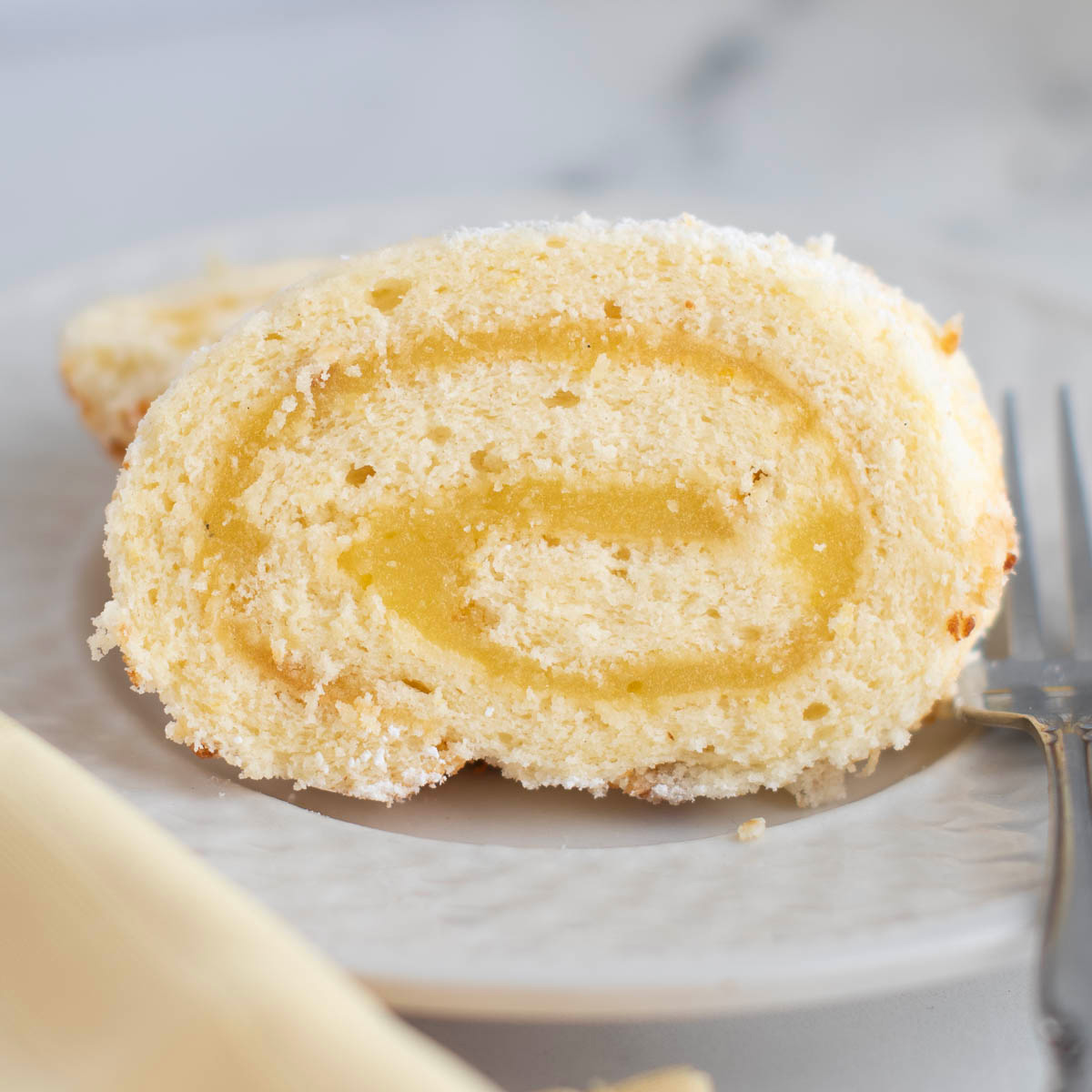
Lemon Swiss Roll Cake



Lemon Swiss Roll Cake is light, airy, and full of bright citrus flavor. A soft chiffon sponge wrapped around tangy lemon curd makes a simple but truly lovely dessert—and it’s a great make-ahead recipe.
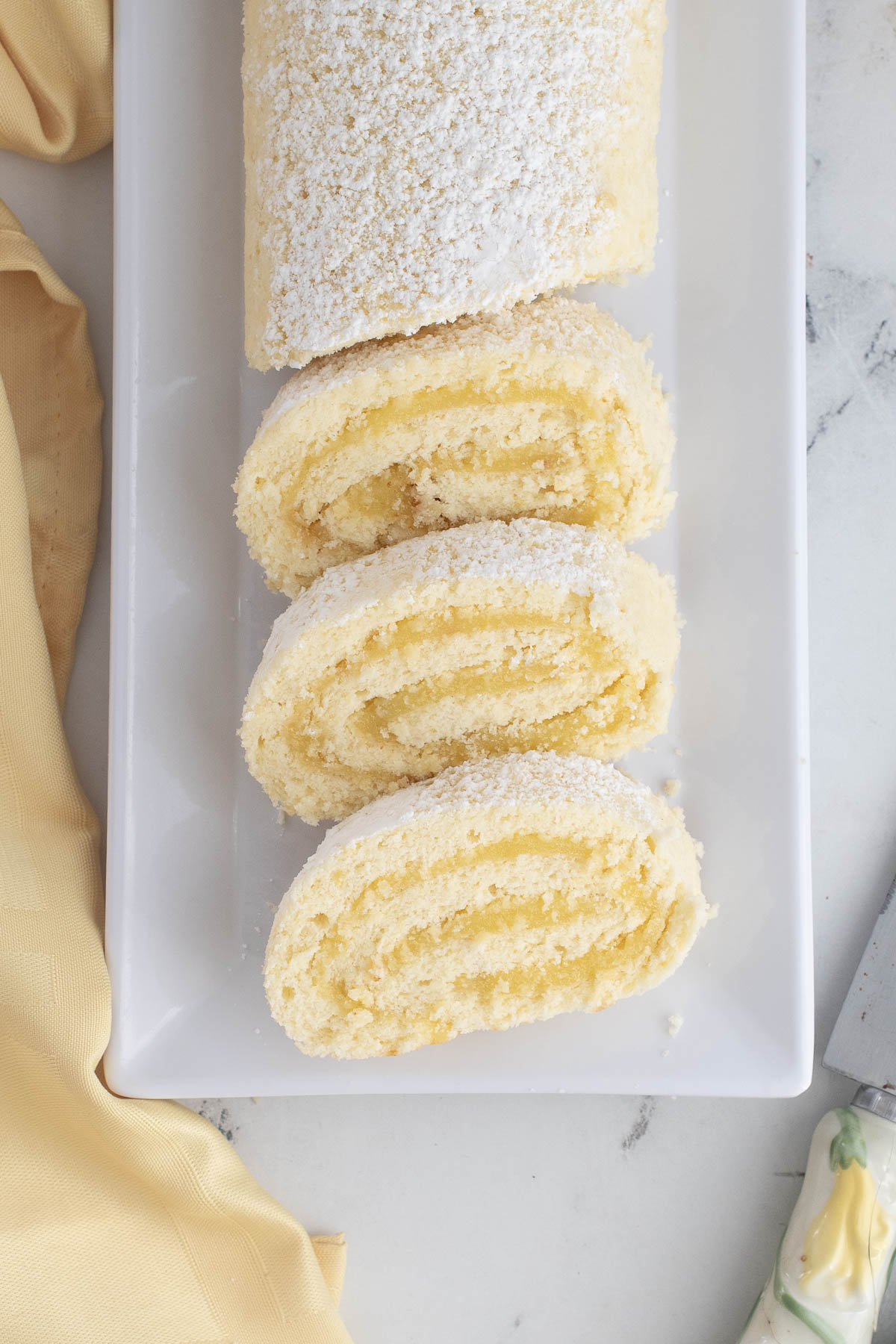
Table of contents
What’s So Great About This Recipe?
This cake celebrates lemon in the best way: a thin, tender sponge rolled around a layer of zesty curd. No heavy frosting or extra flavors to distract—just clean, refreshing lemon from top to bottom.
I like to make the filling with Meyer lemons for their gentle, floral character, but the recipe works just as well with regular lemons. Use whatever you have on hand; both varieties shine in this cake.
The overall process is straightforward, and once you master the roll, you’ll find this format endlessly adaptable.
How This Recipe Works
This Swiss roll starts with a chiffon sponge, one of my favorite cake styles because it stays soft and flexible. That flexibility is exactly what allows the cake to roll neatly without cracking.
Here’s why chiffon works so well:
- Whipped eggs provide lift and keep the crumb airy.
- Oil coats the flour, limiting gluten formation.
- Sugar holds moisture and keeps the cake tender.
With the right balance of structure and tenderness, you get a cake that melts in your mouth yet is sturdy enough to hold a tight swirl of lemon curd.
If you’d like to learn more about how ingredients affect cake texture, visit the Cake Baking Guide → and Baking Ingredient Science → pages.
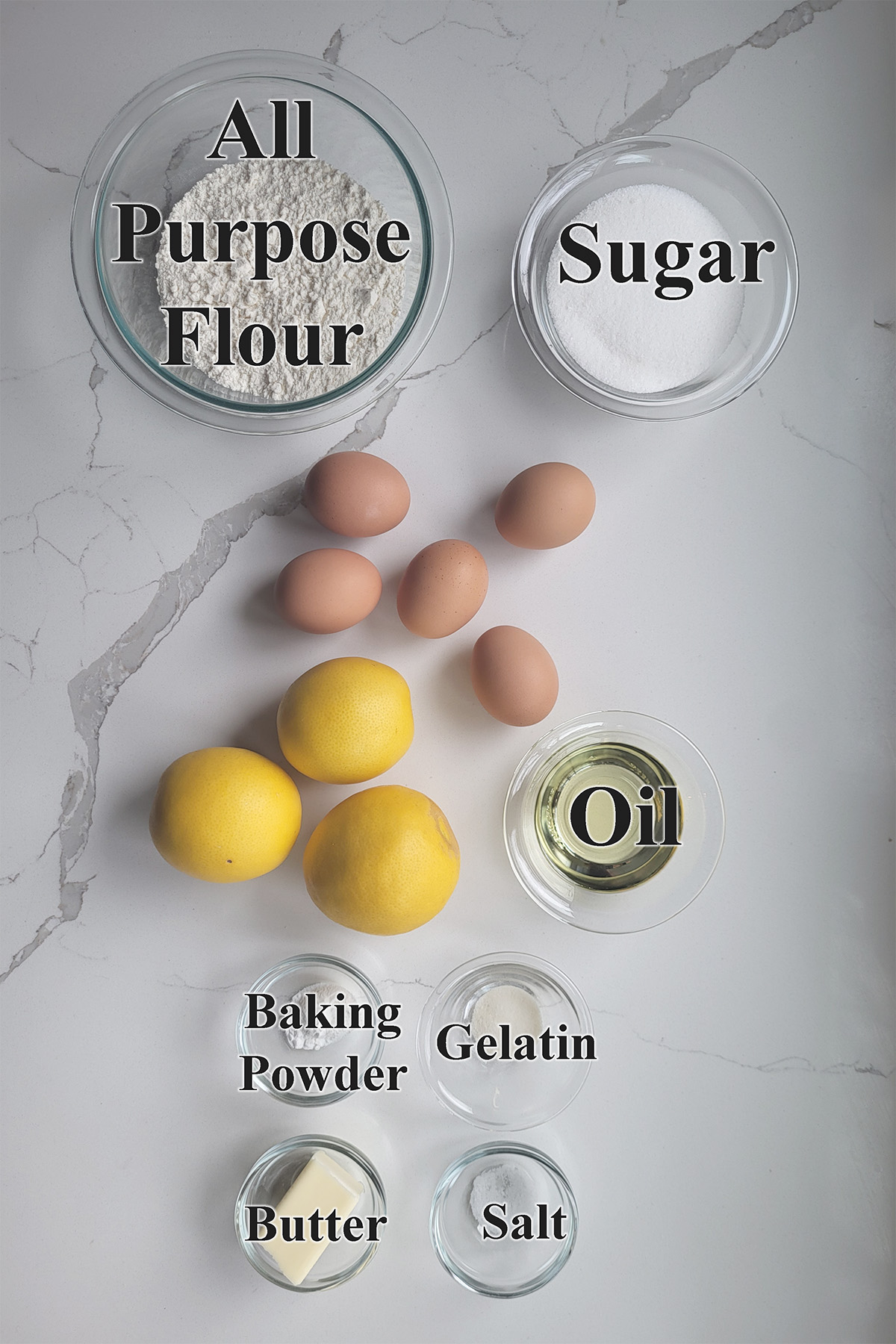
Ingredients
Ingredient Notes
- All Purpose Flour – Medium protein content. All-purpose flour makes a sponge cake that’s tender but still has enough structure to roll without cracking.
- Lemon Juice – Use Meyer or regular lemons. Meyer lemons bring a mild, floral flavor; regular lemons give a sharper acidity. The amount of juice in a lemon can vary quite a bit, so be sure to measure.
- Oil – A chiffon cake uses oil rather than butter. Oil keeps the crumb soft and flexible, even after chilling.
- Egg Whites – Whipped whites create the structure and flexibility you need for rolling.
Process Photos
Here’s what the recipe process looks like at each stage. Refer to the recipe card below for measurements and exact instructions.
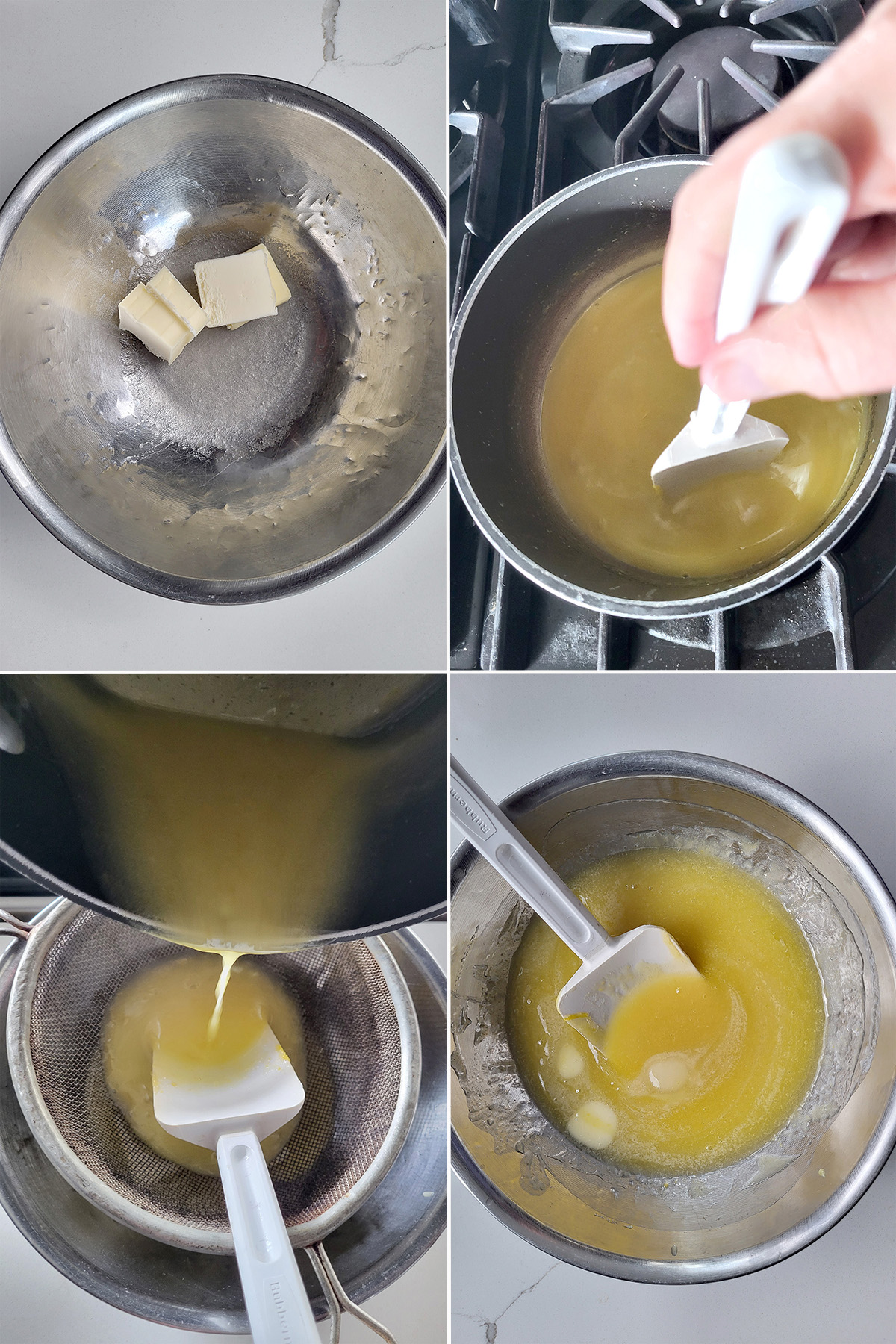
- Bloom the gelatin in a heatproof bowl and set the butter on top.
- Cook the lemon juice, sugar, zest and eggs over medium heat, stirring constantly.
- The moment the curd begins to bubble remove it from the heat and strain it into the bowl with the gelatin.
- Stir until the gelatin and butter are melted. Chill until you’re ready to assemble the cake.
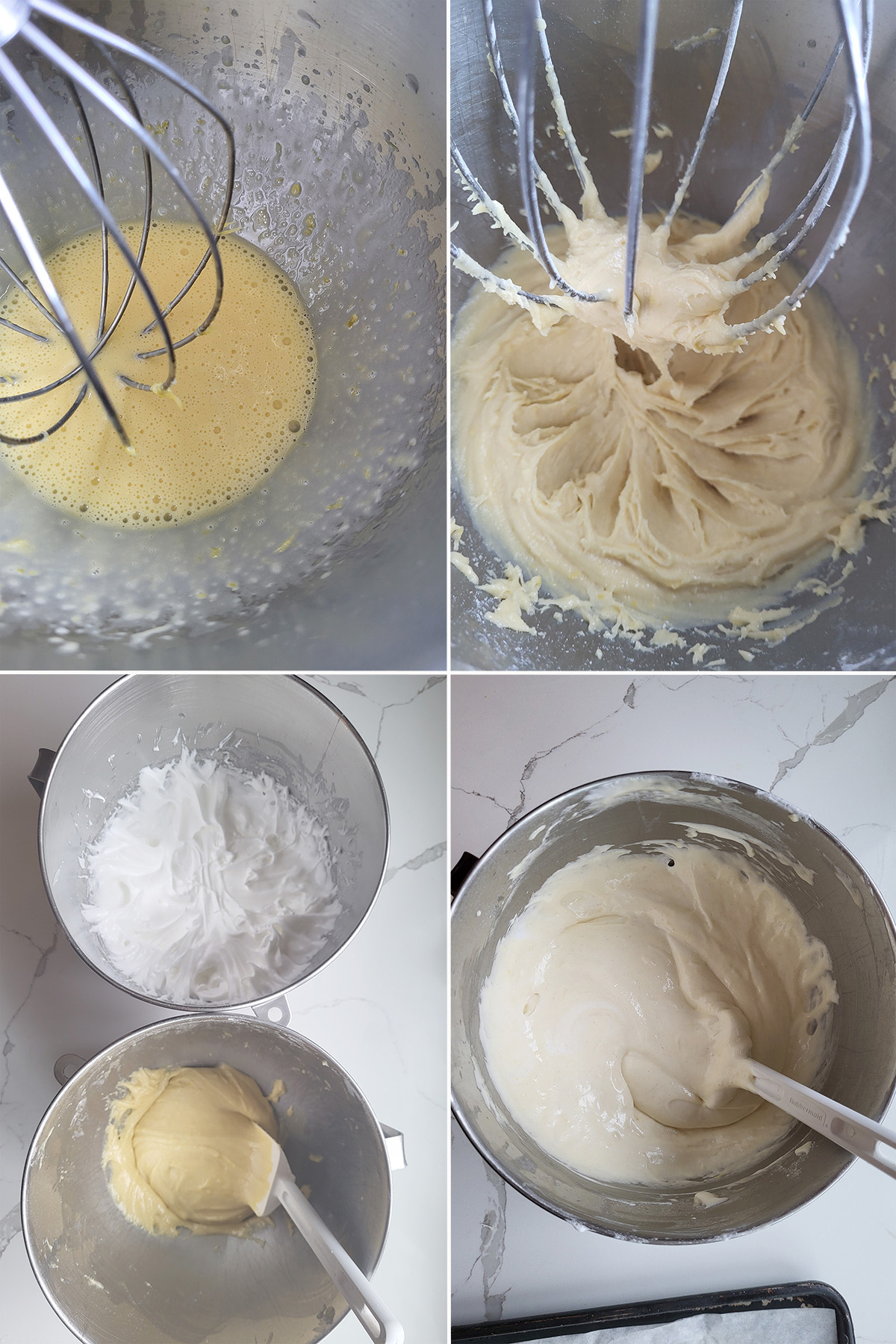
- Whisk the egg yolks, sugar, oil, water, lemon zest and juice until emulsified.
- Add the flour to the yolk mixture.
- Whip the egg whites.
- Fold the whites into the yolk mixture.
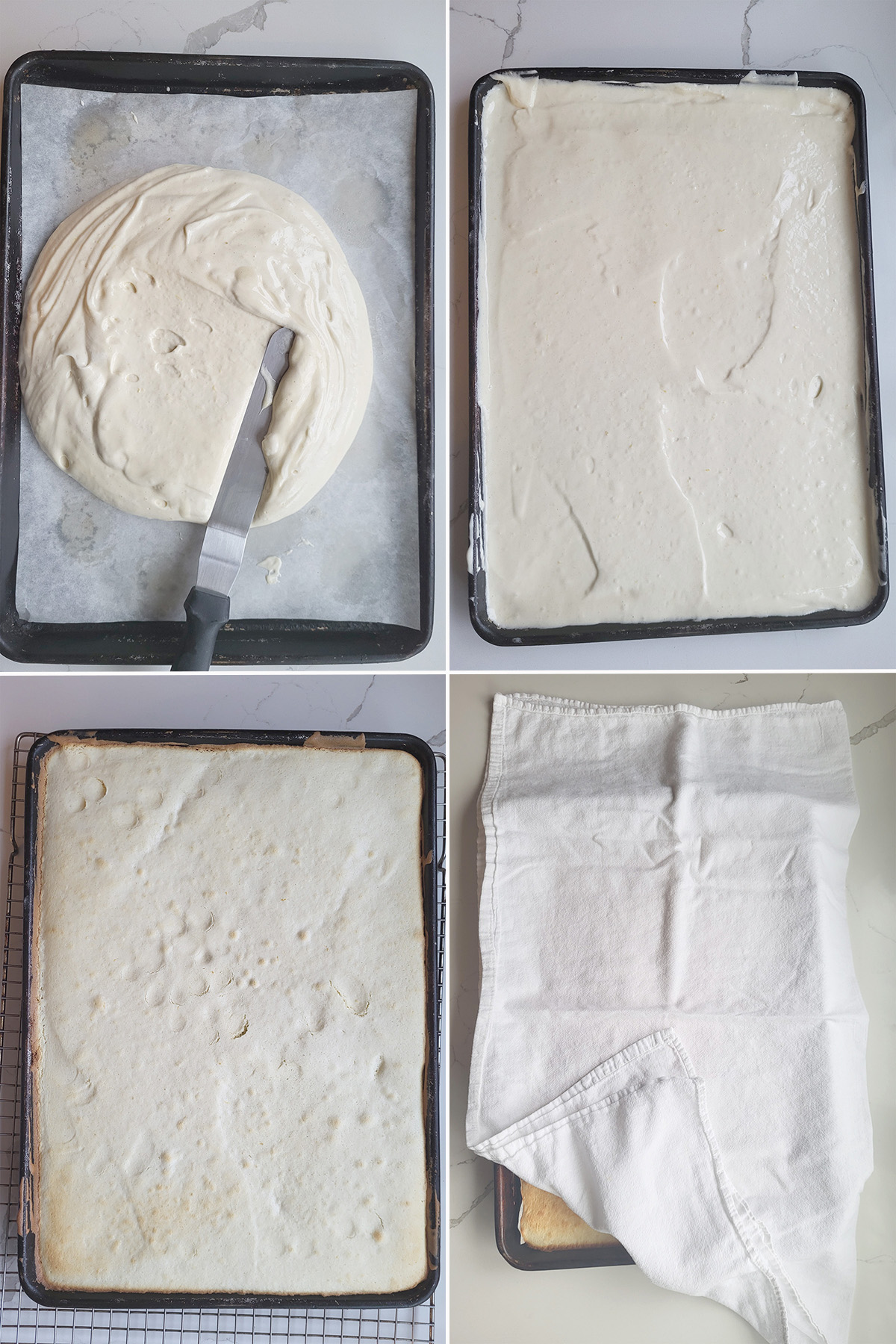
- Spread the batter evenly in the sheet pan. Avoid leaving thin edges which can overbake and crack.
- Bake just until the cake springs back when pressed lightly in the center.
- Immediately cover the warm cake with a clean kitchen towel and set aside to cool.
Baking Sense Tip
Why Cool the Cake Under a Towel?
Covering the warm sponge traps a bit of steam, which keeps the surface moist and prevents the cake from drying out. A barely cooled, supple sponge is much more flexible—exactly what you want for a roll that won’t crack.
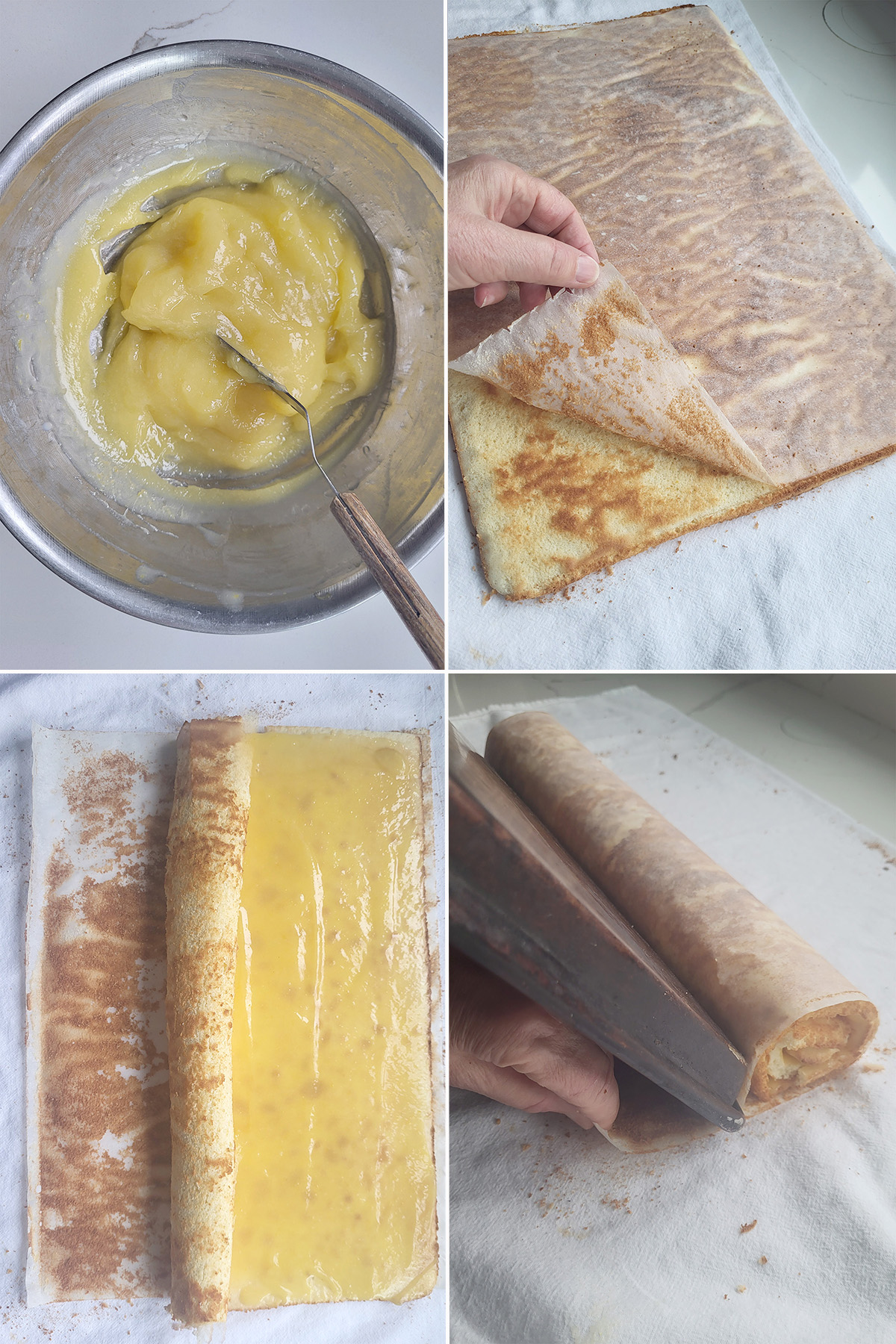
- If the lemon curd is very stiff, briefly stir it to soften to a spreadable consistency.
- Flip the cake onto the towel and peel the parchment off the cake.
- Hold the cake and parchment together and flip the cake again so the parchment is on the bottom. Spread the curd evenly over the cake. Use the edge of the parchment to lift and roll the cake.
- When you finish rolling, wrap the parchment over the cake, leaving a small overhang at the bottom.
- Use the edge of the baking pan to hold the parchment in place, then gently tug on the overhang to tighten the roll. Wrap the cake tightly and refrigerate for at least 2–3 hours.
Work Ahead
Lemon curd can be made ahead and refrigerated for up to 3 days or frozen for a month. It’s difficult to spread the lemon curd when it’s cold and firm. Use a spatula to break up and soften the curd to make it easier to spread.
The cake must be rolled right after it cools.
The assembled cake can be made ahead. See the storage section for details.
Storage
The assembled cake will keep for 2–3 days in the refrigerator. For serving, it can sit at room temperature for 2–3 hours.
For longer storage, wrap and freeze the cake for up to 1 month. Defrost at room temperature in the wrapping. Individual slices freeze well, too.
Flavor Variations
This chiffon roll is a great base for other citrus and fruit fillings. You can swap the lemon curd for lime, grapefruit, orange, passion fruit, or even a raspberry or rhubarb curd. The method stays the same, and each flavor gives the cake a different, refreshing twist. Always use the optional gelatin when making curd for a cake filling so the slices hold cleanly.
To turn this into a “Lemon Meringue Roll,” frost the chilled cake with Seven Minute Frosting and lightly toast it with a kitchen torch. Once frosted, serve the cake within one day.
FAQs
Avoid overbaking—the thin layer can dry out quickly. Cool the cake under a clean kitchen towel to retain moisture. Assemble and roll soon after the cake cools; if it sits too long, it loses flexibility. Make sure you’re using a well-balanced sponge with both oil and water.
Roll the cake tightly and use the parchment to help secure the shape. Use the side of the sheet pan to push against the cake while you pull the parchment tight (see process photos). Chill the cake for several hours before slicing so the curd has time to set and lightly absorb into the sponge.
More Roll Cakes
More Lemon Recipes
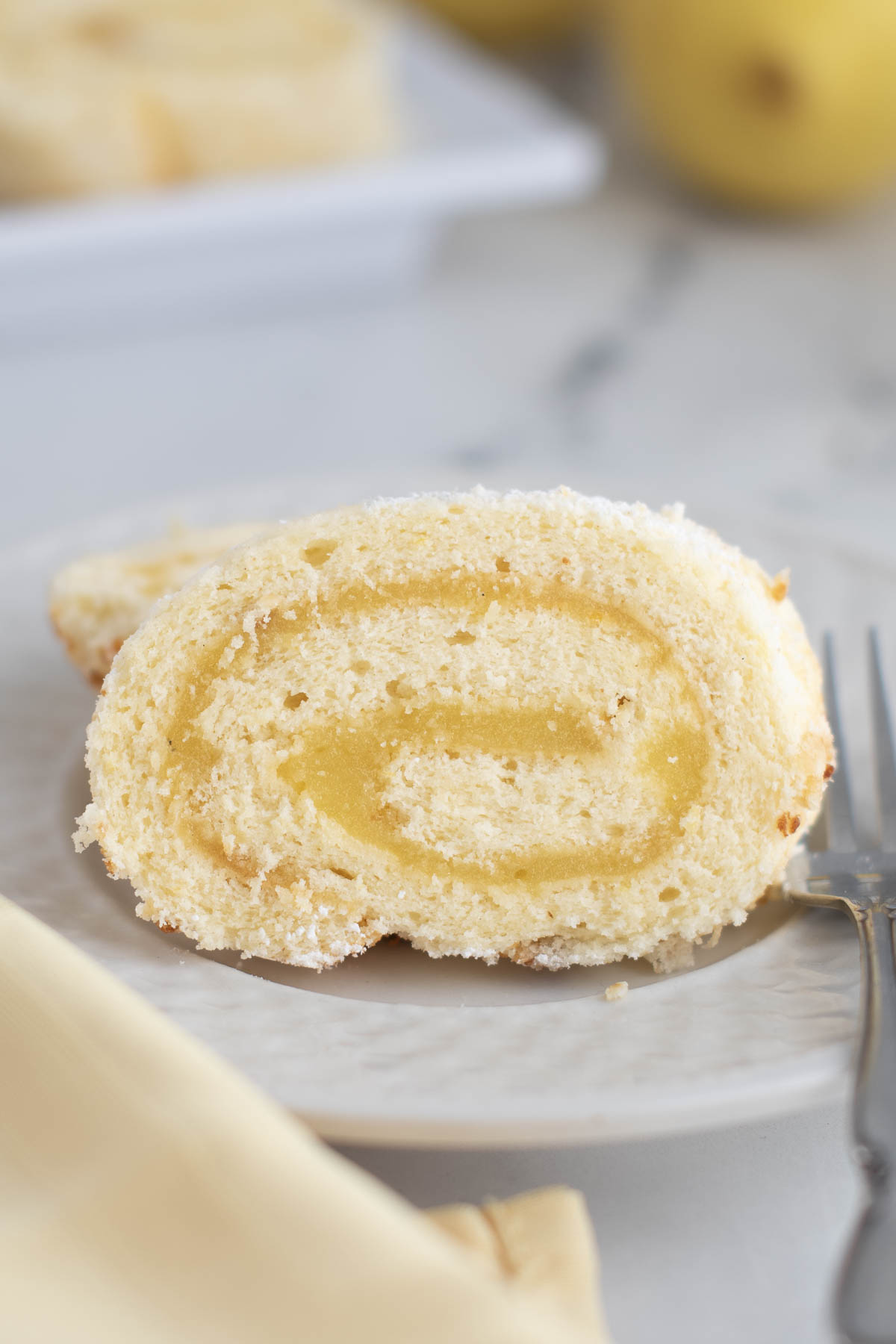
If you love this recipe as much as I do, I’d really appreciate a star rating and a quick comment. Ratings and comments help my recipes show in search results. Thanks!
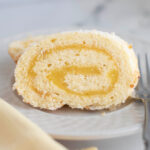
Lemon Swiss Roll Cake
Ingredients
Meyer Lemon Curd
- 1 tablespoon water (room temperature)
- ¾ teaspoon gelatin powder
- 1 ½ oz unsalted butter
- 6 oz granulated sugar (¾ cup )
- 1 large egg
- 1 large egg yolk
- 2 oz Meyer lemon juice (¼ cup, about 1-2 lemons)
- finely grated zest from the lemons
- ⅛ teaspoon table salt
Cake
- 5 oz all purpose flour (1 cup, see note)
- 1 teaspoon baking powder
- ¼ teaspoon salt
- 6 oz granulated sugar (¾ cup, divided)
- 2 oz vegetable oil (¼ cup)
- 3 each large eggs (separated)
- 2 oz water (¼ cup)
- Meyer lemon zest
- 2 oz Meyer lemon juice (¼ cup)
Instructions
Make The Curd
- Place 1 tablespoon water in a medium size, heatproof bowl. Sprinkle ¾ teaspoon gelatin powder over the water and whisk briefly to combine. Wait 5 minutes for the gelatin to bloom. Place 1 ½ oz unsalted butter on top of the bloomed gelatin and set a fine sieve over the bowl. Set the bowl aside.
- In a medium saucepan, thoroughly whisk together 6 oz granulated sugar, 1 large egg and 1 large egg yolk. Add 2 oz Meyer lemon juice, the finely grated zest from the lemons and ⅛ teaspoon table salt.
- Heat the egg/juice mixture over medium heat, stirring constantly. You must be sure to keep stirring across the entire bottom and corners of the pot so the custard does not have a chance to stick. The mixture will start out opaque with a fine white foam over the surface. As it heats up the curd will thicken, become more translucent and the foam will disappear.
- Cook until the curd just begins to boil. Don't allow it to come to a rolling boil. One or two bubbles is all you need to see.
- Immediately remove from the heat and pour through the sieve over the butter. Stir until the butter and gelatin are melted and thoroughly incorporated. Cover the bowl with plastic wrap and cool to room temperature before putting in the refrigerator to chill while you prepare the cake. The curd will be too soft to spread right after making it. It must have some time to thicken before filling the cake.
Make The Cake
- Preheat the oven to 350°F. Set a half sheet pan and a 1/2 sheet of parchment paper on your work surface.
- Sift 5 oz all purpose flour with 1/2 cup of the sugar, 1 teaspoon baking powder and ¼ teaspoon salt onto the parchment paper.
- In a large mixing bowl, combine 2 oz vegetable oil, 3 egg yolks, 2 oz waterand the Meyer lemon zest whisk to combine. With mixer running add 2 oz Meyer lemon juice. Mix on medium speed until the ingredients are well combined and emulsified, about 3-4 minutes.
- With the mixer running on low, slowly add the dry ingredients to yolk mixture using the parchment paper as a funnel. Whip on high speed for 1 minute, then set aside. Set the parchment paper into the half sheet pan.
- Whip 3 egg whites on medium speed to soft peak. Gradually add the remaining 1/4 cup sugar, increase the speed to medium high and whip to full peak. Fold the whites into the yolk mixture in three increments. Fold just until there are no visible streaks of egg white. Avoid over-folding.
- Pour the batter into the pan and smooth until level. Be careful not to leave the edges too thin or they will over-bake. Bake until the middle of the cake springs back with lightly pressed, about 10-12 minutes. Be careful not to overbake.
- Cover the pan with a clean kitchen towel and cool the cake completely in the pan.
Assembly
- As soon as the cake is cooled, run a small knife around the edges. Flip the cake out of the pan onto the towel. Peel the parchment off the back of the cake but leave it on the cake. Use the towel and the parchment to flip the cake back over onto the parchment paper.
- If the curd is firm from refrigerating, loosen it up with a spatula to make it easier to spread. Remove the towel and spread the Meyer lemon curd over the cake. Use the parchment paper to lift the long side of the cake nearest you then slowly roll the cake using the paper to guide the process.
- Wrap the parchment paper around the cake and let it overhang at the bottom. Use the rim of the sheet pan to push against the cake while you pull the bottom overhang to lightly tighten the roll. (see process photos) Wrap the entire cake with plastic wrap. Chill at least 3-4 hours to allow the curd to set into the cake. At this point the cake can be frozen for up to 1 month.
- Unwrap the cake and trim the ends at a slight angle. Transfer it to a serving tray, seam side down. Generously sprinkle the cake with powdered sugar. The cake will keep covered at room temperature for 2-3 hours or refrigerated for 2-3 days.
Would you like to save this recipe?






As an Amazon Associate and member of other affiliate programs, I earn from qualifying purchases.