
Classic Chocolate Mousse
Classic Chocolate Mousse is one of those recipes every baker should have in their back pocket. The texture is impossibly light and the chocolate flavor is deep and direct. Once you understand the technique, you can use it to make a standalone dessert, a cake filling, or a jumping-off point for variations like Vanilla Mousse or Fresh Strawberry Mousse.
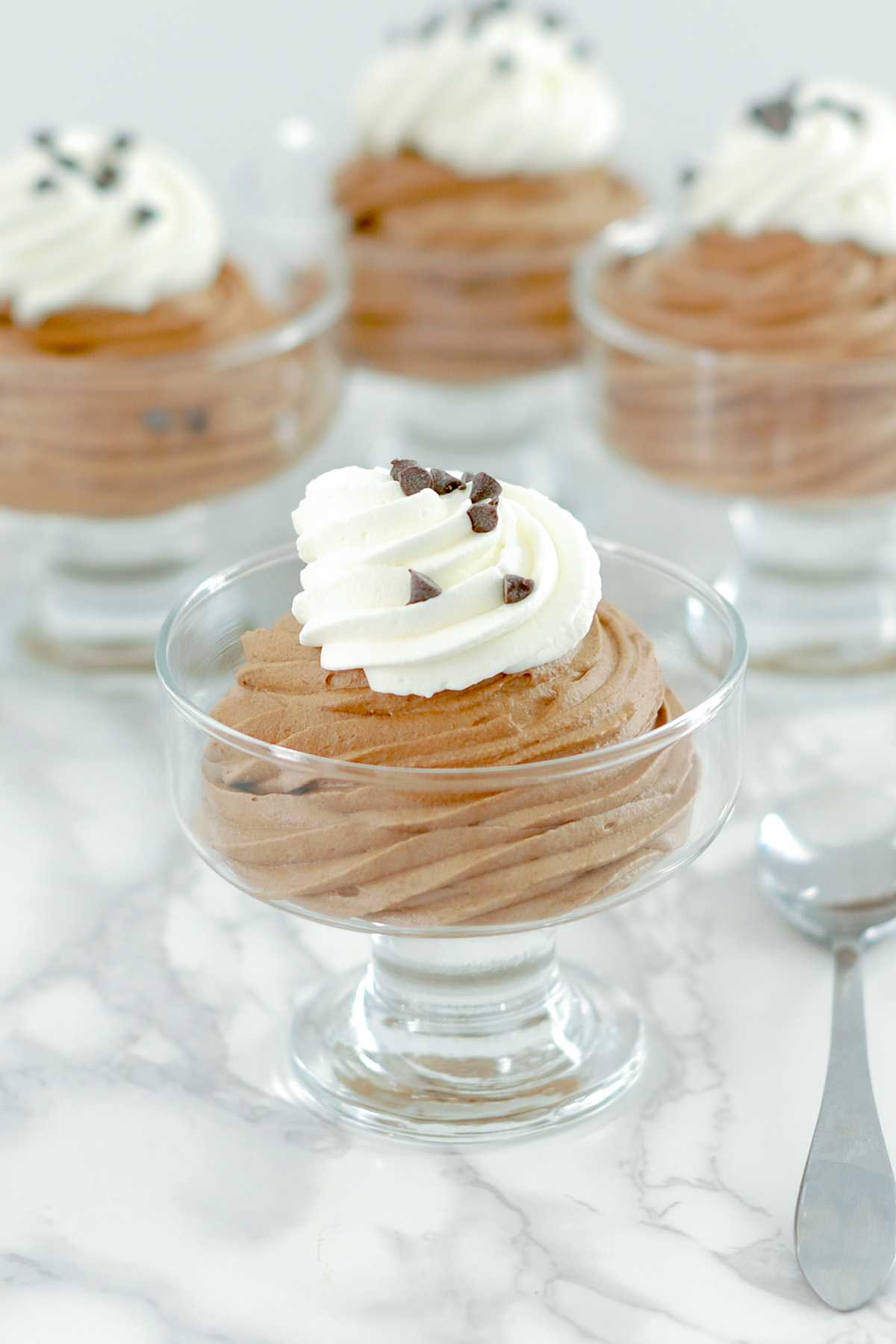
Table of contents
About This recipe
This version uses the full classic French method — whipped yolks, whipped cream, and whipped whites — which gives you a mousse that’s lighter and more stable than simpler versions. It takes a little more effort than a two-ingredient whipped cream mousse, but the result is worth it. I’ll walk you through exactly what each step is doing and why it matters.
Ingredients
Ingredient Notes
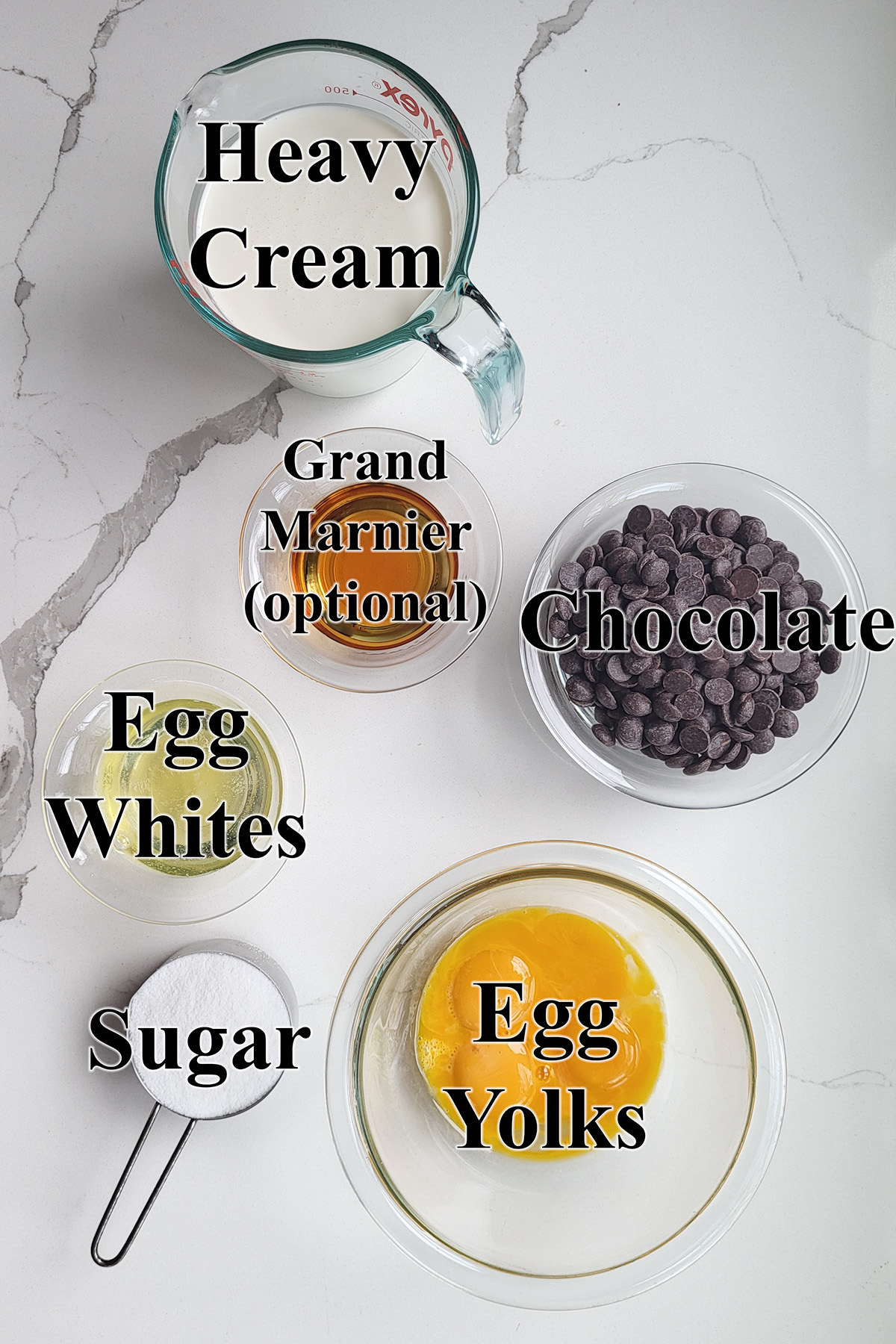
- Heavy Cream – Use heavy cream rather than whipping cream. The higher fat content gives you a more stable foam that holds its structure in the finished mousse rather than weeping or deflating as it chills.
- Chocolate – This recipe uses 55% semi-sweet chocolate, which gives you a good balance of chocolate flavor and sweetness. The percentage on a chocolate package tells you how much of the bar is cocoa solids relative to sugar and other ingredients — the higher the number, the less sweet and more intensely chocolatey the result. You can use up to 70% dark chocolate here, but expect a more bitter, less sweet mousse. I wouldn’t go lower than 55% or the mousse can taste flat.
- Eggs – Both the yolks and whites are used separately and whipped before folding in. The yolks build the rich chocolate base; the whites add lift and lightness. Neither is optional — they’re doing different structural jobs.
- Grand Marnier – Optional, but a small amount of liqueur does more than add flavor — the alcohol enhances other flavors in the base, and the added liquid makes it easier to fold without deflating the whipped components. Rum or brandy work equally well, or leave it out entirely.
How The Classic Mousse Technique Works
Most mousse recipes are essentially whipped cream with melted chocolate folded in. This one is more involved, and it’s worth understanding why.
You’re building three separate aerated components and then combining them: whipped cream for richness and body, whipped egg yolks for the chocolate base, and whipped egg whites for lift. Each one needs to be properly aerated before folding, and each fold needs to be gentle enough to preserve the air you’ve worked to create.
The yolks are whisked over warm water first — this gently cooks them to a safe temperature while also helping them whip up lighter and more voluminous than cold yolks would. The whites get the same warm water treatment, heated to 160°F before whipping, which both pasteurizes them and helps them whip to a more stable peak.
The one moment that trips people up is combining the melted chocolate with the whipped yolks — temperature matching is critical there, and I’ve explained exactly how to handle it in the process section below. Watch the recipe video to see the entire process in action.
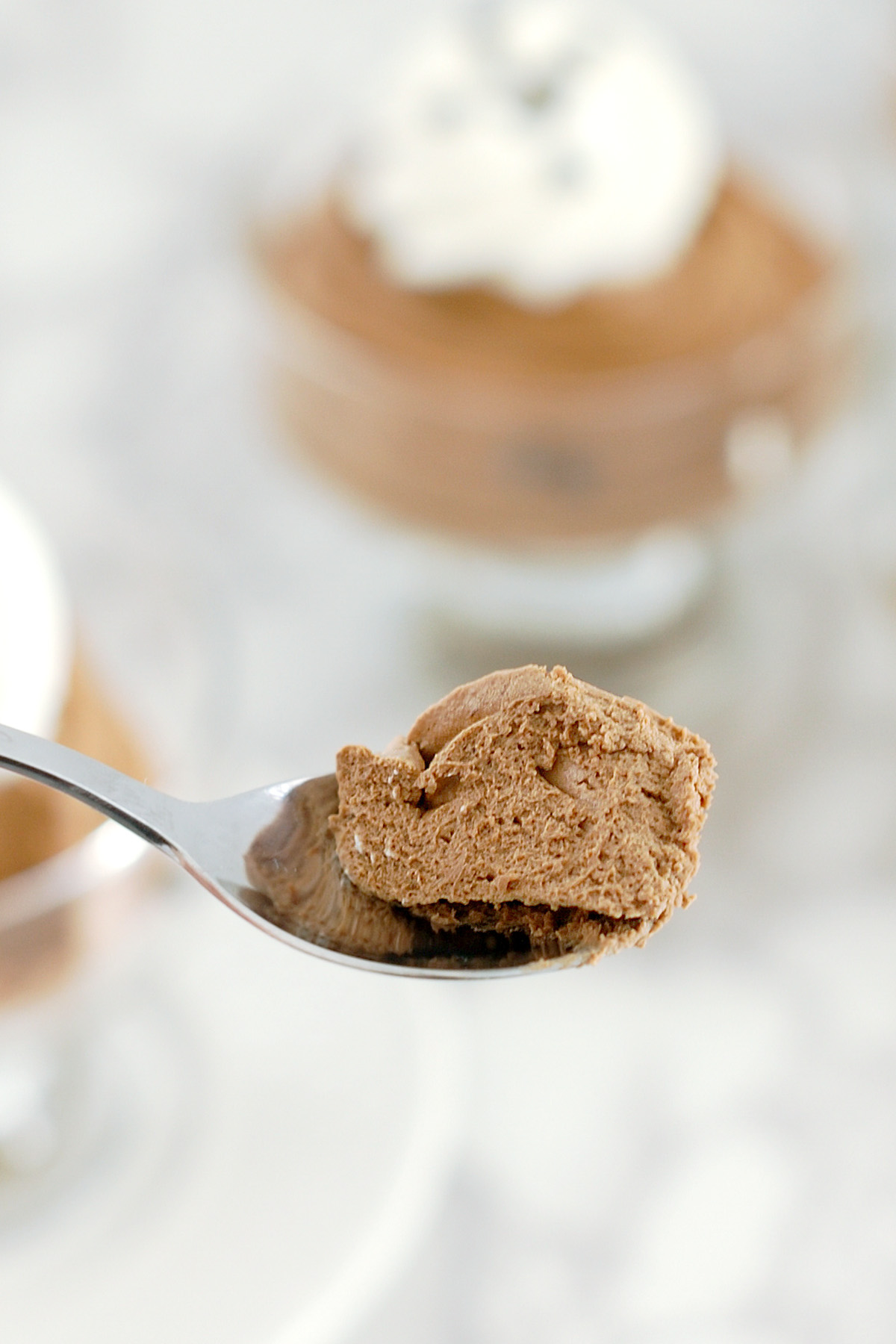
The result is a mousse that’s genuinely lighter than a cream-only version, with enough structure to hold its shape in a glass or as a cake filling.
Process Photos
Here’s what the recipe process looks like at each stage. Refer to the recipe card below for measurements and exact instructions.
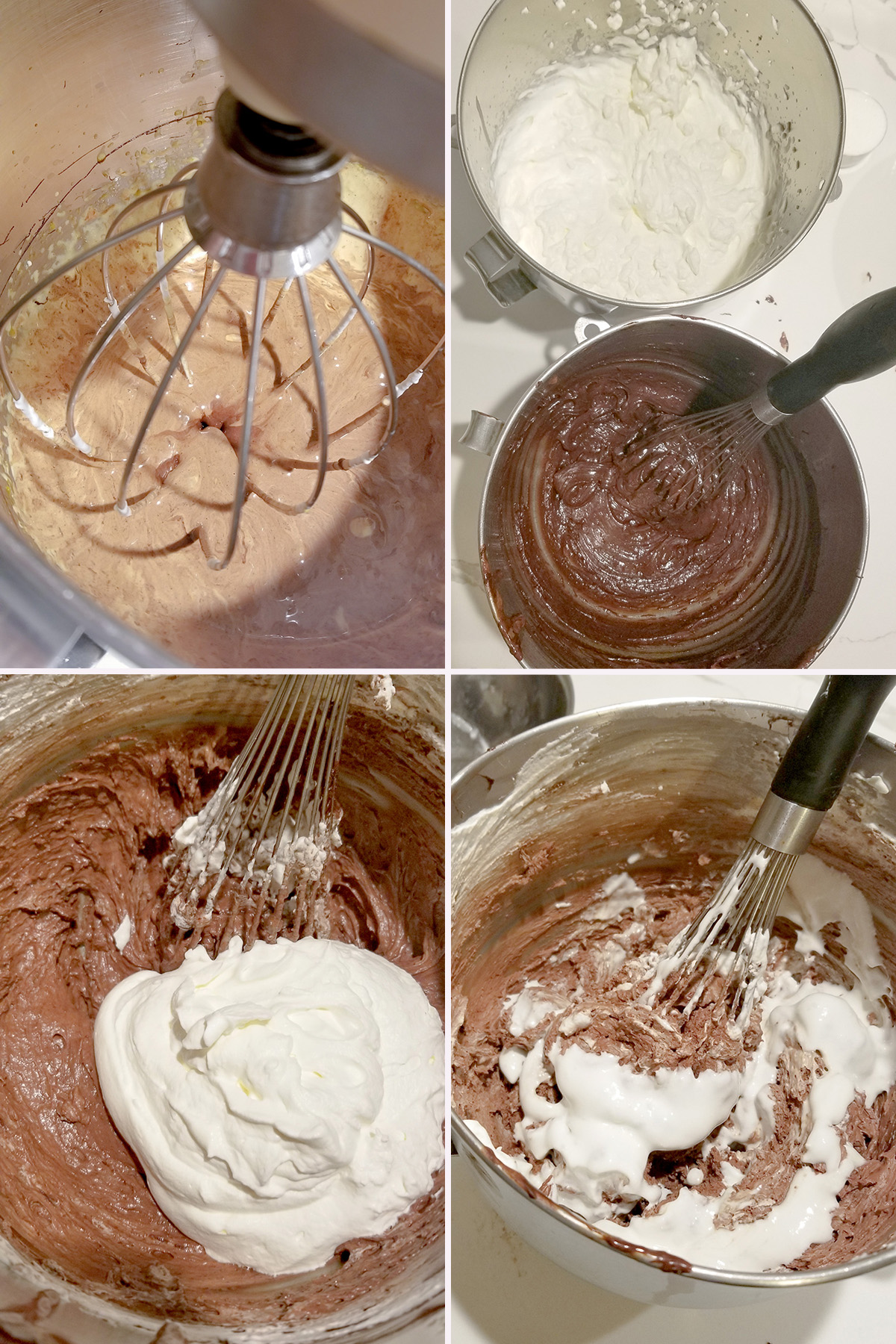
- Whisk the egg yolks over warm water and whip until light and airy.
- Whisk the melted chocolate into the yolks. See the info box below for detailed explanation of how to do this.
- Fold the whipped cream into the chocolate base.
- Fold the egg whites into the mousse.
Combining Chocolate and Eggs Without Seizing
The trickiest moment in chocolate mousse is combining melted chocolate with the whipped egg yolks. If the temperatures are off, the chocolate can seize into a grainy, lumpy mass instead of a smooth base.
The key to a smooth base is temperature matching (“tempering“). Both the chocolate and the yolks should be slightly warmer than body temperature — about 100°F — when you combine them. If the chocolate has cooled too much, microwave in 10-second intervals until it’s just slightly warm to the touch. Don’t let the yolks cool all the way down either; “barely cooled” is what you’re aiming for, not cold.
Tempering is a type of “liaison” — a classic technique for gradually bringing two ingredients together so neither one shocks the other.
How to do it: Add 1/3 of the melted chocolate to the yolks first and whisk until completely combined before adding the rest. This first addition tempers the yolks and begins to equalize the two mixtures so the remaining chocolate incorporates smoothly. Then whisk in the remaining chocolate.
The same principle applies when you add the whipped cream. Whisk the first 1/3 of the cream into the chocolate base vigorously — this loosens and lightens the base so the remaining cream can be folded in gently without deflating it.
If your chocolate base seizes despite all this, it usually means one component was too cold. You can sometimes rescue it by setting the bowl briefly over warm water and whisking gently until it smooths out.
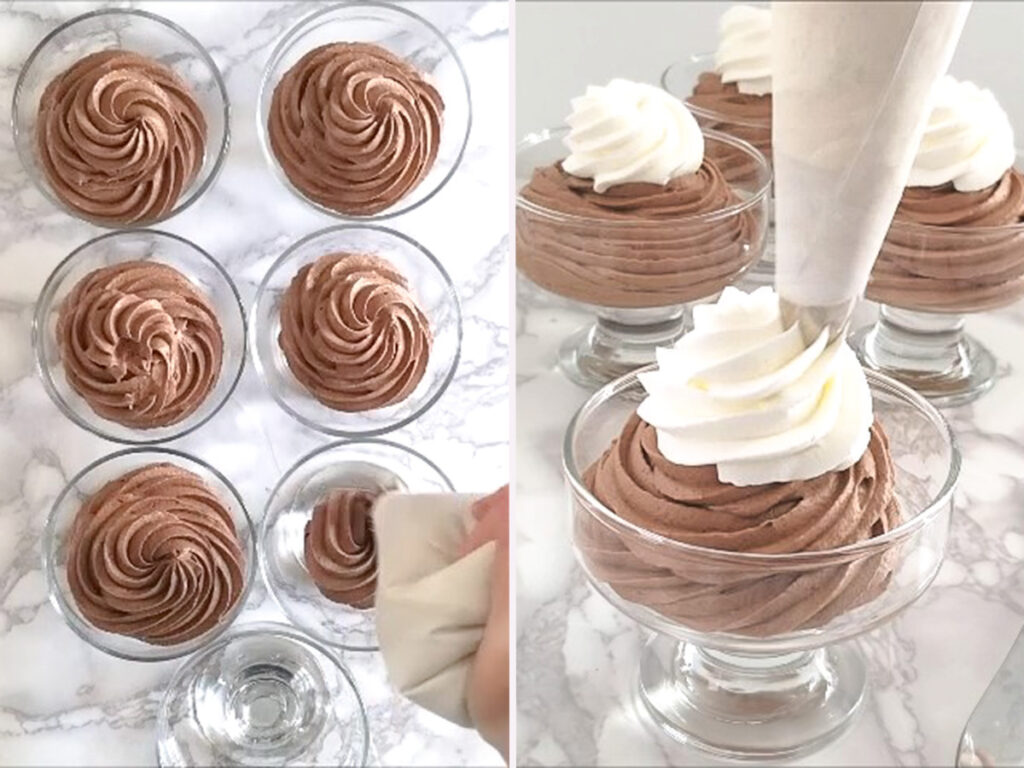
- While the mousse is still soft, pipe or spoon it into dessert dishes.
- Top with whipped cream and chill until set.
Storage
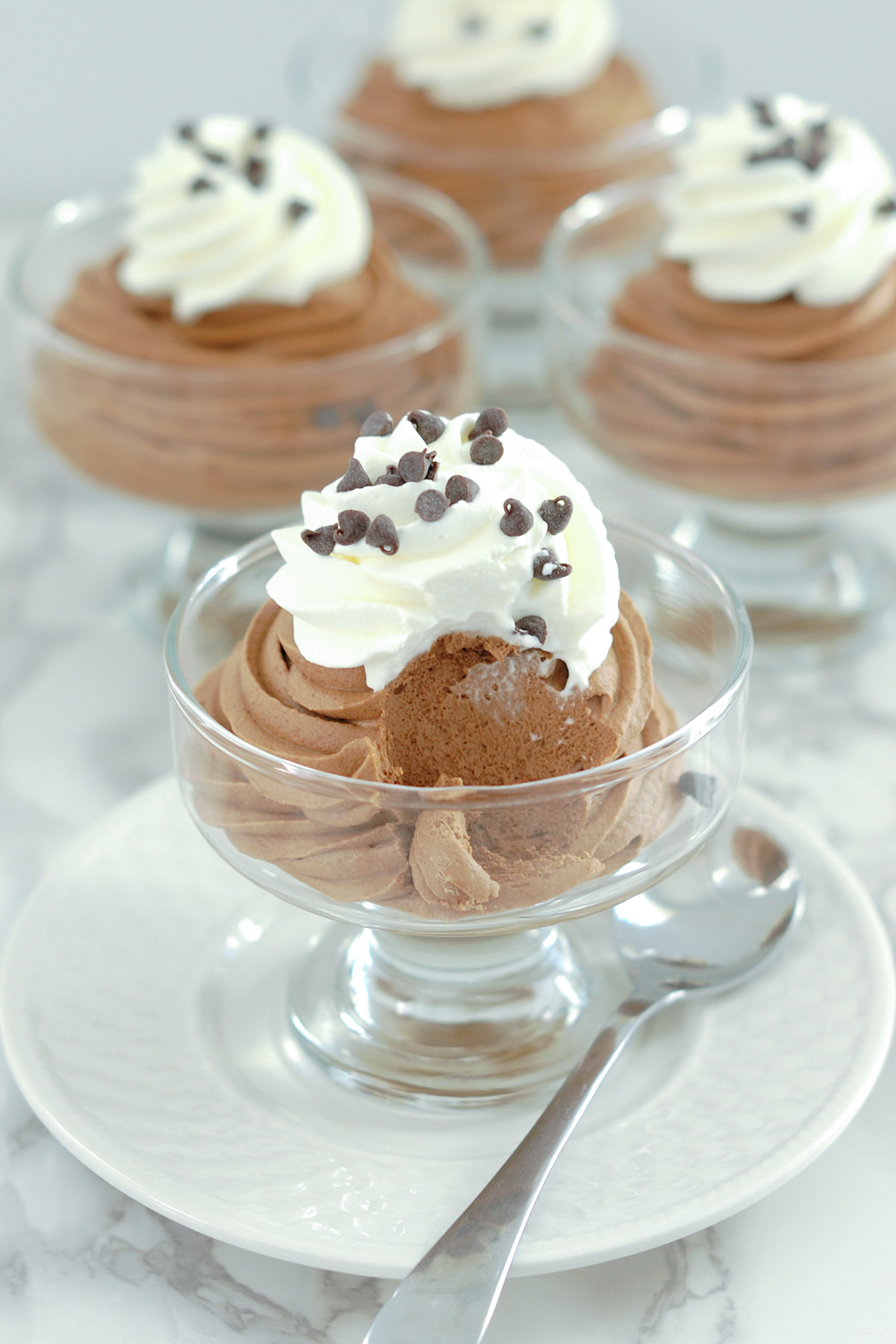
Chocolate Mousse will keep in the refrigerator for 2-3 days. Serve chilled.
FAQs
Yes — this is actually a good make-ahead dessert. You can pipe it into serving glasses up to two days in advance and keep it covered in the refrigerator. The texture holds well.
You can, but the mousse will be noticeably sweeter and the chocolate flavor less pronounced. Milk chocolate also contains more sugar and less cocoa butter, which can affect how the base sets. If you go that route, taste as you go and consider reducing the added sugar slightly.
Temperature mismatch is almost always the cause. If the chocolate is too cool when it hits the eggs, or the eggs have cooled down too much, the chocolate contracts and turns grainy instead of combining smoothly. See the info box above for how to prevent it — the short version is that both components should be slightly warmer than body temperature before you combine them, and always add the chocolate in two additions rather than all at once.
Yes — it’s an excellent cake filling. Have your cake layers ready before you begin, and spread the mousse while it’s still soft. Refrigerate the assembled cake to set the mousse before icing.
Many recipes skip the egg yolks or whites and fold whipped cream directly into melted chocolate. That works and produces a decent result, but this full method gives you a lighter, more complex texture. The whipped yolks add richness and body; the whites add airiness that whipped cream alone can’t achieve.
More Mousse Recipes
Once you’re comfortable with the classic technique, mousse is an endlessly adaptable format. Here are some directions worth exploring:
Concorde Cake— A wildly beautiful French Cake made with chocolate meringue layers and filled with Chocolate mousse
Vanilla Mousse — A lighter mousse with distinct vanilla flavor made with the classi technique.
Fresh Strawberry Mousse — A fruit-forward version that works beautifully in spring and summer.
Chocolate Mousse Pie — If you want to take this mousse somewhere more substantial, this is the starting point.
Peanut Butter Mousse Pie – A peanut butter treat made for grown-ups.
Now that you’ve made this recipe what should you do with all the extra egg whites? Check out this collection of recipes that use extra whites for some great ideas.
If you love this recipe as much as I do, I’d really appreciate a star rating and a quick comment. Ratings and comments help my recipes show in search results. Thanks!
Classic Chocolate Mousse
Video
Ingredients
- 16 oz heavy cream (2 cups)
- 10 oz semi-sweet chocolate (chopped)
- 5 large egg yolks
- 2 oz Grand Marnier (¼ cup, optional)
- 4 oz granulated sugar (½ cup, divided in half)
- 2 large egg whites
Instructions
- Whip 16 oz heavy cream to soft peak and set in the refrigerator while you prepare the other ingredients. Melt 10 oz semi-sweet chocolate and set aside. You want the chocolate to cool slightly but remaining a little warmer than body temp.
- Combine 5 large egg yolks, 2 oz granulated sugar and 2 oz Grand Marnier in a mixer bowl. Set the bowl with the yolks over a pan of simmering water (make sure the bottom of the bowl doesn't touch the water). Whisk until the mixture is warm to the touch. Don't throw away the water, you'll use it for the whites too.
- Move the bowl to the mixer (or use a hand mixer) and whisk until the yolks are barely cooled and have lightened in color and texture. If the chocolate is quite cool, microwave briefly so it's slightly warmer than body temp. Both the yolks and the chocolate should be slightly warmer than body temp.
- Whisk 1/3 of the the melted chocolate into the yolk mixture until completely combined. Whisk in the remaining chocolate. If the mixture is still warm, wait for it to cool to room temp. Whisk 1/3 of the whipped cream into the chocolate base and whisk until completely combined. Then fold the remaining whipped cream into the chocolate base.
- Combine 2 large egg whites with 2 oz granulated sugar in a heatproof mixing bowl. Set the bowl over the pan of simmering water and heat to 160 °F, whisking constantly. Remove the whites from the heat and whip to full peak and completely cooled. Fold the whites into the mousse.
- Pipe or spoon into serving glasses while the mousse is still soft. Refrigerate until set. Serve with a dollop of whipped cream and some chocolate shavings or fresh berries.
Would you like to save this recipe?


As an Amazon Associate and member of other affiliate programs, I earn from qualifying purchases.
Very flawed recipe. I don’t understand how adding melted chocolate to cooled egg. To further cool and solidify is going to ‘fold’ into whipped cream. Resulted in a chunky scrambled waste of ingredients. Save yourself the trouble.
Hi Harriet. There’s nothing wrong with the recipe, per se, but I can see that I didn’t specify clearly enough how to mix the chocolate and egg yolks. There’s a process called “liason” where you add some of the chocolate to the eggs to “temper” then finish combining. If it’s done right you don’t get lumps. You can see the process in the video. Sorry for the inadequate directions. I’ve edited both the recipe and the post to give a much more detailed explanation. I’ve been meaning to update this post for a while. Thank you for the heads up. I hope you try it again.
This says 8 servings, but how large is a serving? I am planning to use it to fill cream puffs and need to know how many batches I will need to make.
It’s hard to be exact with the size of the servings since the amount of air you get into the mousse can vary. But I would estimate about 3/4 – 1 cup per serving. It would be easier to follow my recipe for Chocolate Eclairs with chocolate filling. Just pipe the choux as puffs instead of eclairs.
Could white chocolate (true white chocolate with cocoa butter) be substituted for semi-sweet? If so, would you do any other substitutions like less sugar? I am looking for a white chocolate mousse recipe and not finding one I like.
White chocolate is sweeter and softer than dark chocolate. So there might be a texture difference. I’d have to test to know for sure. I’ll put white chocolate mousse on my to do list. For now, if you try swapping it, let me know how it turns out.
Thank you so much for this wonderful recipe. I did have some issues with egg yolks and chocolate not blending well it got really thick and clumped up. Do you have any idea what I’ve done wrong? It’s still delicious!
If the chocolate is quite cool it may clump as it combines with the yolk mixture. You want the chocolate to be very, slightly warm. I’ll update the instructions to be more specific. Thanks for the feedback.
Good point! Thanks for sharing this recepie with us! It still turned out amazing!
If using this as a cake filling should the cake be refidgerated?
Yes, because of the cream it should be refrigerated. You can take the cake out an hour or two before serving to soften up a bit.
Thank you so much!