Sourdough Rye Dinner Rolls



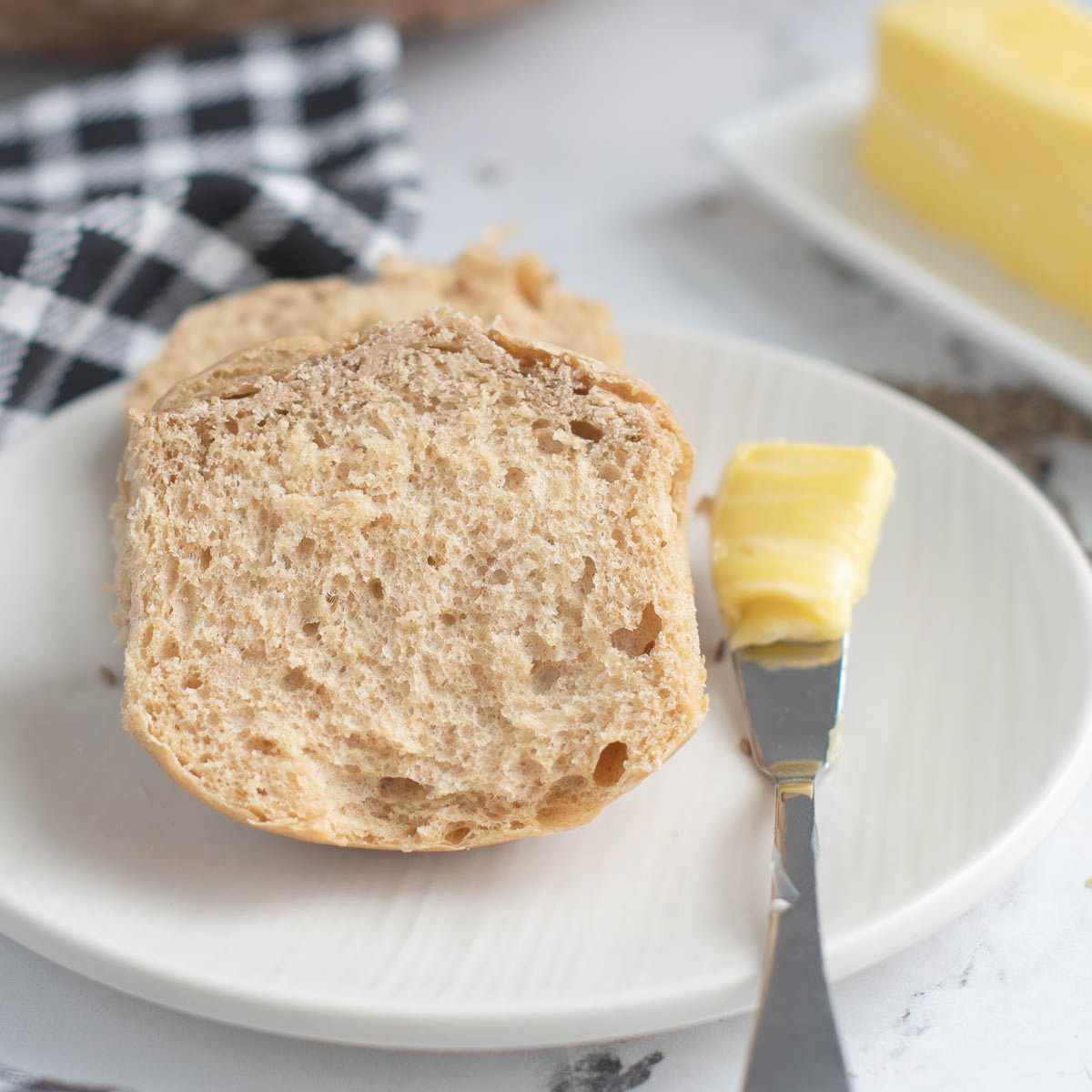
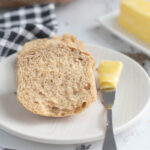
Sourdough Rye Dinner Rolls are soft, buttery, and lightly sweet from a dash of molasses. Rye flour, caraway seeds, and an active sourdough starter give them a distinctive flavor and tender crumb.
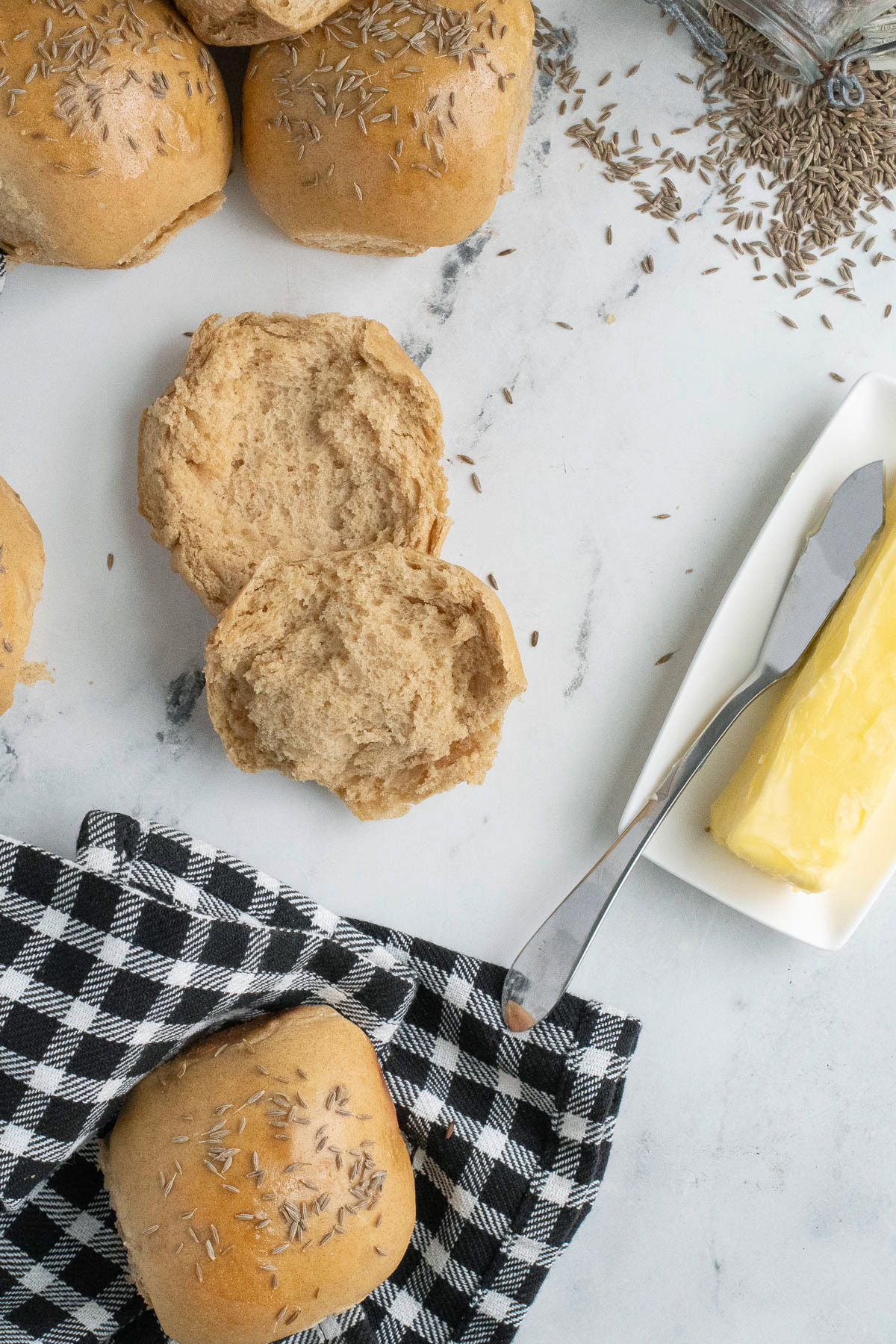
Table of contents
Why you’ll love this recipe
Everyone loves a buttery-soft, lightly sweet dinner roll — and this one has just a little more character.
Rye deepens the flavor and gives these rolls a rustic edge. Molasses adds gentle sweetness and a beautiful color, and together they balance the light tang of sourdough fermentation. The result is a dinner roll that feels both familiar and distinctive.
This is an enriched dough, made with milk, eggs, and butter, so the crumb stays soft and supple. Enriched sourdough behaves a little differently than lean sourdough — fermentation is slower, and timing is more flexible. Visit my Sourdough Baking Guide for a deeper explanation of how enriched doughs work.
These rolls are an adaptation of my yeasted Rye & Molasses Rolls. Visit that post if you don’t have an active sourdough starter yet.
Ingredients
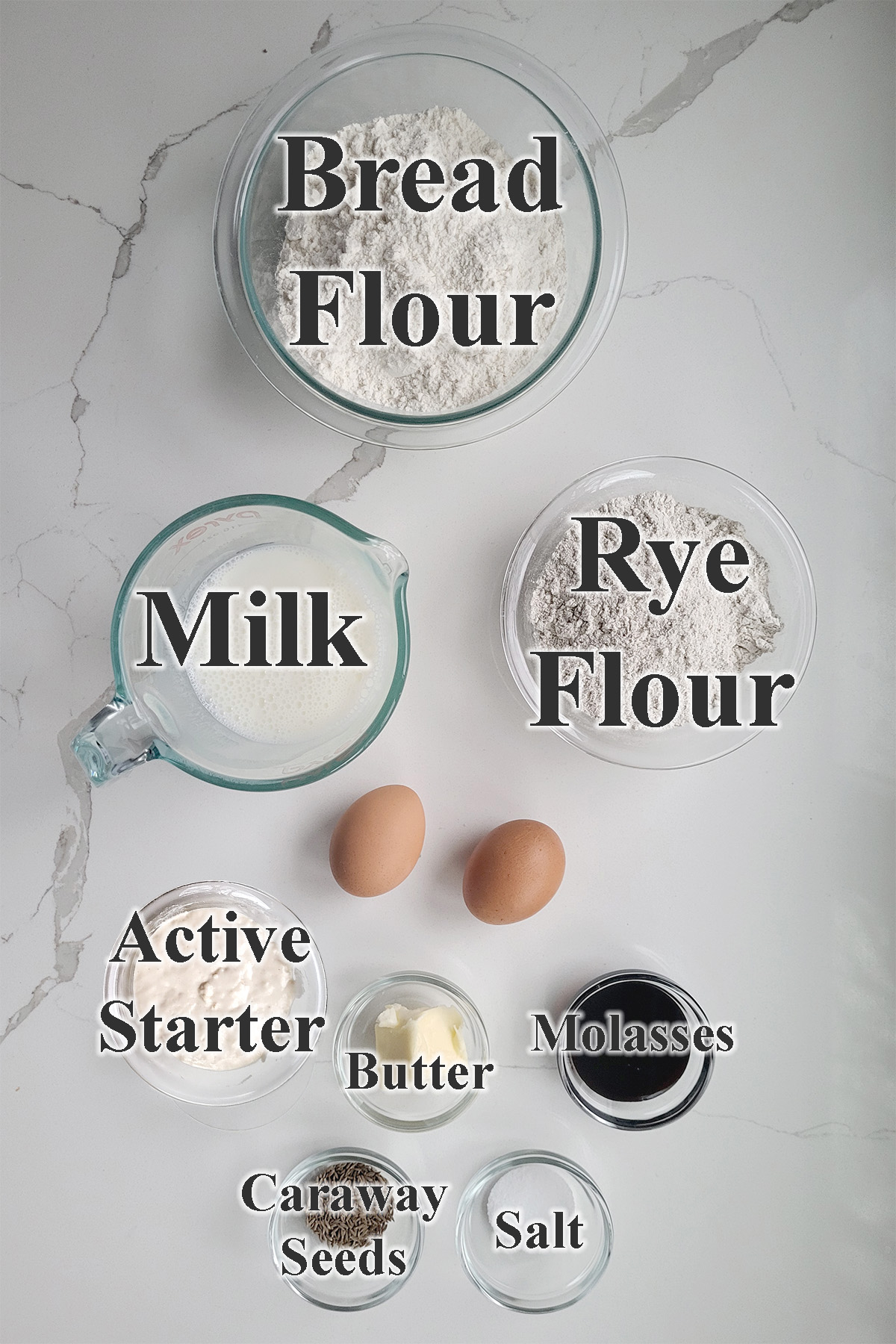
Ingredient Notes
- Bread Flour
Higher protein means stronger gluten development. This structure helps the rolls rise high and hold their shape. - Rye Flour
Rye contributes flavor but very little gluten, so a small amount goes a long way. Because of this, the dough will feel quite soft and sticky at first. Don’t add extra flour, or the rolls will bake up dense. Used in moderation, rye keeps the crumb tender rather than heavy. - Active Sourdough Starter
(100% hydration) – Use a lively starter that’s been fed 6–8 hours before mixing. If your starter has a different hydration, adjust the liquid or flour accordingly to maintain the dough’s consistency. - Molasses
Molasses is the syrup left behind from sugar refining. It adds sweetness, moisture, and color. Avoid blackstrap molasses; its flavor is too strong for this dough. - Milk, Egg & Butter
These ingredients enrich the dough for a soft, tender crumb. - Caraway Seeds
The seeds are optional, but rye and caraway are a classic flavor combination.
Process Photos
Here’s what the recipe process looks like at each stage. Refer to the recipe card below for measurements and exact instructions.
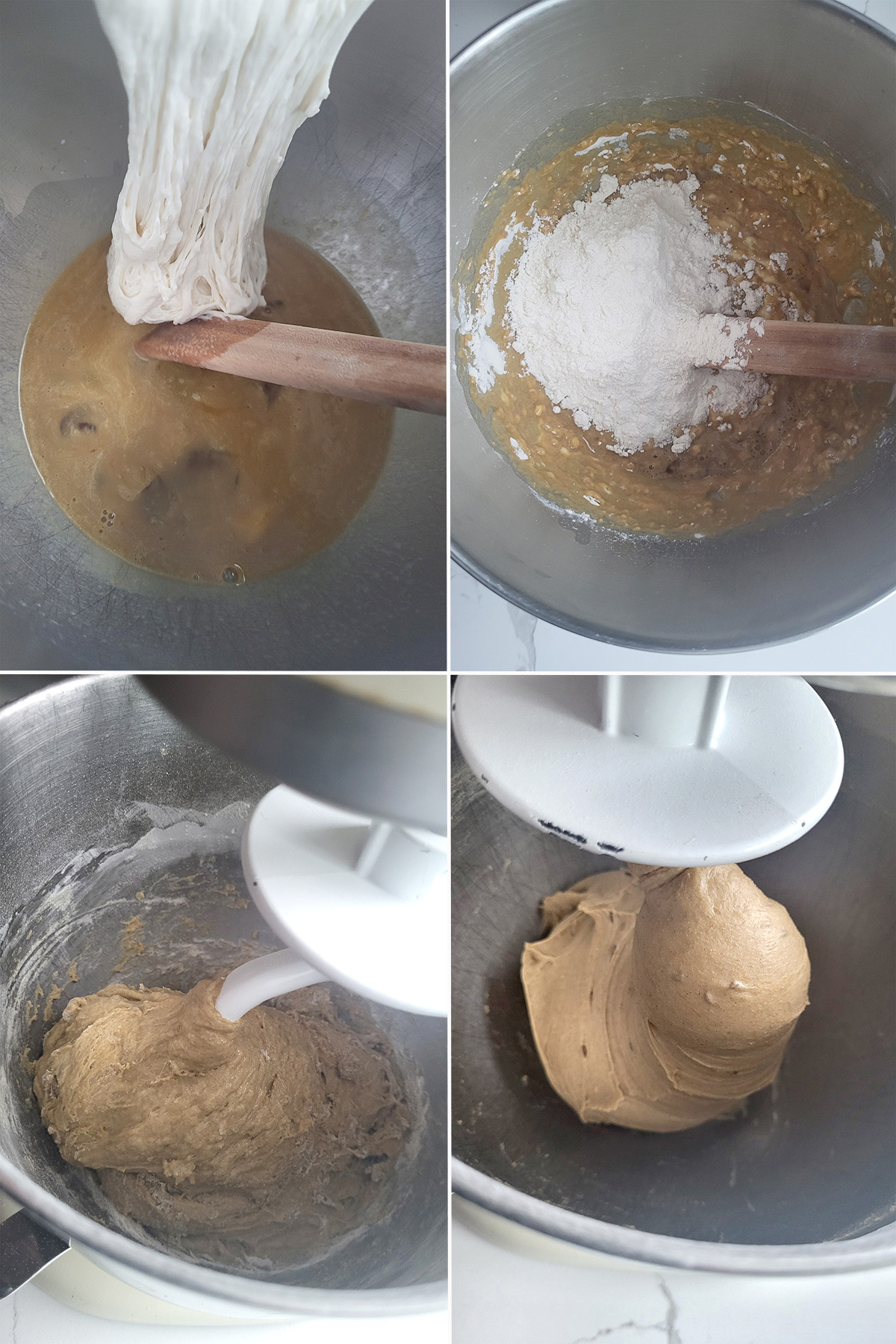
- Combine the scalded milk with the butter and set aside to cool. Add the starter, eggs, salt, and bread flour. Mix to form a thick batter.
- Switch to the dough hook and add the rye flour and caraway seeds.
- Knead until the dough clears the sides of the bowl and gathers on the hook. (If working by hand, knead 8–10 minutes until smooth and elastic.)
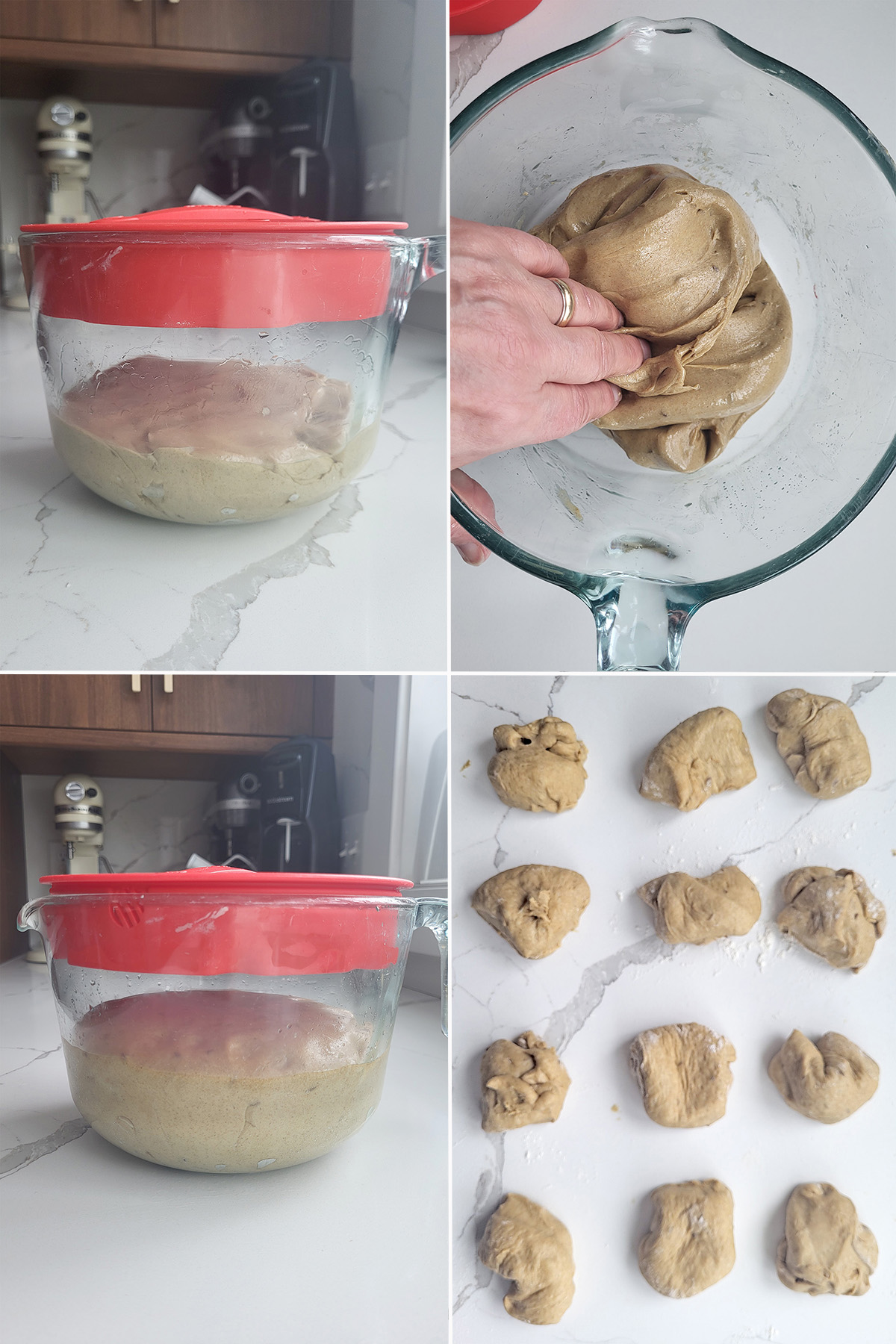
- Set the dough aside at room temperature for 5-6 hours of bulk fermentation.
- Every hour or so, fold the dough to redistribute the yeast and aerate and develop the dough.
- Once bulk fermentation is complete, refrigerate the dough for cool fermentation. If you want to bake the same day, proceed without refrigerating.
- Divide the dough into 12 equal pieces.
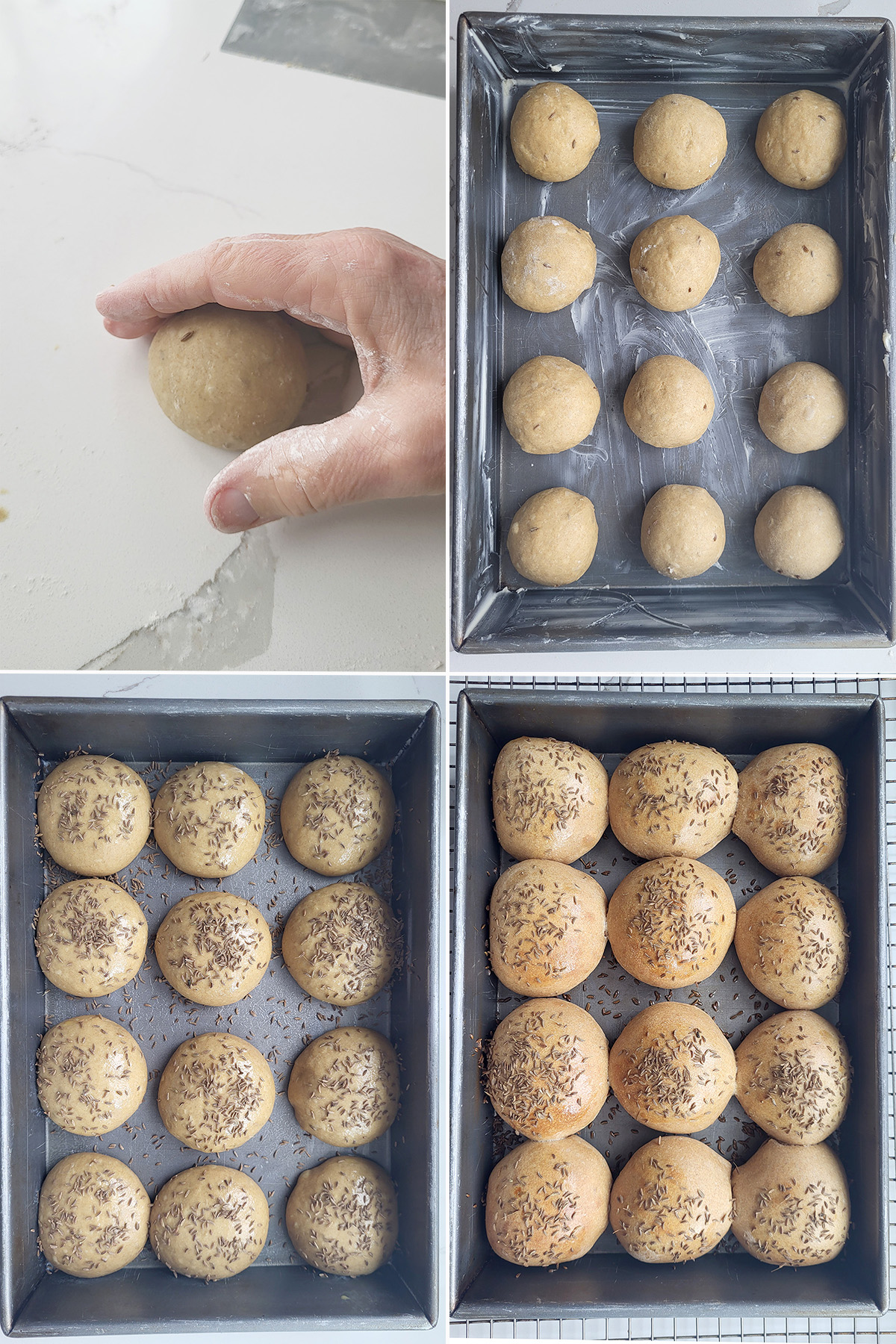
- Shape each piece into a smooth ball by rolling the dough under your cupped hand.
- Set the rolls into a generously buttered pan and set aside to proof for about 2-3 hours. The proofing time will vary based on the temperature of the dough and the ambient temperature.
- To test readiness:
- If the dough springs right back, it needs more time.
- If the dimple slowly fills in, it’s ready to bake.
- If the roll collapses, it has over-proofed.
- Bake until well risen and golden brown.
Baking Sense Tip
Enriched doughs rise more slowly than lean doughs. Sugar and fat slow yeast activity, so both the bulk fermentation and final proof may take a bit longer.
Baking Schedule
Feed the Starter
Feed your starter the night before or early the morning you plan to mix. Adjust timing depending on temperature and starter activity. You want it at peak ripeness when mixing the dough.
Mix the Dough
Once the starter is ready, mix the dough and ferment at room temperature for 5-6 hours. Timing depends on ambient temperature and how vigorous your starter is. Because this is an enriched dough, expect it to rise more slowly. You can proceed with baking at this point, but I recommend a cold fermentation for better flavor.
Cold Fermentation
After bulk fermentation, cover tightly and refrigerate overnight—or up to 48 hours.
This improves flavor and makes the dough easier to shape.
Shape in the Morning
Shape the rolls. At this stage, the dough balls can be wrapped and frozen (before final proof) for future baking. After shaping, freeze the dough balls on a sheet pan. Once firm, transfer to freezer bags. Defrost, let rise, and bake.
Final Proof
At room temperature, the final rise usually takes 2–3 hours, depending on the environment.
Storage
- Short-Term Storage: Rolls are best the day they’re baked but will keep at room temperature for 1–2 days. Freeze any leftovers.
- Freezing Baked Rolls: Freeze after baking and cooling. Defrost and warm in a 200°F oven.
More Rye Recipes
If you love this recipe as much as I do, I’d really appreciate a star rating and a quick comment. Ratings and comments help my recipes show in search results. Thanks!
Sourdough Rye Dinner Rolls
Ingredients
- 4 ounces milk (½ cup, room temperature)
- 1 ounce unsalted butter
- 1 ½ ounces molasses (2 tablespoons)
- 2 large eggs (room temperature)
- 8 ounces active sourdough starter (1 cup, 100% hydration)
- 1 ½ teaspoons table salt
- 6 ounces bread flour (1¼ cups, see note)
- 5 ounces Rye Flour
- 2 teaspoons caraway seeds
Instructions
- Heat 4 ounces milk until scalding hot. Add 1 ounce unsalted butter to the hot milk and stir until the butter is melted. Pour the milk into a mixing bowl and allow it to cool to about 100 °F. Add 1 ½ ounces molasses, 2 large eggs, 8 ounces active sourdough starter, 1 ½ teaspoons table salt and 6 ounces bread flour Mix until it forms a thick batter. Switch to the dough hook if using on a stand mixer.
- With the mixer running on low speed, add 5 ounces Rye Flour and 2 teaspoons caraway seeds. If mixing by hand stir in as much flour as you can with a wooden spoon, then knead the remaining flour in by hand.
- Knead on medium-high for 5 minutes. The dough will stick to the bottom of the bowl but should gather on the hook and clear the sides of the bowl. If working by hand knead for 6-8 minutes until the dough is elastic and smooth.
- Transfer the dough to a lightly oiled bowl, turning once to coat the dough. Cover the bowl and set it aside at room temperature for 3 hours. Every hour or so check on the progress of the dough by folding it over itself in the bowl. This will help develop the structure and redistribute the yeast. After about 3 hours the dough should be lively, elastic and airy. If the dough is still sluggish give it another hour or two at room temperature. Cover the bowl and refrigerate overnight (or up to 2 days). If you prefer to bake the same day, proceed with shaping the rolls.
- Generously butter a 13"x9" brownie pan. Turn the dough out onto a lightly floured surface. Using a sharp knife or bench scraper cut the dough into 12 even pieces. (I use a scale to make sure all the rolls are the same size.)
- Roll each piece of dough under your cupped hand to form a smooth ball. Place the rolls into the pan. Cover and set aside in a warm spot to rise until nearly doubled in size and the dough springs back slowly when poked, about 2-3 hours. Proofing time will vary based on the temperature of the dough and the ambient temperature. Preheat the oven to 375 °F.
- Brush the rolls with egg wash and sprinkle with caraway seeds, if desired. Bake the rolls until they are golden brown and feel light when picked up. About 10-15 minutes.
- Enjoy warm or at room temperature.
Would you like to save this recipe?


As an Amazon Associate and member of other affiliate programs, I earn from qualifying purchases.