
Vanilla Chiffon Cake
Vanilla Chiffon Cake! “Chiffon” is a great word. It sounds pretty and it conjures up images of softness, airiness and luxury, like the namesake fabric. Those are all lovely traits for a cake, no? Who doesn’t want a cake that is soft, airy and luxurious?
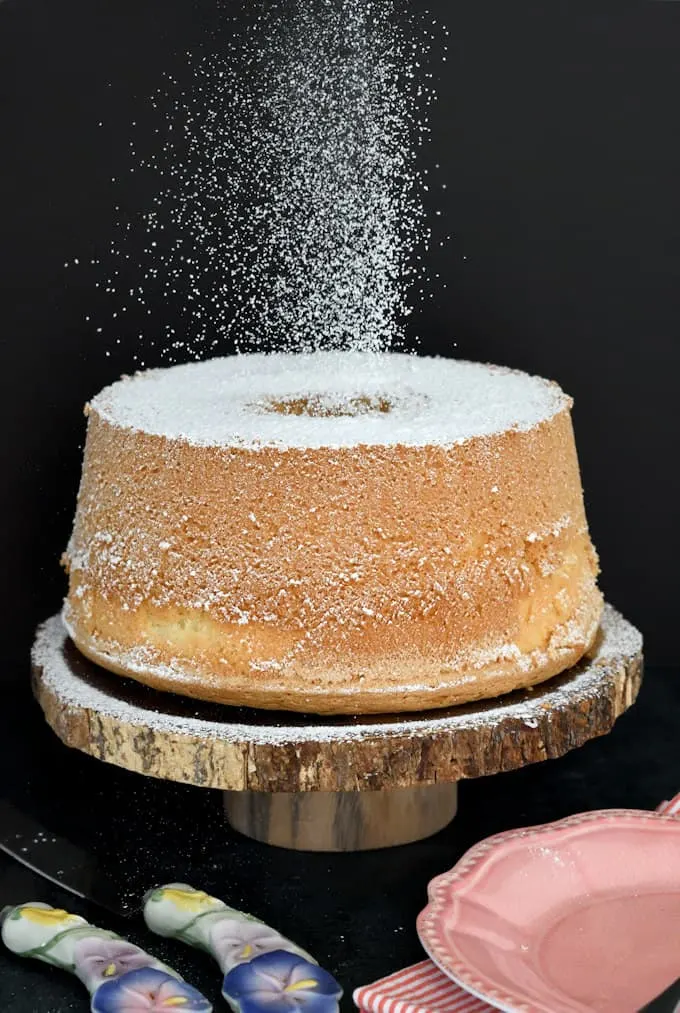
Table of contents
What is Chiffon Cake?
What makes chiffon cake unique is the fact that is a cross between a rich buttery cake and an airy sponge cake. It’s got the best of both worlds.
Cake recipes are all about the balance of the ingredients. There are cake structure builders (eggs and flour) and cake tenderizers (fat and sugar).
A chiffon cake is lighter than a typical butter cake because it has less overall fat and relies on whipped eggs for much of the structure.
A chiffon cake is richer than sponge cakes like Angel Food and Genoise, which use little or no fat and fewer or no yolks.
It’s a Goldilocks cake that works equally well as a simple dessert dusted with powdered sugar or as the base for a more elaborate layered creation.
Ingredients
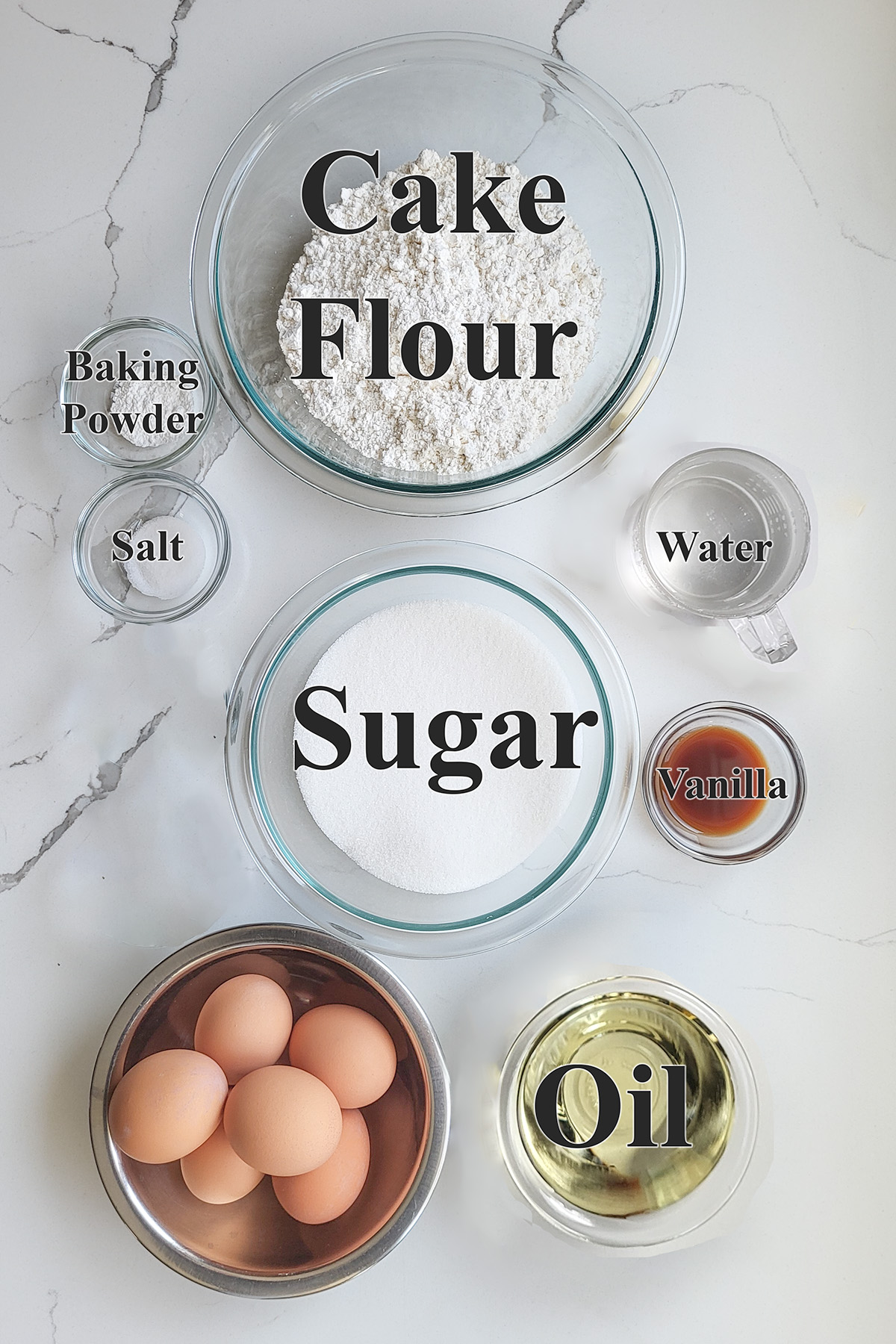
Ingredient Notes
- Cake Flour – Low protein cake flour makes a very tender cake. I prefer bleached cake flour for the softest crumb, but unbleached cake flour will work.
- Oil – The oil not only adds moisture to the cake, but also coats the flour which prevents gluten formation. Oil stays liquid when chilled, so the cake will stay soft, even when refrigerated.
- Eggs – Eggs provide both structure and lift. The yolks emulsify the oil and liquid for a smooth batter; the whipped whites create the airy texture chiffon is known for.
- Baking Powder – It looks like a lot of baking powder in the recipe. But this cake needs to rise high in the oven. The structure from the eggs will support the air in in the cake and the baking powder will expand those bubbles for the lightest cake.
Chiffon Cake Mixing Technique
The process for mixing chiffon cake starts with emulsifying the oil and water in the recipe. Egg yolks contain lecithin, which will bind the oil and liquid together.
Because we start the recipe with an emulsified base, the cake batter will be smooth and stable. This is the perfect building block for a cake with an even crumb and without any oily residue on the palate.
To begin creating a light and airy texture we will aerate the emulsified base. The sifted dry ingredients are added to the yolk mixture then whipped on high speed to trap air and lighten the mixture.
Whipping the whites with sugar is when the real magic happens. The sugar stabilizes the whipped whites so they can trap plenty of air, which expands in the oven — creating volume.
But be careful not to overwhip the egg whites. The sugar will stabilize the foam, but if you whip the whites too long they can separate and weaken the structure. The less stable foam cannot rise tall in the oven, compromising the cake rise. Stop whipping as soon as the whites reach full peak.
Once you have perfectly whipped egg whites, gently fold them into the yolk base. Stop folding the second you no longer see any streaks of egg white. Over-folding will deflate the batter.
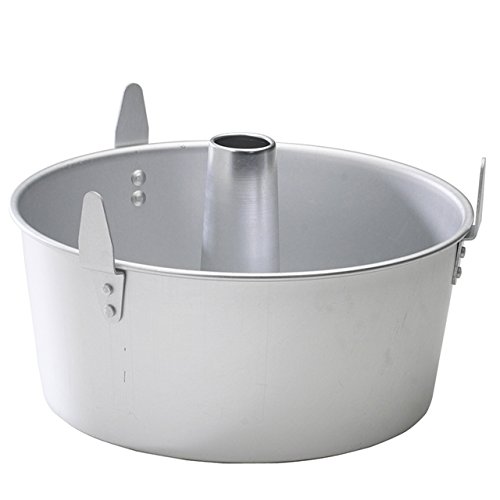
Finally, bake your beautiful batter in an ungreased tube pan for the classic chiffon cake shape. The batter will cling to the ungreased pan supporting the structure until the batter sets. The cake bakes both from the tube in the center and the outer walls of the pan, so it can rise straight and tall.
Since the baked cake is stuck to the bottom (and sides and middle) of the pan, you can flip the pan over onto the cooling rack as soon as it comes out of the oven. This cake has a delicate texture when it’s warm so it needs the pan to help it stay in place until it is completely set.
Process Photos
Here’s what the recipe process looks like at each stage. Refer to the recipe card below for measurements and exact instructions.
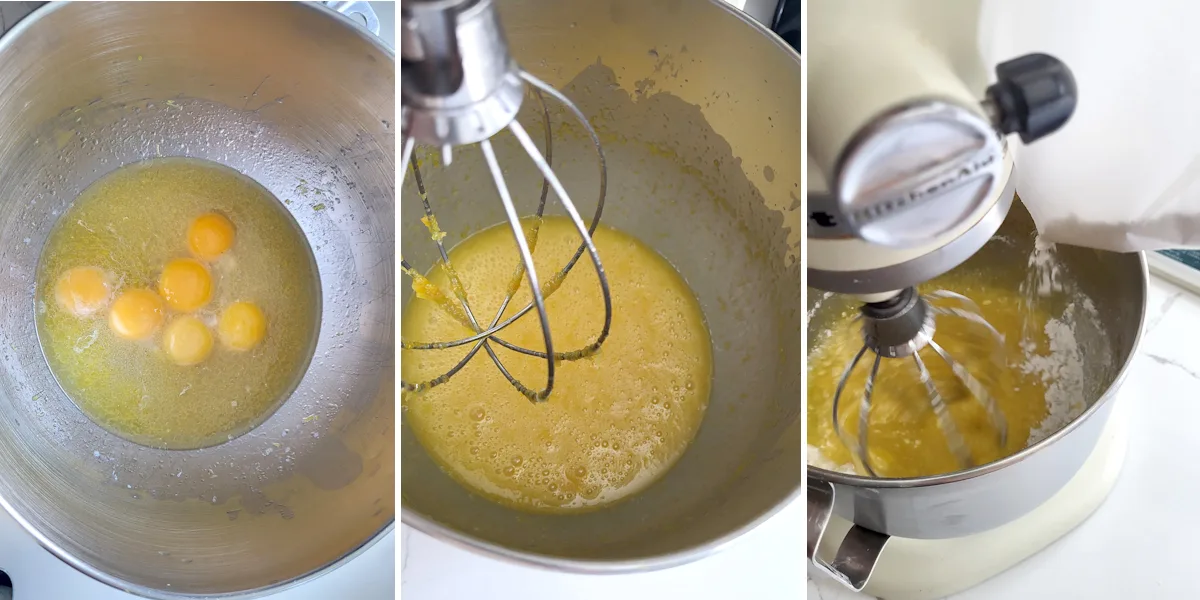
- Combine the eggs, oil, water and in a mixing bowl.
- Mix until the ingredients are emulsified.
- Add the dry ingredients and mix to combine.
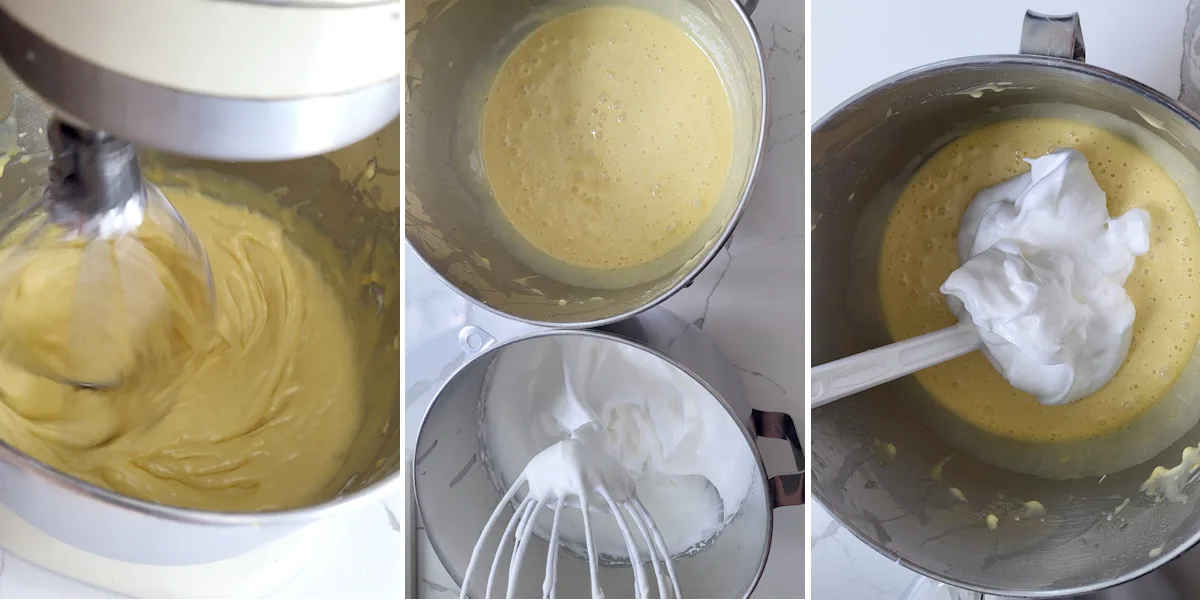
- Increase the speed to high and whip for 1 minute. Set the bowl aside.
- Whip the whites with sugar until the reach full peak.
- Fold the whites into the batter.
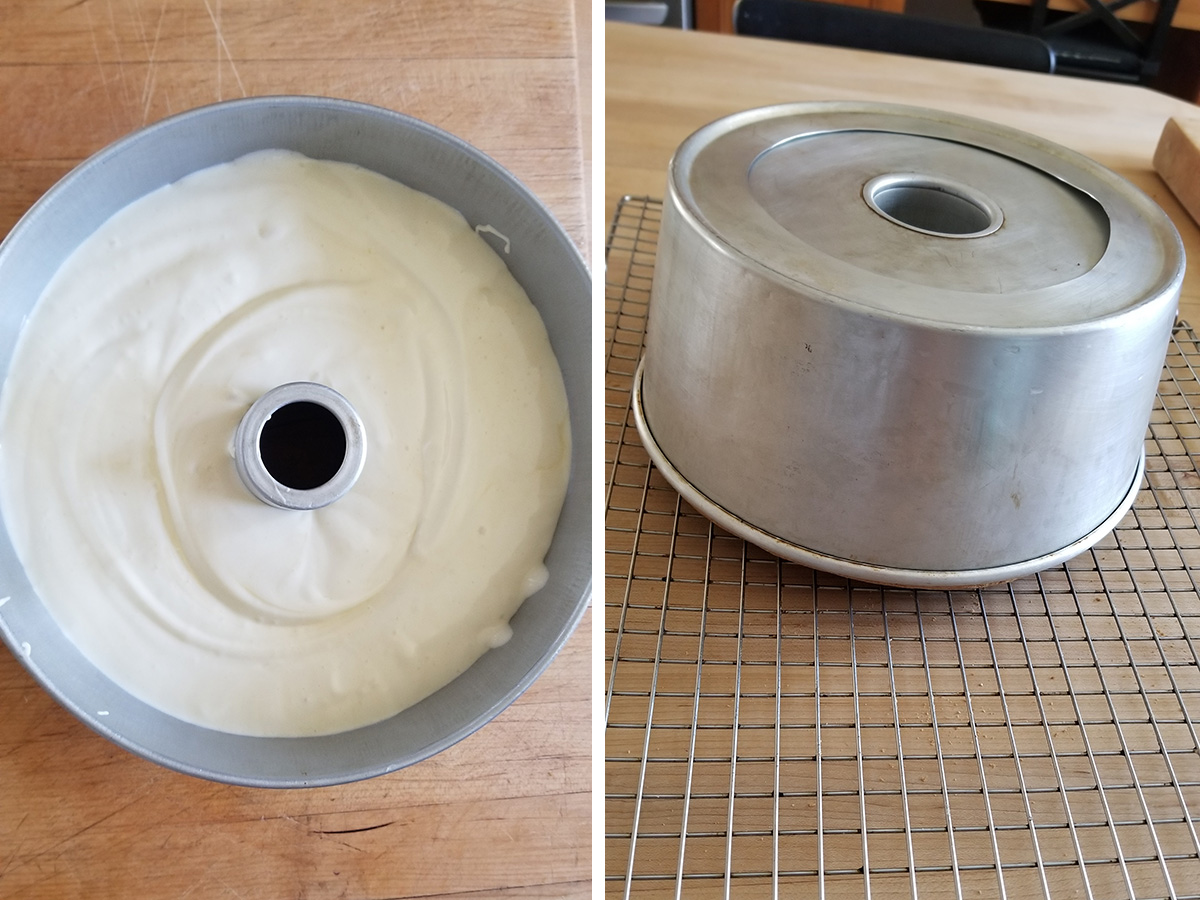
- Pour the batter into the pan and spread gently to even it out. Bake until the middle of the cake springs back with lightly pressed.
- Cool the cake in the tube pan upside down so it doesn’t collapse.
- If you bake the batter in regular round pans cool right side up.
FAQs about Vanilla Chiffon Cake:
Chiffon cakes are traditionally baked in an angel food cake pan. The batter can also be baked in two, 8 inch x 3 inch round pans to make a layer cake.
If the cake is baked in a tube pan, treat it like an angel food cake and cool it upside down. Cool layer cakes in the pans.
If you baked the cake in a tube pan and greased the pan the cake can sink. If you took the cake out of the pan before it was completely cooled, or if you didn’t cool it upside down, the cake could sink. If you overwhip the eggs your cake won’t rise as high as it could.
A chiffon cake will stay fresh at room temperature (if it doesn’t have a filling) for 3-4 days.
A cake without filling can be stored at room temperature for 3-4 days. If the cake has a perishable filling, it should be refrigerated.
Yes, because it’s made with oil instead of butter, chiffon cake will be soft even if refrigerated.
Yes, wrap the cake in two layers of plastic wrap and freeze for up to 3 months. You can also freeze individually wrapped slices. Defrost in the wrapping at room temperature.
More Chiffon Cakes
- Chocolate Chiffon Cake
- Lemon Chiffon Cake
- Coconut Chiffon Cake (coming soon)
If you love this recipe as much as I do, I’d really appreciate a star rating and a quick comment. Ratings and comments help my recipes show in search results. Thanks!
Vanilla Chiffon Cake
Video
Ingredients
- 3 ½ oz vegetable oil (½ cup)
- 6 large eggs (room temp, separated)
- 6 oz water (¾ cup)
- 1 tablespoon vanilla extract
- 10 oz cake flour (2 ¼ cups, see note)
- 12 oz granulated sugar (1 ½ cups, divided)
- 1 tablespoon baking powder
- ½ teaspoon table salt
Instructions
- Preheat the oven to 325 °F. For a traditional chiffon cake, use an ungreased 10" tube pan. If you want to make a layer cake line two 8”x3" cake pans with parchment paper or butter and flour the bottom of the pans only.
- Combine 3 ½ oz vegetable oil, 6 egg yolks, 6 oz water and 1 tablespoon vanilla extract in a mixer bowl. Mix on medium speed until well combined and have become emulsified.
- Sift 10 oz cake flour with 1 cup of the sugar, 1 tablespoon baking powder and ½ teaspoon table salt. With the mixer on low, add the dry ingredients to yolk mixture. Whip on high speed for 1 minute, then set aside
- Whip 6 egg whites on medium speed to soft peak. Gradually add the remaining ½ cup sugar, increase the speed to medium high and whip to full peak. Fold the whites into the yolk mixture in three increments.
- If making a layer cake, divide the batter between the two pans. If you're using a tube pan, pour all the batter into the pan. Bake until the middle of the cake springs back with lightly pressed, 30-35 minutes for the layers or about 50-60 minutes for the tube pan.
- Cool the cake completely in the pan. If using a tube pan cool the pan upside down.
Would you like to save this recipe?


As an Amazon Associate and member of other affiliate programs, I earn from qualifying purchases.
Hi, please reply this asap! Do we use large eggs or small eggs for this recipe? Also can someone please explain the part about cooling it upside down? Thanks so much!
My recipes always use large eggs. I’ve updated the recipe card to note they are large eggs. If you bake the cake in a tube pan, cooling it upside down keeps it from sinking as it cools. If you bake the cake in round pans for a layer cake, cool the cake upright.
Can I use orange juice instead of water? The size of my tube pan is 8′.. How to reduce this recipe to fit in my 8′ tube pan? Please reply. Thank you.
Yes to the orange juice. If you want an orange cake I would also recommend putting the finely grated orange zest in the batter as well. The zest has the orange oil which has more orange flavor than the juice does. This is a big recipe, so if you have a smaller pan you can maybe do 2/3 of the batter or mix the entire batter and bake extra in cupcake pans.
If I wanted to make this is chocolate do I sub. Some flour for Dutch cocoa?
Cake flour: 226 + 54g cocoa=280?
Thanks regards
Yes, that should work.
Would you mind giving me the ratio of flour and cocoa in cups?
Do you want to know how much flour and cocoa to use (in cups) to make this a chocolate cake? If so, try using 1 3/4 cups of flour and 1/2 cup of cocoa.
If i want to bake this in cupcake form, how long should I bake them for?
I can’t say exactly, but I would start checking after 10 minutes. When you press the center of a cupcake and it springs back, it’s done.
Hi !
I was wondering if you did some testing about substituing some of the water for cream and/or buttermilk ?
I thought because in a chiffon cake we use oil for a super moist cake instead of butter. I was thinking using cream ínstead of water would give a nice taste. What do you think ? Would you recommand it ? If yes would you make any adjustment ? Can you still refrigerate if you do with cream, because cream is a liquid fat ?
I was also wondering why we put water ínstead of buttermilk, since buttermilk make moist and tender cake ?
Thank you 🙂
The oil contributes both fat and moisture to the batter. Using cream instead of water would add more fat to the recipe and might make the cake too dense. The chiffon cake just have a different flavor and texture profile than a Buttermilk Cake. It is supposed to be light and fluffy. Adding cream of buttermilk would change the texture.
Thank you for thé info 🙂
Hi, are these ingredients for two 8″ pan or for one 8″ pan only? Hope you notice my comment, thank you.
Two 8″ pans as shown in the video.
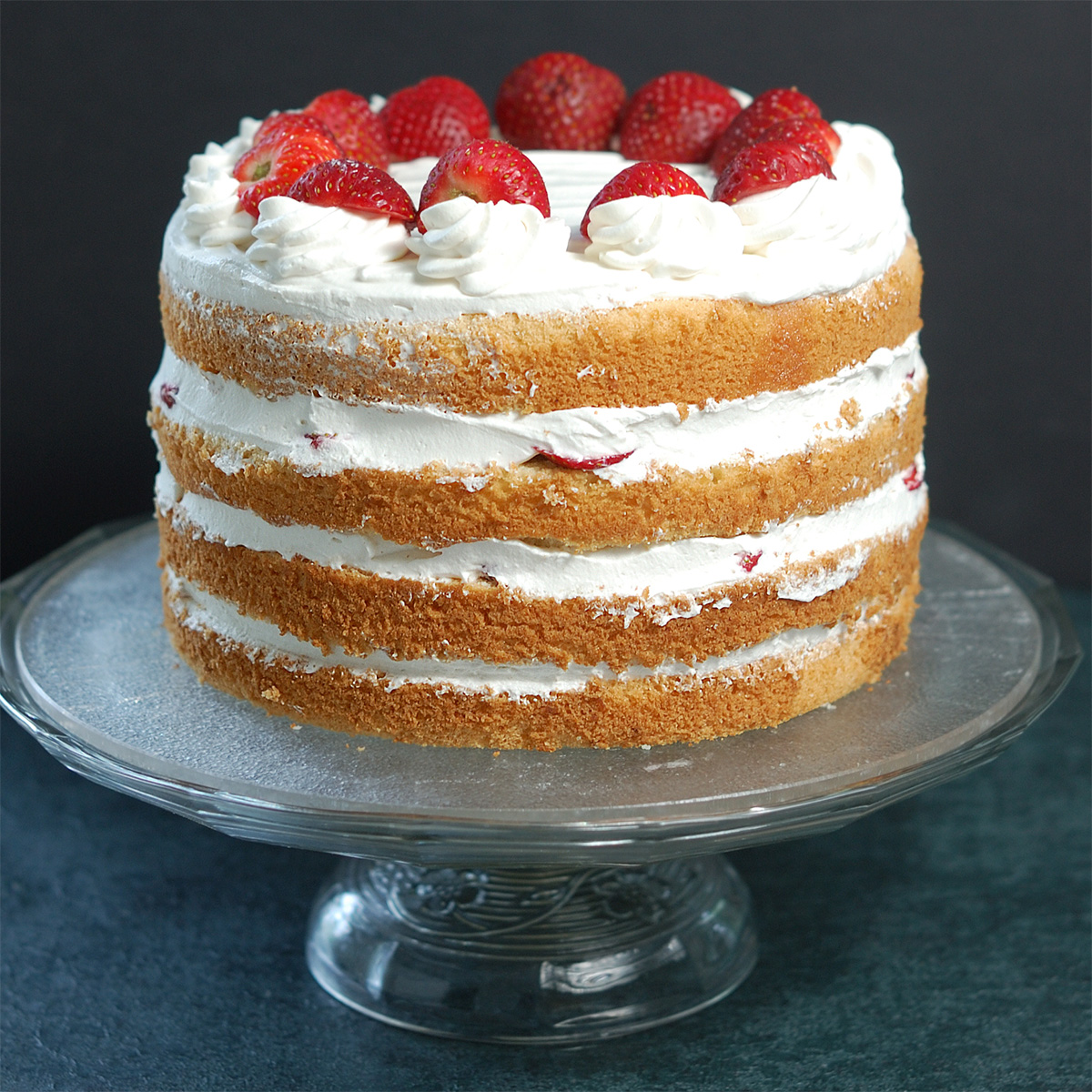
I made this for my mum for her birthday and the recipe was great! I didn’t have cake flour so did the cornstarch substitute and it seemed to work perfectly. I did my cakes in two 8” rounds, and cut each in half to make four tiers, and it was the perfect amount. I also cooled my cakes in the tin upside down since that seems to be the thing to do with chiffon cakes and it did the trick. Absolutely perfect recipe – the cake was light, fluffy, and super tasty!!! Definitely will continue using this recipe and definitely would recommend!!!!!!
It’s like eating a cloud, isn’t it?