Basque Burnt Cheesecake
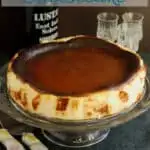
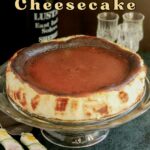
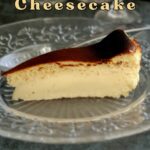
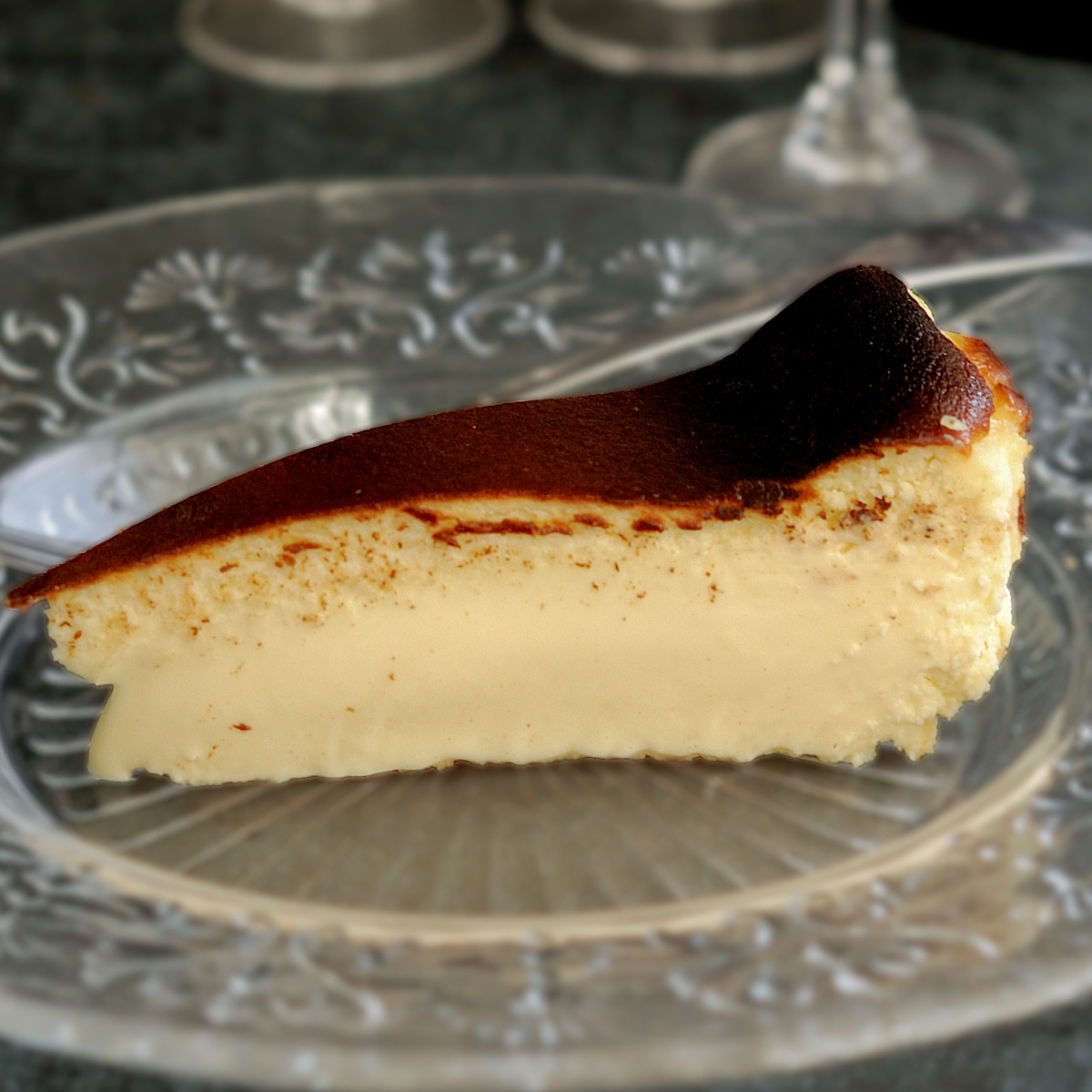
Basque Burnt Cheesecake is a unique confection that truly is super-easy to make. It is stunning to see with its mahogany brown top and oozy, custardy center. This Cheesecake, which originated in San Sebastian, is unlike any you’ve ever tasted.
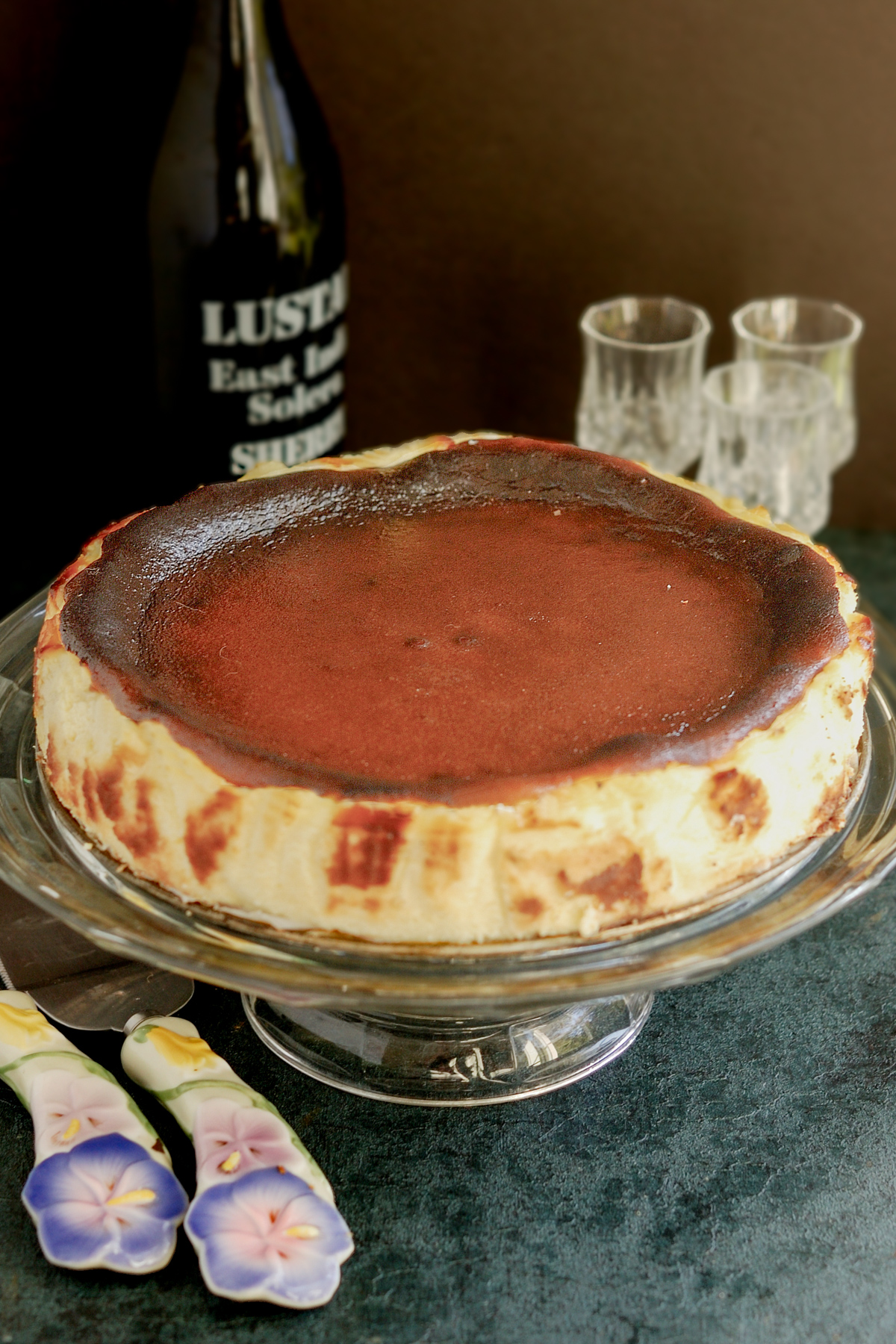
Table of contents
What is a Basque Burnt Cheesecake?
San Sebastian is known as the best place to eat in Europe. After a family trip to that lovely city on the Bay of Biscay, I wouldn’t argue with that statement. San Sebastian is famous for Pinxtos (Basque for tapas) and this unique cheesecake.
I visited La Viña before this cheesecake became a worldwide phenomenon, and I’ve been making it ever since.
To start, forget every “rule” you know for making a great cheesecake.
This cheesecake is different from American cheesecake in pretty much every way. The recipe starts with 2 pounds of cream cheese, as many cheesecakes do, but from there it gets really weird.
- There are no flavorings like vanilla or lemon and there’s a little more salt than usual.
- The batter is not made with a mixer (it can be though), but is made in a food processor. You simply chuck in all the ingredients into the processor and give it a whirl.
- There is no crust on the cheesecake.
- The batter is baked in a parchment lined spring form pan.
- The cake is not baked in a water bath.
- The weirdest part of this recipe, the cake is put into a screaming-hot oven and bakes in just 25 minutes.
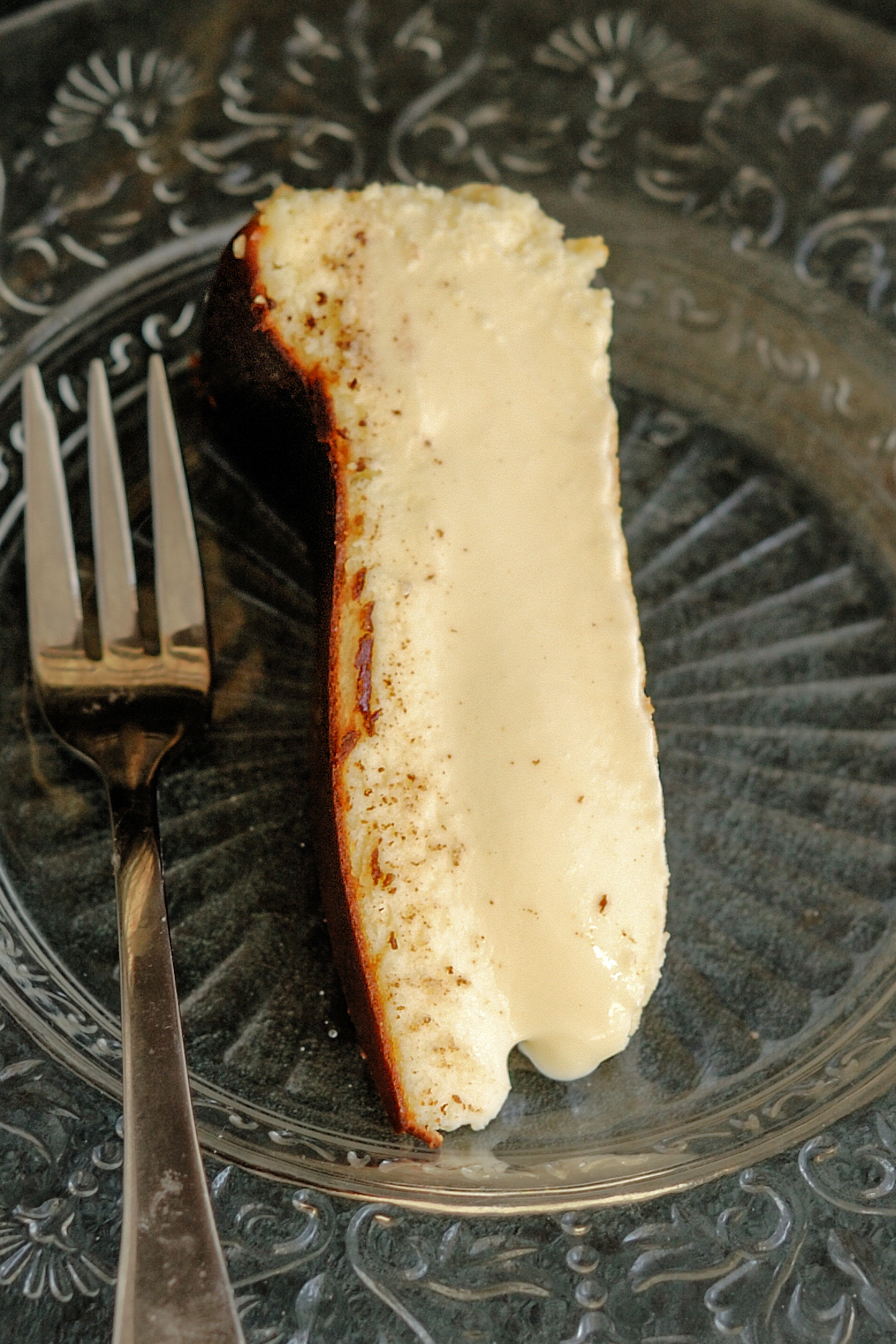
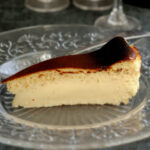
What’s the result? Well, instead of a cheesecake that is pale yellow and creamy from the edges to the center, the cake is dark brown on top, set around the edges, and super-custardy in the middle.
The taste is eggy and creamy and the browned top adds a slight bitter edge.
The Origins of this Recipe
I’ve seen a bunch of recipes on the interwebs that call themselves San Sebastian Cheesecake or Basque Cheesecake but most of them didn’t look quite right to me.
Some of the recipes added flour and buttered the pan instead of lining it with parchment. Those cakes were pretty and sliced into a perfect standing wedge. But that’s not what we ate in San Sebastian.
The original cake we enjoyed at the famous La Vina Pinxo Bar was oozy, custardy and tasted like eggs. It’s nothing like an American cheesecake, which is why it was so fun to taste.
This recipe is adapted from the original La Viña recipe, which the chef generously shares publicly. I’ve adjusted it slightly based on my own testing, but the spirit of the original is intact.
Ingredients
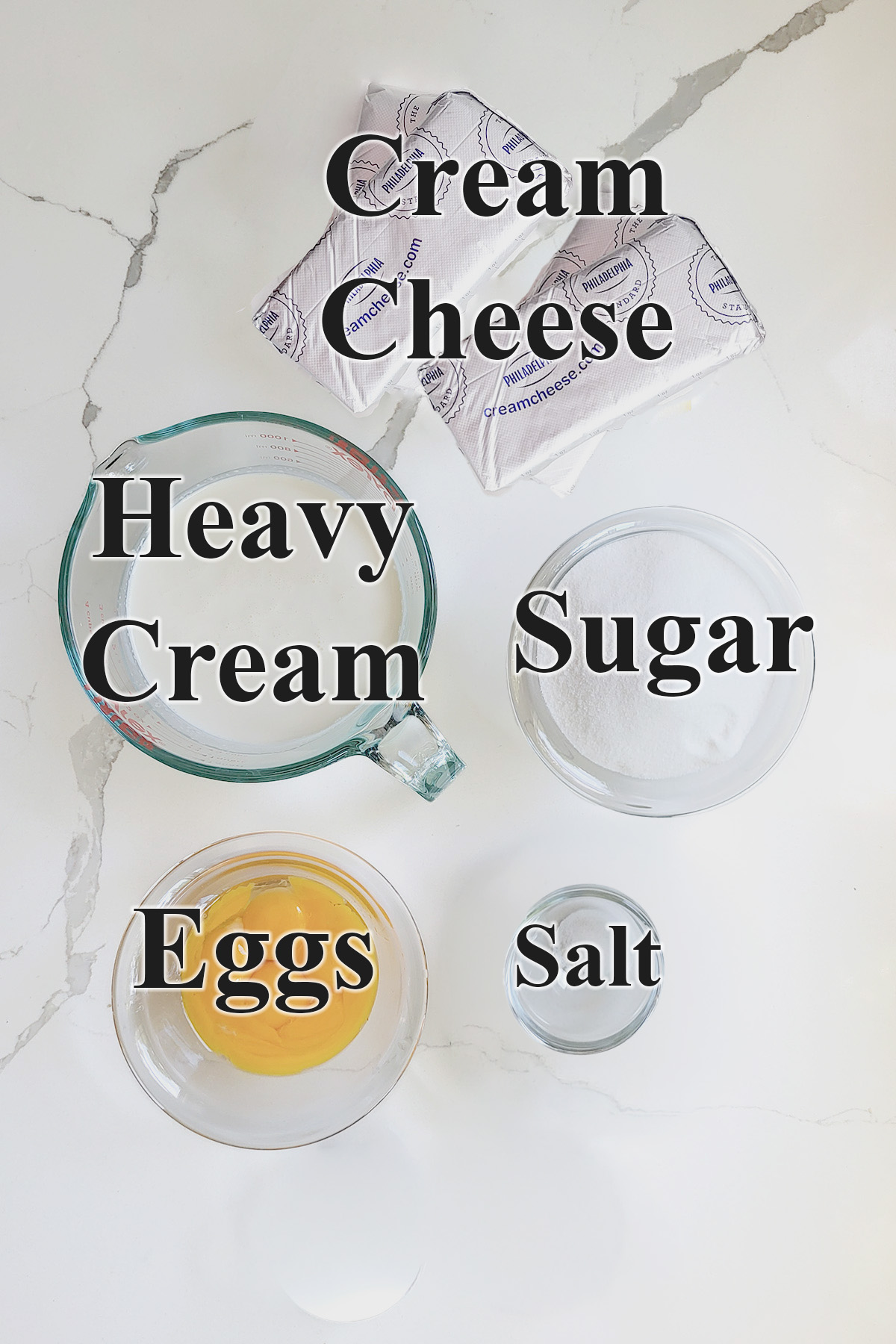
Ingredient Notes
- Cream Cheese – Use only full fat cream cheese for this recipe. The cream cheese should be room temperature.
- Heavy Cream – Heavy cream adds additional fat for an ultra creamy texture.
- Eggs – There are a lot of eggs in this recipe. The egg flavor is prominent in this custardy cheesecake.
- Salt – There’s slightly more salt than you’d find in an American cheesecake. The salt balances the custardy flavor.
Process Photos
Here’s what the recipe process looks like at each stage. Refer to the recipe card below for measurements and exact instructions.
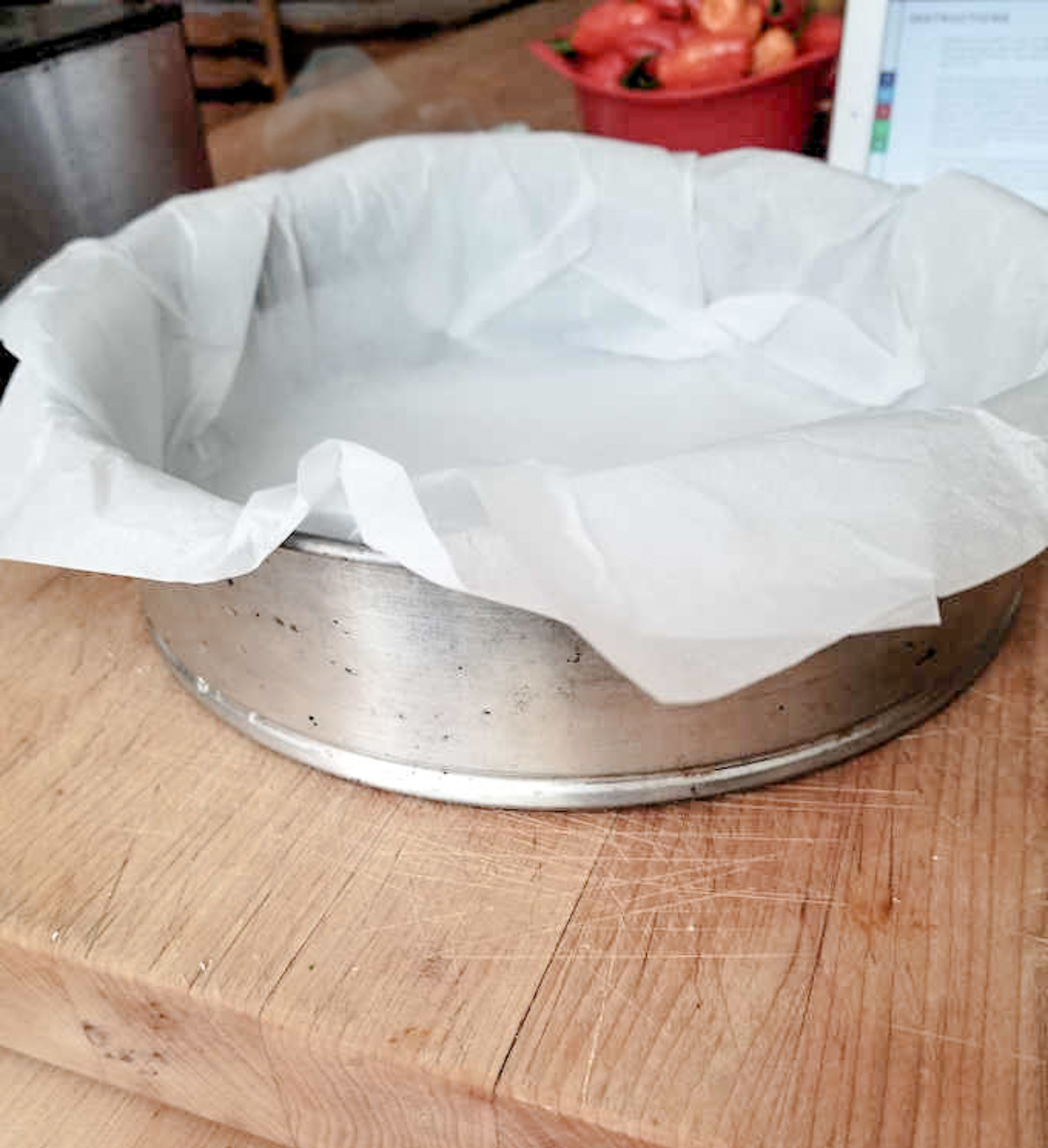
- Line a springform pan with parchment paper. Leave at least a 2″ overhang. It’s ok that the paper doesn’t lie flat.
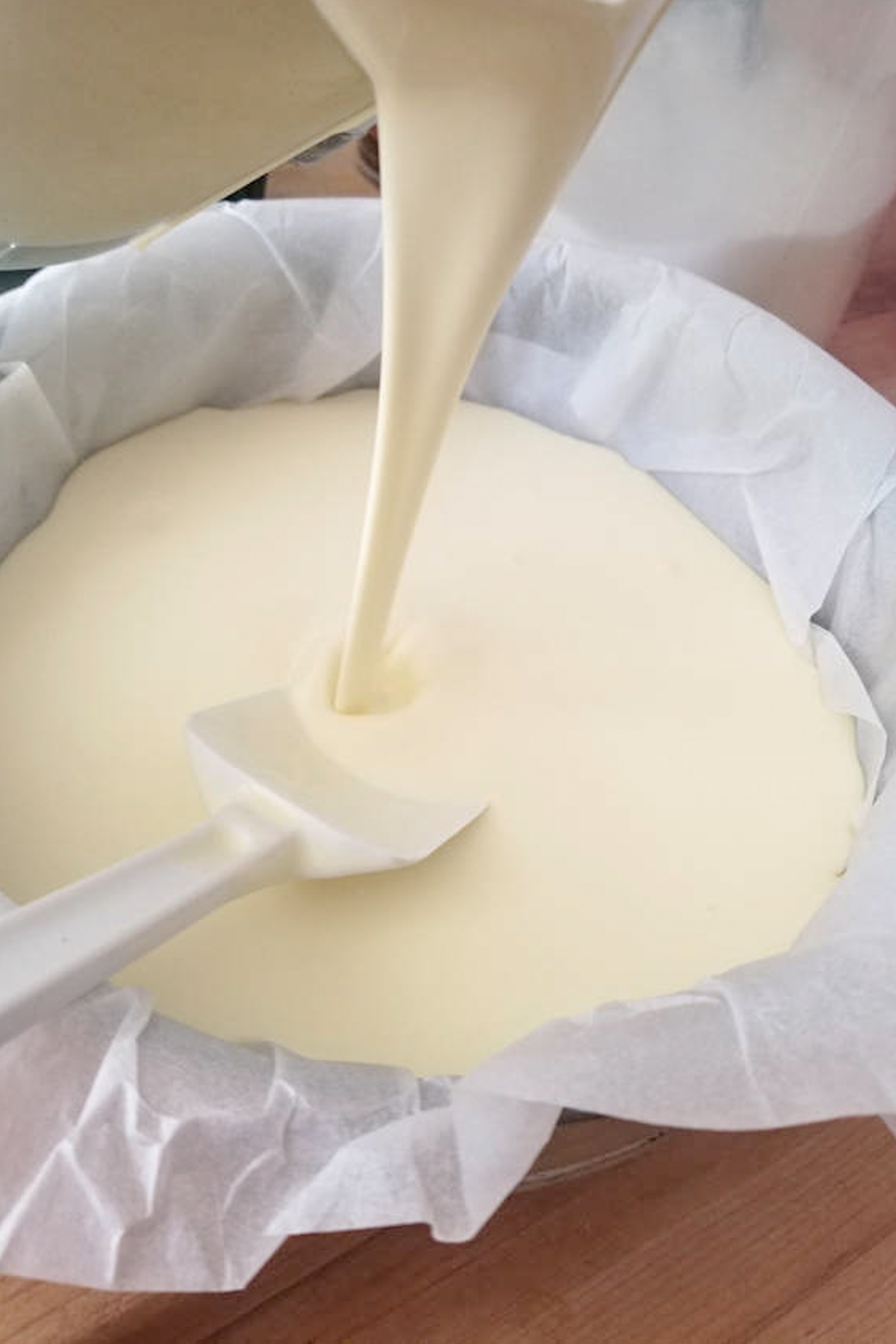
- After mixing the batter in a food processor or with a mixer, pour the batter into the parchment lined pan.
- As you add the batter to the pan the parchment lining will settle.
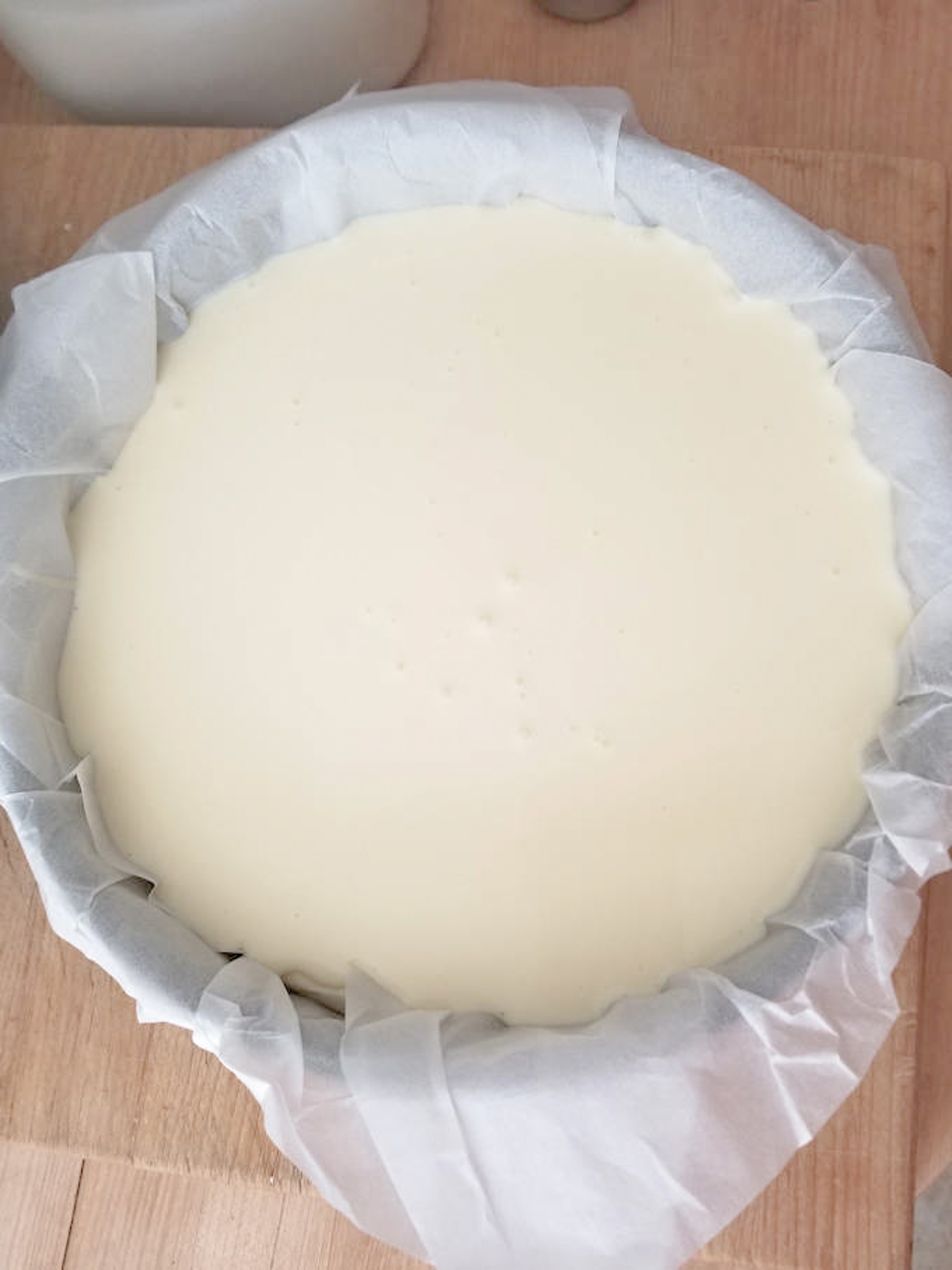
- Tap the pan to release any bubbles.
- Unlike American cheesecake, Basque cheesecake is not baked in a water bath.
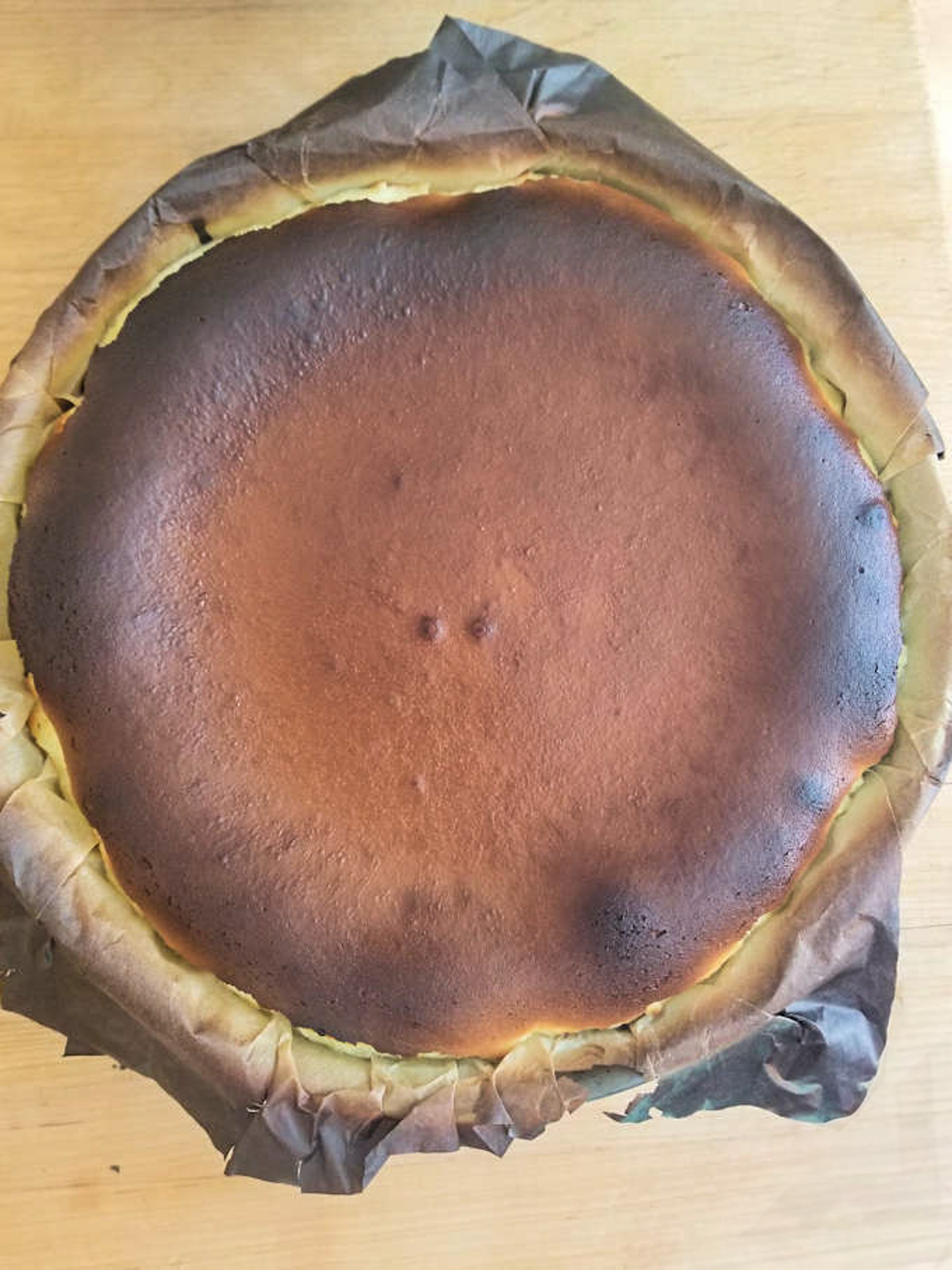
- Chill completely before serving. Do not remove the pan until serving.
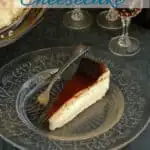
- To serve the cake, remove the springform pan then peel back the parchment.
- Serve slices right from the parchment paper.
Recipe Tips for Basque Burnt Cheesecake
- If you have a large food processor use it to make the batter. If you don’t have a food processor you can make the batter using a mixer. Add the ingredients in the same order and mix until the batter is glossy and smooth.
- You can’t make this recipe without a spring form pan. Regular cheesecake gets firm enough when chilled to flip out of a regular cake pan. But this cake is so soft, even when chilled, the spring form is required.
- Chill the cake before serving so the edges and bottom are firm enough to form slices.
- Don’t try to remove the parchment and pan bottom before serving. The browned parchment looks dramatic so leave it in place until cutting the cake. Just peel back the sides, cut and lift the slice off the paper underneath.
- Serve Basque Cheesecake with good sherry for a real treat!
Can’t get enough cheesecake? Visit this page to see an entire list of all my cheesecake recipes, as well as a wealth of tips and information for making no-fail cheesecakes every time.
If you love this recipe as much as I do, I’d really appreciate a star rating and a quick comment. Ratings and comments help my recipes show in search results. Thanks!
Basque Burnt Cheesecake Recipe
Ingredients
- 32 oz cream cheese
- 14 oz granulated sugar (1 ¾ cups)
- 7 large eggs
- 1 teaspoon table salt
- 8 oz heavy cream (1 cup)
Instructions
- Preheat the oven to 500 °F. Line a 10" spring form pan with 2 sheets of parchment paper, leaving a 2" border of paper extending from the top of the pan. The paper will not lie flat against the pan, this is ok.
- Place 32 oz cream cheese and 14 oz granulated sugar in the bowl of a food processor. Pulse a few times to combine the ingredients. Add 7 large eggs, 1 teaspoon table salt and 8 oz heavy cream. Process the batter for 3 minutes to completely emulsify the batter. If you don't have a food processor the batter can be mixed in the same order of ingredients a stand or hand mixer. Just be sure to mix the batter until very smooth and glossy.
- Pour the batter into the prepared pan and immediately place it in the oven. Bake until the top of cheesecake is very dark brown and the sides of the cake are risen-up and set, about 25 minutes. The center of the cake will still be quite soft and will jiggle like a liquid if you shake the pan.
- Remove the cake from the oven and cool to room temperature on a cooling rack. Refrigerate the cake until completely chilled, at least 4 hours. The cake will be soft and fluffy around the edges and custardy in the center. The center will be set just enough to slice.
Would you like to save this recipe?



As an Amazon Associate and member of other affiliate programs, I earn from qualifying purchases.
It turned out just like the original San Sebastian I had in Istanbul ! Thank you so much for the most perfect recipe !
Thank you for posting this. I live in Miami where a Basque restaurant opened called Leku. I had no idea what a treat I was in for when I tried the cheesecake! I went back again just as an excuse to eat another slice. I’m excited to have a recipe to duplicate it at home now.
Hi. How do I reduce the ingredients for 6 inch round pan ? Please advised. Thank you.
The volume of the 10″ round pan I used is about 2.5 times more than the volume of a 6″ round pan. So you’d need to divide the ingredient by 2.5 to get the right amount of batter for a 6″ pan. To make it easier you could just divide by 2 and have slightly more batter than you need (don’t fill the pan more than 3/4 full) or divide by 3 and have a slightly shorter cake. The baking time will also be shorter since the pan is smaller.
Hi! I’m gonna attempt this recipe as a Father’s Day dessert. However, my oven temperature limit is only 446F. How long would you reckon I should have it baked for in order to achieve the same results? Thank you so much in advance!
I can’t say the exact amount of time. I would just start checking at the time listed in the recipe(25 min) and look for signs the cake is done. The top should be very dark brown and the sides of the cake will puff up and set. The middle portion of the cake will still be loose. I would expect that the cake may take 5-10 minutes longer. But, again, go more by how the cake looks than the exact time.
Regardless of how much I’ve tried tweaking the recipe (less eggs, less time in the oven), the center always comes out more solid than I’d like. I’m looking to achieve a semi-molten center. Any recommendations?
2. Why is there a syrupy liquid that forms at the bottom, between the side and the baking paper. It’s quite a lot, so I usually tilt the cheesecake (with the plate underneath it) to move all the syrup to one side, and then let a napkin absorb it.
Hi Tammy. First off, using less eggs means less liquid in the batter so wouldn’t make the interior more custardy. The eggs are key to the custardy flavor and texture of this recipe. Are you using large eggs? What brand of cream cheese are you using? Are you using heavy cream? As far as the syrupy liquid, I can’t even imagine what would cause that to happen. There must be liquid seeping out for some reason. Does the liquid form while the cake is chilling or is it there right out of the oven?
Hi Eileen. Thanks for the quick reply!
I’m using large eggs, and the cream cheese is Philadelphia. I’m also using whipping cream (which I think is the same as heavy cream). Unfortunately, I’m not sure when the syrupy liquid forms exactly, as I keep the cheesecake in the springform pan and covered from the sides with the baking paper still intact around it. Once it cools down In room temperature (3-4 hours later), I unlock and remove the springform pan and open up the paper. I read somewhere that the syrup is a sign of over baking (which could also explain the solidified center, but if I bake it any less, the top won’t be brown. It only starts getting brown towards the final 5-7 minutes of baking.
By the way, a separate question – I’ve tried mixing in the cream using the pedal once, and the batter was liquidy, and the cheesecake rose and then after removing from the oven, the center collapsed a little, similar to the slice you show a picture of. Another time I mixed the cream in using the whisk attachment and the mix became fluffier and thicker, but the cheesecake Didn’t collapse much after removing it. Which attachment do you use to mix?
Hey Tammy.
To increase difference between superficie and inside baking point increase the oven temperature.
Try +20 celsious and see if there is any difference.
However you can also use a thermometer and stop baking when inside say is 70C. Then if you want more brown the outside increase oven temperature and viceversa. If you want more creamy the inside stop baking before the 70C I suggested. Say 65C. Keep in mind the salmonella however.
Are you using a fan oven? I used a fan oven and mine started going brown within the first 5 minutes. Cooked prfectly with a liquidy centre.
I didn’t use the convection fan for baking this cheesecake. But if yours turned out well then that’s great.
Hello Tammy, the liquid can also be a result of over- mixing / if you beat the mixture too long.. try to mix for shorter time- just enough to have the batter homogeneous. good luck!