
How to Feed & Maintain your Sourdough Starter
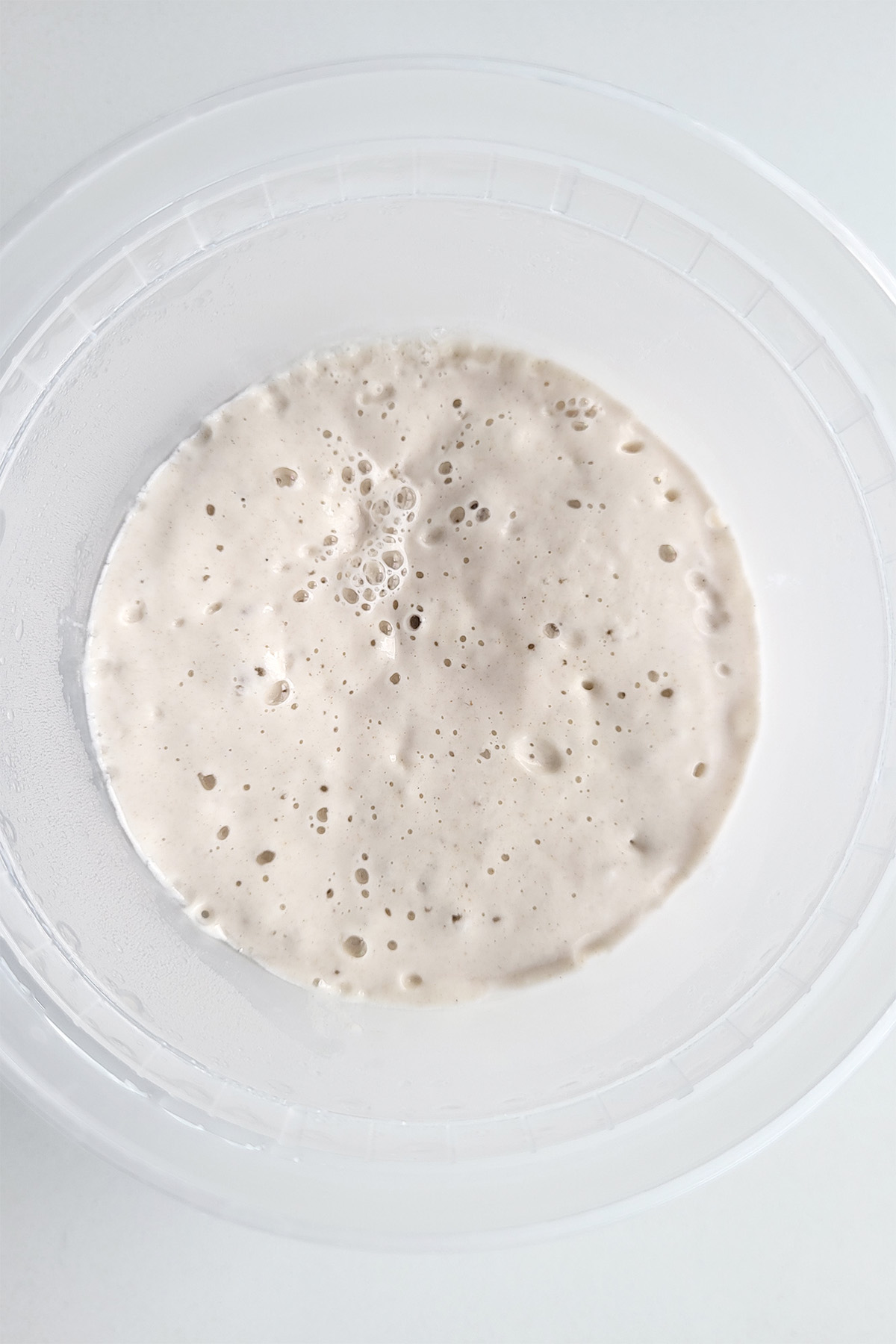
You’ve done it! You’ve created a living batter filled with wild yeast. Now let’s look at how to feed and maintain your sourdough starter so it stays healthy and ready to bake when you are.
If you haven’t made your starter yet, start here: How to Make Sourdough Starter from Scratch.
This post is part of my broader approach to sourdough baking. If you’d like a deeper look at feeding, maintenance, troubleshooting, and recipes, visit the Sourdough Baking Guide.
Table of contents
My Approach to Maintaining a Sourdough Starter
I tend to have a fairly relaxed attitude toward sourdough maintenance. Starters are resilient, and they don’t need to be handled with kid gloves to survive.
There are many ways to feed, maintain, and use a sourdough starter. Below, I’ll show you the method I use at home, which is flexible, forgiving, and well-suited to most home bakers.
As long as your starter is fed periodically and given time to become active before baking, it will usually do just fine.
At the end of this post, you’ll find a step-by-step feeding guide with exact ingredient amounts and instructions. First, though, let’s go through the hows and whys.
Where to Store Your Starter
Room Temperature vs. Refrigerator
Since I don’t bake every day, I keep my starters (I have two) in the refrigerator. For most home bakers, refrigeration makes long-term maintenance much easier.
Storing a starter in the refrigerator significantly slows fermentation and reduces how often it needs to be fed. I recommend feeding your refrigerated starter about once per week when you’re not baking.
If you bake daily, you may prefer to keep your starter at room temperature, where it will need to be fed every day. Otherwise, the refrigerator is your friend.
When to Feed Your Starter
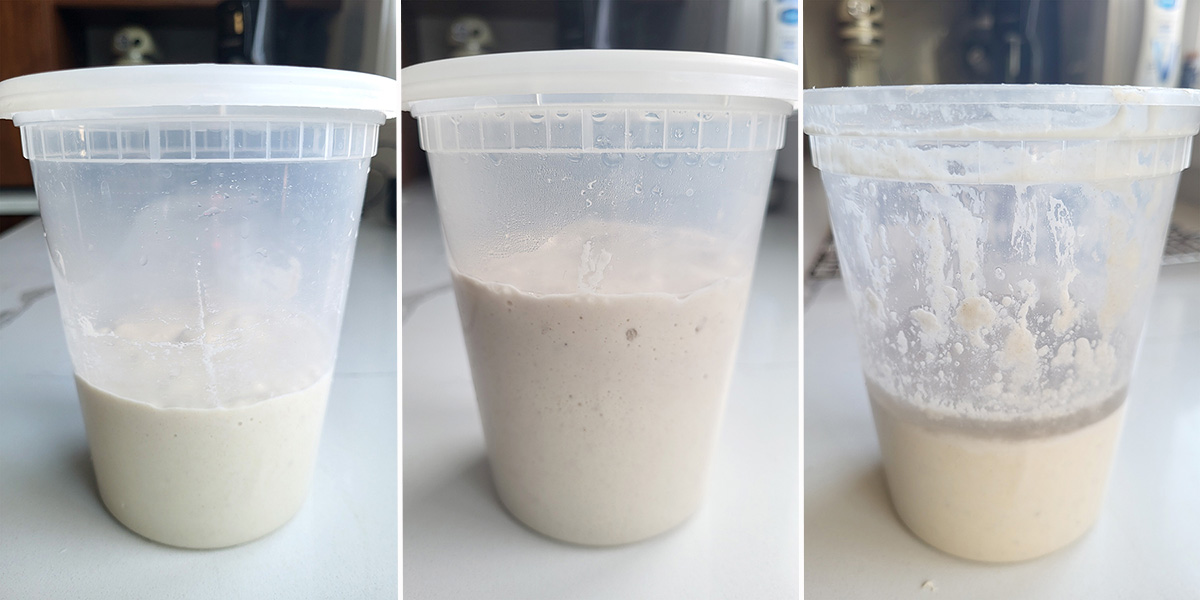
How and when you feed your starter depends mostly on your baking schedule. If you’re a when-the-mood-strikes baker like me, I suggest keeping your starter in the refrigerator and feeding it about once per week when you’re not baking.
When you’re ready to bake, you’ll need a fed and active starter.
If your starter has been fed within the last two to three days and has been refrigerated, you may be able to use it without feeding. The dough may ferment a bit more slowly because of the cooler temperature, but the starter can still perform well.
As you get to know your starter, you’ll develop a sense of when it’s active enough for baking. When in doubt, feed the starter and give it time to become fully active before mixing your dough.
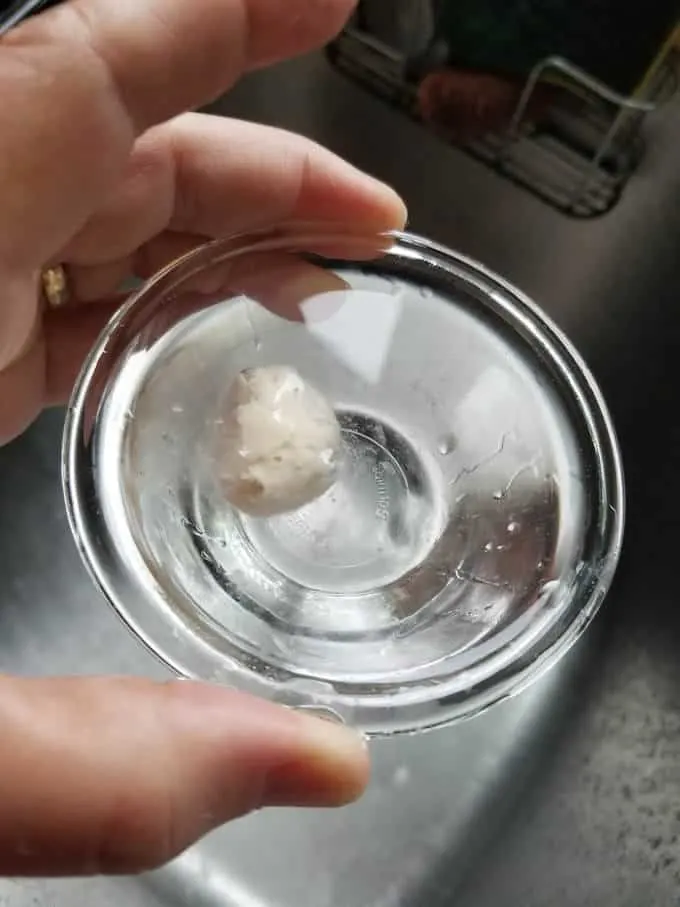
How to Do a Float Test
To test for yeast activity, drop a small dollop of starter into a bowl of water. If it floats, it’s ready for baking.
If you plan to bake and your starter needs feeding:
How far in advance you feed your starter depends on how long your recipe takes.
- If you are making a two-day recipe, take the starter out of the refrigerator early in the morning on the day you want to mix the dough. Feed it right away and it should be ready by early afternoon.
- If you are making a one-day recipe, take the starter out of the refrigerator the night before and feed it. It should be ready to use first thing in the morning.
Understanding Discard
If you continually feed a starter without discarding any, you’ll quickly end up with more starter than you can reasonably use.
Discard is simply the portion of starter that’s removed before feeding.
Discard doesn’t have to be thrown away. Even if it’s not active enough to bake bread, it can be used in many other recipes as a flavor and texture enhancer.
If you bake less frequently, you may find yourself discarding a lot of the starter just to maintain it at 12 oz. If that’s the case, a smaller starter might be a better fit.
Maintaining a Smaller Starter (Low-Waste Option)
Maintaining a smaller starter follows the same principles as maintaining a full-size starter—the only difference is the amount you keep on hand.
Here’s how it works:
- Reduce the overall amount of your starter from 12 oz to 3 oz.
- To maintain your small starter all the information outlined in this post still applies. The only difference is that you discard 2 oz of starter at each feeding.
- The remaining 1 oz of starter is mixed with 1 oz of water and 1 oz of flour.
- When you’re ready to bake take the entire 3 oz of unfed starter and feed with 3 oz of water and 3 oz of flour. You now have 9 oz of starter. Once the starter is active, use 8 oz in your recipe. You will have 1 oz left to continue the feeding cycle.
Common Questions About Feeding and Maintaining a Starter
Honestly, I’ve gone longer than a month without feeding my starter and I haven’t killed it yet. Give it a feeding and see if it wakes up. If it’s alive, keep feeding it until it is reliably doubling in size within 4-5 hours.
If you go more than about 2 weeks between feedings, you might want to give the starter 2-3 feedings before using. A starter that hasn’t been fed for weeks will be out of balance and sluggish.
If your starter was fed a day or two before, it’s possible to use the starter straight from the refrigerator. Give it a float test to make sure it’s active. The dough may take a little longer to ferment since the temperature of the dough will be colder. Use warmer water (about 110-120°F) to mix the dough to speed up the process.
It’s called “hooch” and don’t worry, your starter is still alive. Just stir that water back into the starter before feeding. You might need at least 2 feedings to completely revive and rebalance the starter.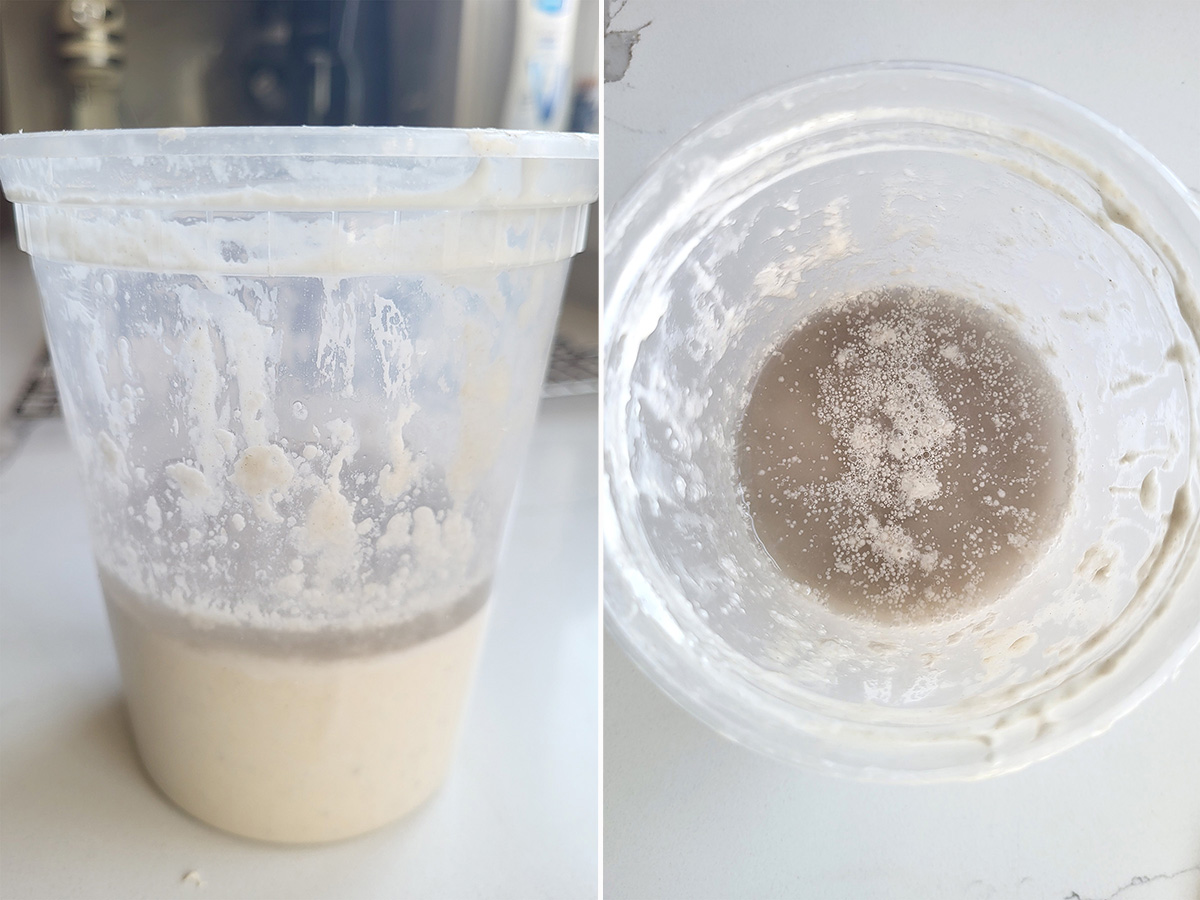
To maintain your starter at 100% hydration it is best and most accurate to weigh your ingredients. If you’re just a little bit off every time you feed, eventually, your starter could be thrown out of balance.
No problem, use the amount of starter called for in the recipe. Then weigh out 4 oz of the remaining starter for feeding and discard the rest.
Yes, If you continually feed the starter without discarding, you’ll end up drowning in starter.
Yes, even if the discard is not active enough for baking bread, you can add it to many other recipes as a flavor and texture enhancer.
Unless you’re going away for an extended time, your starter should be just fine for a couple of weeks in the refrigerator. If you’ll be gone really long-term, put the starter into the freezer or dry it. Frozen or dried starter will need several feedings to rejuvenate.
Feeding Your Sourdough Starter: A Quick Reference
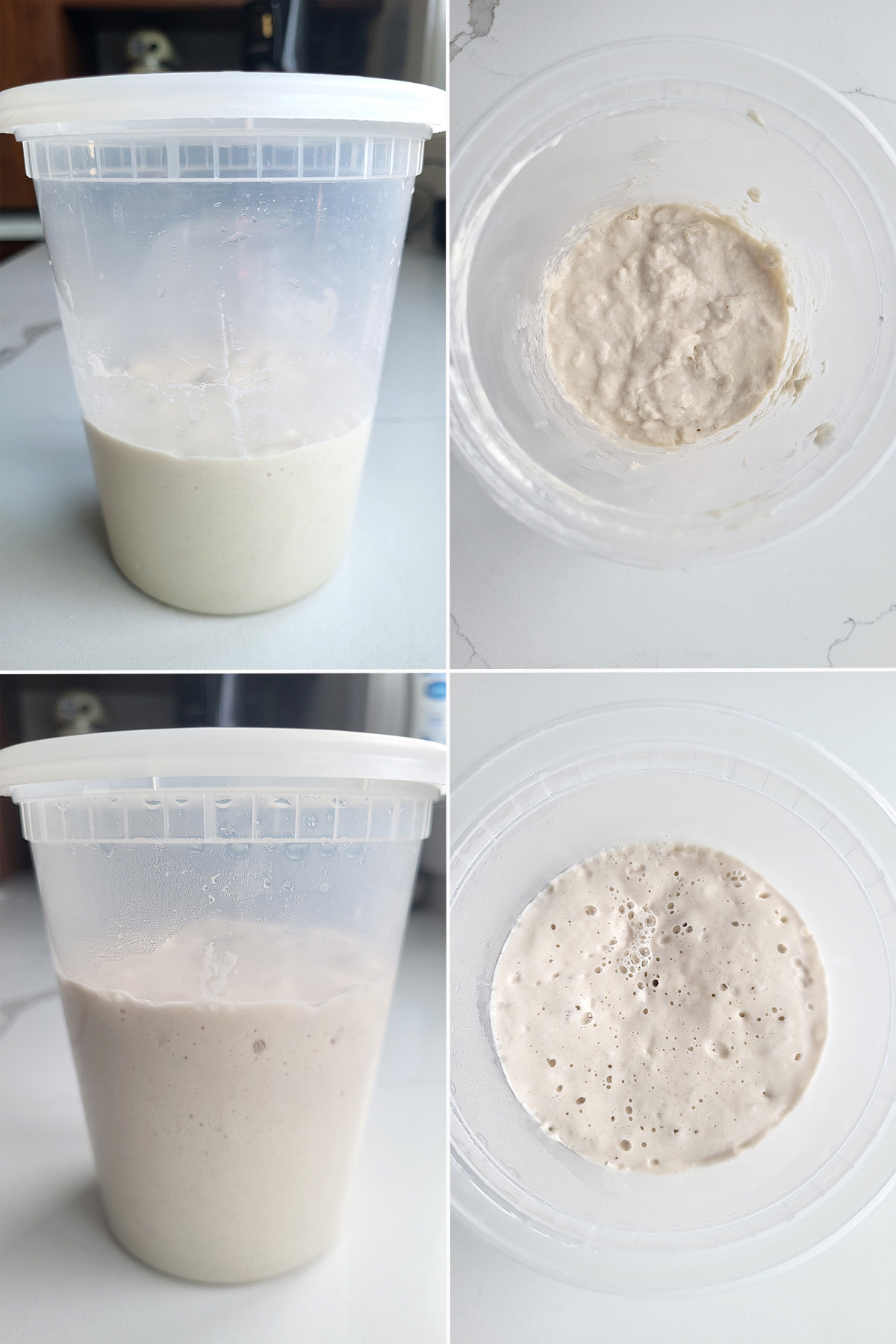
Below is a simple reference guide showing how I feed my starter each time.
If this guide was helpful, a 5-star review is always appreciated.
How to Feed Sourdough Starter
Video
Ingredients
- 4 oz unfed sourdough starter (see note)
- 4 oz all purpose flour
- 4 oz water (room temperature)
Instructions
- Weigh 4 oz unfed sourdough starter into a clean container. Discard the extra starter (see note)
- Add 4 oz all purpose flour and 4 oz water and mix until combined. Set aside at room temperature.
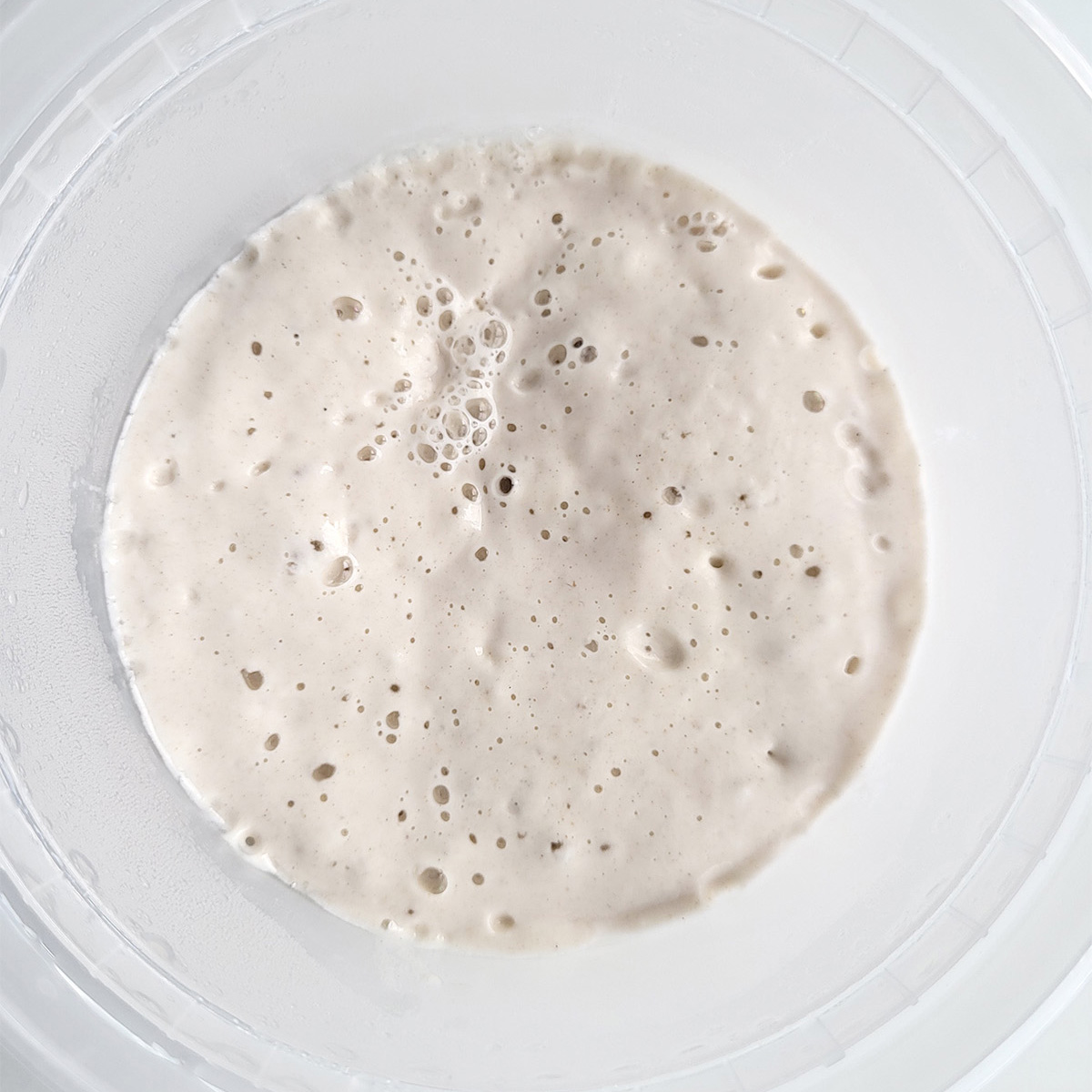
- The starter is ready to use when it has doubled in volume and a small spoonful floats when dropped into a bowl of water. This generally takes 4-5 hours but the time can vary based on dough temperature and room temperature.
- If you do not plan to bake with the starter on the day it is fed, refrigerate 3-4 hours after feeding.
- Feed refrigerated starter weekly. If you go longer than a week without feeding, you may want to give the starter two feedings before using.
Would you like to save this recipe?


As an Amazon Associate and member of other affiliate programs, I earn from qualifying purchases.
Very early Sunday morning, I fed my starter after using it in bread and left it out until Monday evening. I then popped it in the fridge overnight. Tuesday morning, I checked my starter and did a float test after taking it out of the fridge and it did not float. The current recipe I’m using states that if I want a more sour taste, I can use an unfed starter from the fridge…but as I said, it’s not floating. What should I do? Hoping for a more sour taste.
An older starter does have more of a sour taste, but it has less leavening activity. I also find that it’s harder to get good gluten development with an unfed starter. Your best bet is to follow the recipe as long as it’s from a reliable source. Is it a bread recipe?
Great explanation and cant wait to start .
Is it necessary to transfer the starter to a clean vessel?
I just wipe the vessel to make a roughly level “ring” about 1/2 above the starter level.
No, if you measure out 8 oz of starter and leave 4 oz in the container you can do it that way. I have a collection of plastic deli containers so will transfer to a clean container every so often. If you have a specific container for your starter you don’t need to transfer.
I really like the simple manner in which the author relays the information. Very helpful
Thanks!
Materials
4 oz (112g) unfed sourdough starter
4 oz (112g) all purpose flour
4 oz (120 ml) water, room temperature
I think there is a typo error with the water weight. Shouldn’t it be 112g if we are using the weighing scales?
Thank you for your recipes and the instructions!
From a sourdough baker in New Zealand!
Maureen
I give the weight in ml since I tend to use a measuring cup for the water. You can weigh the water and it would be 113.2 g.
@Eileen Gray, What if I used the wrong amount of water? Will it keep my dough from rising and being active? I weighed my water to the exact weight of my flour and starter (which was active before I fed, then after feeding it did not rise)
If you are feeding your starter with the same weight of starter, water and flour then you are doing it right. I’m not sure I understand the problem. Is your starter not rising or did you make a dough that isn’t rising?